November 12, 1862: Alexander Biddle to Julia Williams Rush Biddle

Alexander Biddle was a member of the prominent Philadelphia Biddle family and was married to Julia Williams Rush,  the granddaughter of Dr. Benjamin Rush.  Biddle served with the 121st Pennsylvania Volunteer Infantry, beginning in September 1862. Starting out as a major, he would participate at Fredericksburg and Gettysburg, among other engagements, and would leave the service as a lieutenant colonel. (He was commissioned, but never mustered, as colonel) [Note: this statement has been updated to reflect that Biddle was not mustered as a colonel]
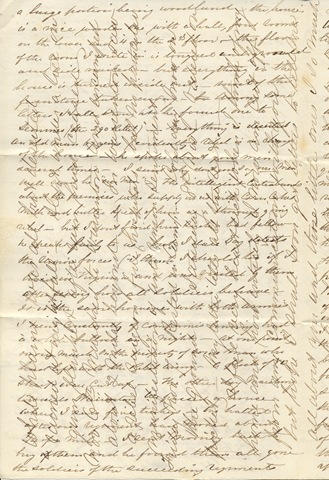
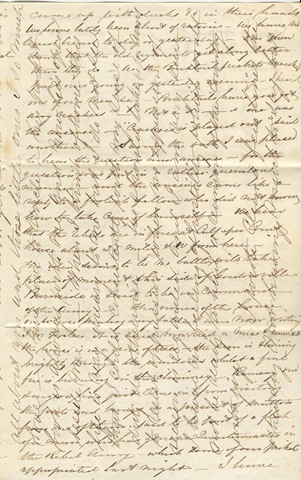
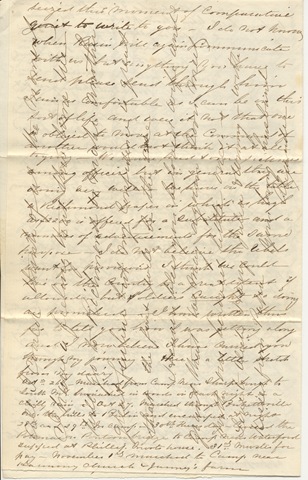
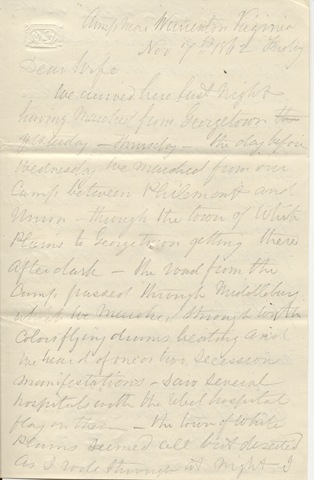
Rush IV-30-25 p1 A Biddle ALS to Julia William Rush, Nov 12 Rush IV-30-25 p2 A Biddle ALS to Julia William Rush, Nov 12 Rush IV-30-25 p3 A Biddle ALS to Julia William Rush, Nov 12 Rush IV-30-25 p4 A Biddle ALS to Julia William Rush, Nov 12

Transcript (excerpt):

Camp beyond Fayetteville

Nov. 12th 1862 Wednesday

Dear Julia

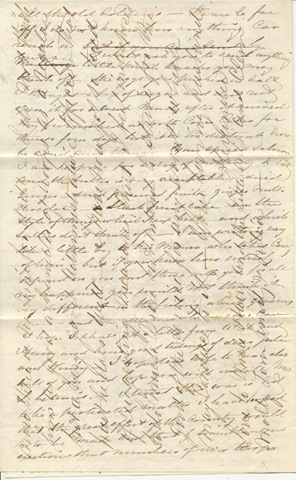
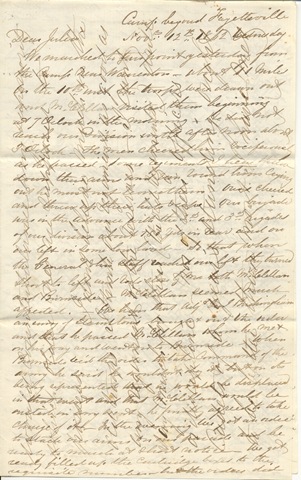
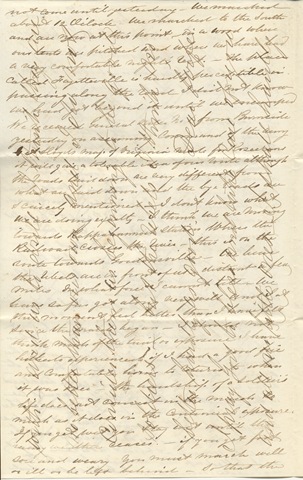
We marched to this point yesterday from the Camp near Warrenton about 11 miles on the 10th inst the troops were drawn out and McClellan visited them beginning at 7 Oclock in the morning. He did not reach our Division until after noon about 3 O’clock. The men cheered him vociferously as he passed. Some regiments I hear threw down their arms and ran round him crying out he must not leave them. Ours cheered and threw up their hats & caps. Our brigade was in the advance with the 2nd and 3rd brigades of our division about 750 yds in rear and on our left in some low land. So that when the General & his staff reached our left they turned short to left and rode close by me both McClellan and Burnside. McClellan seemed much affected. We have that Adgt. Genl Buckingham an envoy of Stanton’s brought out the order and that he passed McClellan whom he met on his way and went out to Burnside – when Burnside rec’d the order to take Command of the army he said he wouldn’t obey it but on its being represented that he would be displaced in that event and that McClellan would be ousted in any event he finally agreed to take charge of it. In the evening we got an order to stack our arms on our parade and be ready to march at short notice. We got ready filled up the cartridge boxes to the requisite number but the order did not come until yesterday. We marched about 12 O’clock. We marched to the South and are now at this point. In a wood where our tents are pitched and where we have had a very comfortable night’s rest…

Citation: Alexander Biddle (1819-1899), autograph letter signed to Julia Williams Rush Biddle.12 November 1862. Rush:IV:30:25

November 10, 1862: Henry and Mary Warner to John Warner

Henry and Mary Warner lived in Allegheny City, Pennsylvania, now part of Pittsburgh. They are the great-grandparents of poet Marianne Moore.  By the 1860s they had three surviving children:  John, Henry, and Anne. Their letters to John, a Presbyterian minister living in Gettysburg, are preserved as part of Marianne Moore’s family papers.

Moore VI-5-12 p1 Henry and Mary Warner to Children 11-10-62

Moore VI-5-12 p2 Henry and Mary Warner to Children 11-10-62

Transcript:

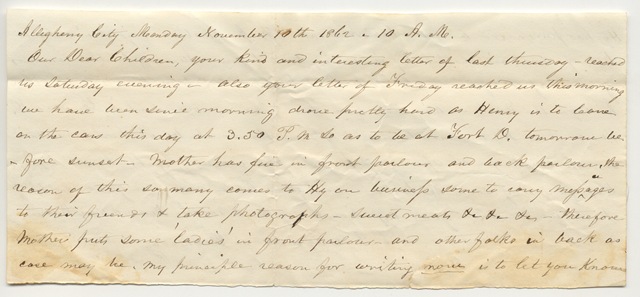
Allegheny City Monday November 11th 1862—10 A.M.

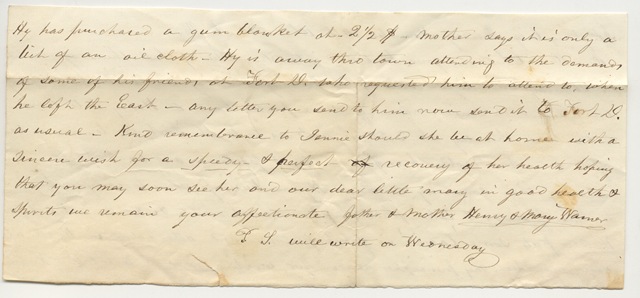
Our Dear Children, your kind and interesting letter of last thursday—reached us Saturday evening—Also your letter of Friday reached us this morning we have been since morning drove pretty hard as Henry is to leave on the cars this day at 3.50 P.M. So as to be at Fort D. tomorrow before sunset—Mother has fire in front parlour and back parlour, the reason of this so many comes to Hy on business some to carry messages to their friends & take photographs, sweet meats &c &c &c—therefore Mother puts some ‘ladies’ in front parlour—and other folks in back as case may be. My principle reason for writing now is to let you know Hy has purchased a gum blanket at 2 ½ $– Mother says it is only a bit of an oil cloth—Hy is away thro town attending to the demands of some of his friends, at Fort D. who requested him to attend to, when he left the East—any letter you send to him now send it to Fort D. as usual—Kind remembrance to Jennie should she be at home with a sincere wish for a speedy & perfect recovery of her health hoping that you may soon see her and our dear little Mary in good health & spirits we remain your affectionate father & mother Henry & Mary Warner

P.S. will write on Wednesday

Citation: Henry and Mary Warner, autograph letter signed to John Riddle Warner. Allegheny City [Pittsburgh], 10 November 1862. Moore VI:05:12

November 9, 1862: Alexander Biddle to Julia Williams Ruh Biddle

Alexander Biddle was a member of the prominent Philadelphia Biddle family and was married to Julia Williams Rush,  the granddaughter of Dr. Benjamin Rush.  Biddle served with the 121st Pennsylvania Volunteer Infantry, beginning in September 1862. Starting out as a major, he would participate at Fredericksburg and Gettysburg, among other engagements, and would leave the service as a lieutenant colonel. (He was commissioned, but never mustered, as colonel) [Note: this statement has been updated to reflect that Biddle was not mustered as a colonel]
Rush IV-30-25 p1 A Biddle ALS to Julia William Rush, Nov 9 Rush IV-30-25 p2 A Biddle ALS to Julia William Rush, Nov 9 Rush IV-30-25 p3 A Biddle ALS to Julia William Rush, Nov 9 Rush IV-30-25 p4 A Biddle ALS to Julia William Rush, Nov 9

Transcript (excerpt):

Dear Julia

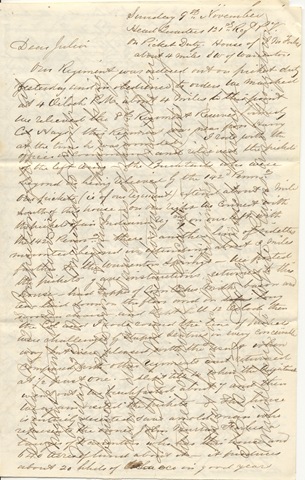
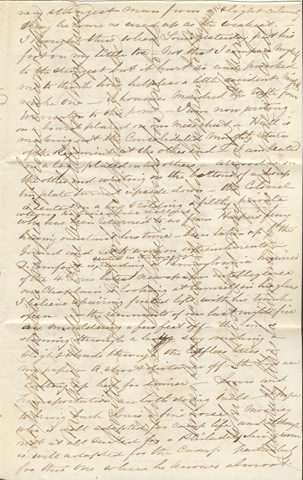
Our regiment was ordered out on picket duty yesterday and in obedience to orders we marched at 4 O’clock P.M. about 4 miles to the point we relieved the 8th Regiment Reserves formerly Col Hayes / this Regiment was near poor Harry at the time he was wounded. I rode with the officer in command and relieved the pickets of the left wing the Buck tails who were beyond us being relieved by the 142nd Penn. Our pickets (i.e. of our Regiment) extend about a mile South of this house on our right we connect with the pickets of an Indiana Reg. on our left with the 142nd Penn. There is another line of videttes mounted beyond us extending about 3 miles further  to the Warrenton Springs. We posted the pickets gave instructions returned to this house – had supper of corn cakes milk bacon and tea – laid down on the floor and on long wooden chairs and slept till 12 Oclock then the Col and I rode round the line of pickets were challenged by stupid sentries in every conceivable way but were pleased with the result when compared with other regiments and returned at ½ past one.

Citation: Alexander Biddle (1819-1899), autograph letter signed to Julia Williams Rush Biddle.9 November 1862. Rush:IV:30:25
November 7, 1862: Alexander Biddle to Julia Williams Rush Biddle

Alexander Biddle was a member of the prominent Philadelphia Biddle family and was married to Julia Williams Rush,  the granddaughter of Dr. Benjamin Rush. A businessman and member of the First Troop Philadelphia City Calvary before the war, Biddle entered Civil War service with the 121st Pennsylvania Volunteer Infantry on  September 1, 1862. Starting out as a major, he would fight at Fredericksburg and Gettysburg, among other engagements, and would leave the service as a lieutenant colonel. (He was commissioned, but never mustered, as colonel)

[Note: this statement has been updated to reflect that Biddle was not mustered as a colonel. It also originally mistakenly stated Biddle was also at Chancellorsville, but he was on leave]

Rush IV-30-25 p1 A Biddle ALS to Julia William Rush, Nov 7 Rush IV-30-25 p2 A Biddle ALS to Julia William Rush, Nov 7 Rush IV-30-25 p3 A Biddle ALS to Julia William Rush, Nov 7 Rush IV-30-25 p4 A Biddle ALS to Julia William Rush, Nov 7

Transcript:

Camp near Warrenton Virginia

Nov 7th 1862 Friday

Dear Wife

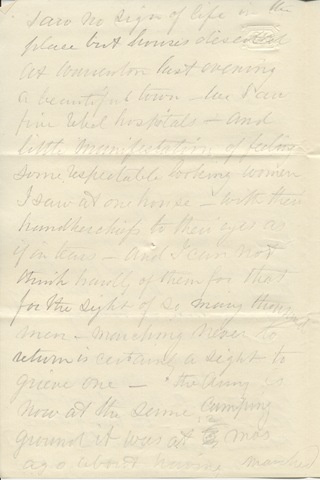
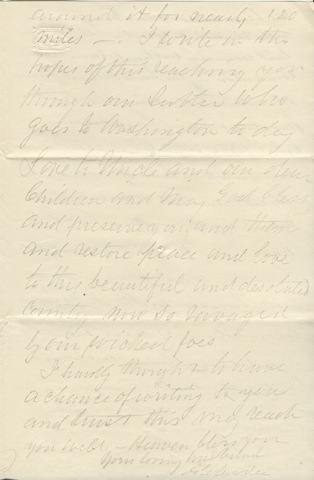
We arrived here last night having marched from Georgetown yesterday – Thursday – the day before Wednesday we marched from our camp between Philemont and Union – through the town of White Plains to Georgetown getting there after dark – the sound from the camp passed through Middleburg which we marched through with colors flying drums beating and we heard of one or two Secession manifestations – saw several hospitals with the rebel hospital flag on them – the town of White Plains seemed all but deserted as I rode through at night I saw no sign of life in the place but houses deserted At Washington last evening a beautiful town – we saw five rebel hospitals – and little manifestation of feeling some respectable looking women I saw at one house – with their handkerchiefs to their eyes as if in tears – and I can not think hardly of them for that for the sight of so many thousand men, marching never to return is certainly a sight to grieve on. The Army is not at the same camping ground it was at 12 mos ago about having marched around it for nearly 120 miles. I write in the hopes of this reaching you through our [sutler?] who goes to Washington to day Love to Uncle and out dear children and may God bless and preserve you and them and restore peace and love to this beautiful and desolated country now so ravaged by our wicked foes

I hardly thought to have a chance of writing to you and trust this may reach you well. Heaven bless you

Your loving husband

Alexander

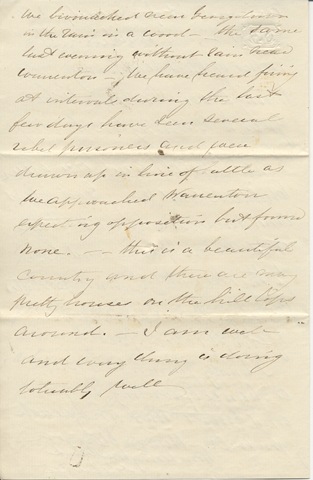
We bivouacked near Georgetown in the rain in a wood. The same last evening without rain near Warrenton. We have heard firing at intervals during the last few days have seen several rebel prisoners and face drawn up in line of battle as we approached Warrenton expecting opposition but found none. This is a beautiful country and there are many pretty houses on the hill tops around. I am well and every thing is doing tolerably well

Citation: Alexander Biddle (1819-1899), autograph letter signed to Julia Williams Rush Biddle.7 November 1862. Rush:IV:30:25
November 5, 1862: Henry and Mary Warner to John Warner

Henry and Mary Warner lived in Allegheny City, Pennsylvania, now part of Pittsburgh. They are the great-grandparents of poet Marianne Moore.  By the 1860s they had three surviving children:  John, Henry, and Anne. Their letters to John, a Presbyterian minister living in Gettysburg, are preserved as part of Marianne Moore’s family papers.

Moore VI-5-12 Henry and Mary Warner to Children 11-5-62

Transcript:

Allegheny City Wednesday November 5th 1862 11 ½ A.M.

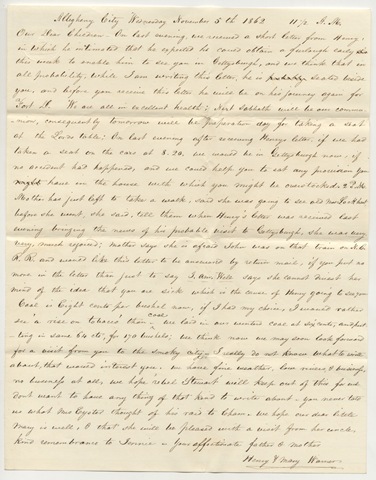
Our Dear Children—On last evening, we received a short letter from Henry, in which he intimated that he expected he could obtain a furlough early this week to enable him to see you in Gettysburgh, and we think that in all probability, while I am writing this letter, he is seated beside you, and before you receive this letter he will be on his journey again for Fort D. We are all in excellent health; Next Sabbath will be our communion, consequently tomorrow will be preparation day for taking a seat at the Lords table; On last evening after receiving Henrys letter, if we had taken a seat on the cars at 8.20, we would be in Gettysburgh now, if no accident had happened, and we could help you to eat any provision you have in the house with which you might be overstocked. 2 P.M. Mother has just left to take a walk, said she was going to see old Mrs Lockhart, before she went, she said, tell them when Henry’s letter was received last evening bringing the news of his probable visit to Gettysburgh, she was very, very much rejoiced; Mother says she is afraid John was on that train on N.C.R.R. and would like this letter to be announced by return mail, if you put no more in the letter than just to say I Am Well says she cannot divest her mind of the idea that you are sick which is the cause of Henry going to see you Coal is Eight centers per bushel now, if I had my choice, I would rather see ‘a rise on tobacco’ than coal—we laid in our winters coal at six cents, and putting in same 64 cts, for 170 bushels; we think now we may soon look forward for a visit from you to the smoky city—I really do not know what to write about, that would interest you. We have fine weather, low rivers, & business, no business at all, we hope ‘rebel Stewart’ will keep out of this for we dont want to have any thing of that kind to write about—you never told us what Mrs Eyster thought of his raid to Cham. We hope our dear little Mary is well, & that she will be pleased with a visit from her uncle, kind remembrance to Jennie—

Your affectionate father & mother

Henry & Mary Warner


Citation: Henry and Mary Warner, autograph letter signed to John Riddle Warner. Allegheny City [Pittsburgh], 5 November 1862. Moore VI:05:12

November 4, 1862: Alexander Biddle to Julia Williams Rush Biddle

Alexander Biddle was a member of the prominent Philadelphia Biddle family and was married to Julia Williams Rush,  the granddaughter of Dr. Benjamin Rush. A businessman and member of the First Troop Philadelphia City Calvary before the war, Biddle entered Civil War service with the 121st Pennsylvania Volunteer Infantry on  September 1, 1862. Starting out as a a major, he would fight at Fredericksburg and Gettysburg, among other engagements, and would leave the service as a lieutenant colonel. (He was commissioned, but never mustered, as colonel)

[Note: this statement has been updated to reflect that Biddle was not mustered as a colonel. It also originally mistakenly stated Biddle was also at Chancellorsville, but he was on leave]

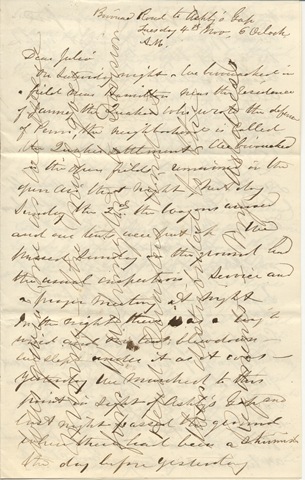
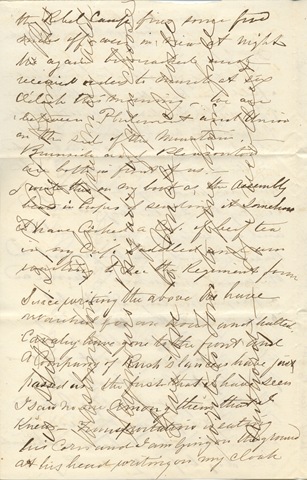
Rush IV-30-25 p1 A Biddle ALS to Julia William Rush, Nov 4 Rush IV-30-25 p2 A Biddle ALS to Julia William Rush, Nov 4 Rush IV-30-25 p3 A Biddle ALS to Julia William Rush, Nov 4 Rush IV-30-25 p4 A Biddle ALS to Julia William Rush, Nov 4

Transcript (excerpt):

Bernard Road to Ashby’s Gap

Tuesday 4th Nov, 6 Oclock AM

Dear Julia

On Saturday night we bivouacked in a field near Hamilton neat the residence of Janney the Quaker who wrote the defence of Penn, the neighborhood is called the Quaker Settlement. We bivouacked in the open fields remained in the open air that night next day Sunday the 2nd the wagons arrived and our tents were put up. We passed Sunday on the ground had the usual inspection Service and a proper meeting at night in the night there was a light wind and our tent blew down. We slept under it as it was. Yesterday we marched to this point in sight of Ashby’s Gap and last night passed the ground where there had been a skirmish the day before yesterday

The rebel camp fires some five miles off were in view at night. We again bivouacked and received orders to march at six O’clock this morning. We are between Philemont and Union on the side of the mountain. Burnsides and Pleasanton are both in front of us.

I write this on my book as the Assembly beats in hopes of sending it somehow I have cooked a cup of beef tea in my cup. Saddled and am waiting to see the Regiment form….

Citation: Alexander Biddle (1819-1899), autograph letter signed to Julia Williams Rush Biddle.4 November 1862. Rush:IV:30:25
November 3, 1862: Samuel Preston Moore telegram to G. T. Beauregard

Pierre Gustave Toutant Beauregard was a Louisiana-born general of the Confederate States Army. He had graduated second in his class from West Point in 1838 and was an admirer of Napoleon. He achieved fame early in the Civil War for commanding the Fort Sumter bombardment and as the victor of the first battle of Manassas. He later served in the Western Theater (including Shiloh and Corinth), Charleston, and the defense of Richmond, but his career was hampered by friction with Jefferson Davis and other generals.


This is one of approximately 1000 military telegrams in P.G.T. Beauregard’s papers at the Rosenbach.

AMs 1168-11 1862-11-03


Transcript:

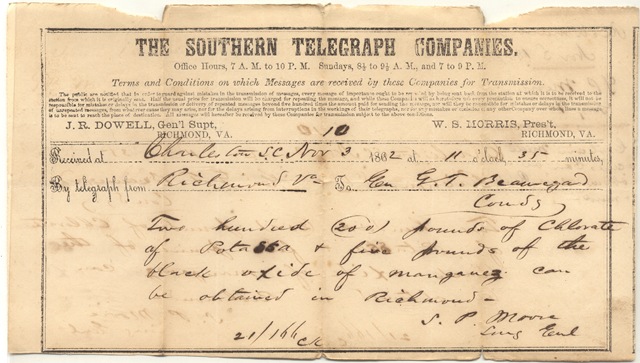
Received at Charleston S.C. Nov 3 1862 at 11 o’clock 35 minutes

By telegraph from Richmond Va To Gen G. T. Beauregard Comdg

Two hundred (200) pounds of Chlorate of Potassa & five pounds of the black oxide of manganese can be obtained in Richmond.

S. P. Moore

Surg Genl


Citation: Samuel Preston Moore (1813-1889), telegram to G. T. Beauregard. Richmond, Va.; 3 November 1862. AMs 1168/11

October 31, 1862: Alexander Biddle to Julia Williams Rush Biddle

Alexander Biddle was a member of the prominent Philadelphia Biddle family and was married to Julia Williams Rush,  the granddaughter of Dr. Benjamin Rush. A businessman and member of the First Troop Philadelphia City Calvary before the war, Biddle entered Civil War service with the 121st Pennsylvania Volunteer Infantry on  September 1, 1862. Starting out as a a major, he would fight at Fredericksburg and Gettysburg, among other engagements, and would leave the service as a lieutenant colonel. (He was commissioned, but never mustered, as colonel)

[Note: this statement has been updated to reflect that Biddle was not mustered as a colonel. It also originally mistakenly stated Biddle was also at Chancellorsville, but he was on leave]

Rush IV-30-24 p1 A Biddle ALS to Julia William Rush, Oct 31 Rush IV-30-24 p2 A Biddle ALS to Julia William Rush, Oct 31 Rush IV-30-24 p3 A Biddle ALS to Julia William Rush, Oct 31 Rush IV-30-24 p4 A Biddle ALS to Julia William Rush, Oct 31

Transcript (excerpt):

Friday

Oct. 31st 1862

Road to Leesburg

Camp in the field

Near Lovettsville

Dear Julia

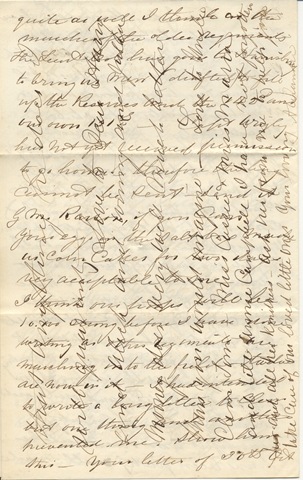
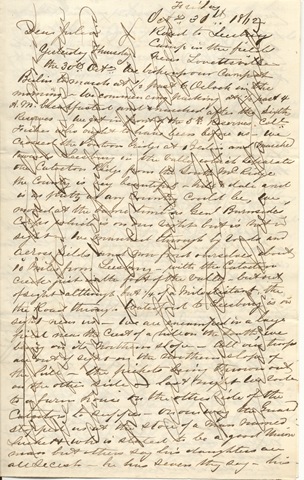
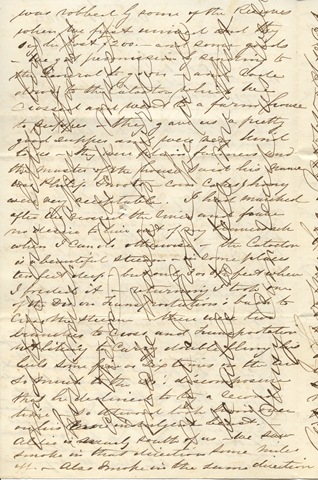
Yesterday Thursday the 30th Oct we broke up our camp at Berlin to march at ½ past 6 Oclock in the morning. We commencing packing at ½ past 4 A.M. breakfasted and marched after the sixth reserves – We got in front of the 5th Reserves Col Fisher who ought to have been before us – We crossed the Pontoon bridge at Berlin and marched towards Leesburg in the valley which separates the Catocton Ridge from the South M. Ridge the country is very beautiful – hill & dale and is as pretty as any country could be, we moved at the same time as Genl. Burnside’s Corps which is on our sight but is not in sight. We marched through by roads and across fields and now find ourselves about 10 miles from Leesburg – with the Catocton creek just in the foot of the valley – but out of sight although but ¼ of a mile distant the road through. Waterford to Leesburg is in sight near us. We are encamped in a large field near the crest of a hill on the South, we are out of sight on the northern slope of the hill – the pickets being thrown out on the other side. Last night we rose to a farm house on the other side of the Catoctons to supper – on out way the Guard stopped us at the store of a man named Suckett who is stated to be a good Union man but others say his daughters are all Secesh. he has seven they say. His was robbed by some of the Reserves when we first arrived and they say he lost $200 – and some goods – We got permission by sending to the General to go on and rode down to the Catocton which we crossed and went to a farm house to supper – they gave us a pretty good supper and were very kind to us – they were plain farmers and the master of the house said his name was Philip Snoots – corn cakes & honey were very acceptable.

Citation: Alexander Biddle (1819-1899), autograph letter signed to Julia Williams Rush Biddle. 31 October 1862. Rush:IV:30:24

October 29, 1862: Alexander Biddle to Julia Williams Rush Biddle

Alexander Biddle was a member of the prominent Philadelphia Biddle family and was married to Julia Williams Rush,  the granddaughter of Dr. Benjamin Rush. A businessman and member of the First Troop Philadelphia City Calvary before the war, Biddle entered Civil War service with the 121st Pennsylvania Volunteer Infantry on  September 1, 1862. Starting out as a a major, he would fight at Fredericksburg and Gettysburg, among other engagements, and would leave the service as a lieutenant colonel. (He was commissioned, but never mustered, as colonel)

[Note: this statement has been updated to reflect that Biddle was not mustered as a colonel. It also originally mistakenly stated Biddle was also at Chancellorsville, but he was on leave]

Rush IV-30-24 p1 A Biddle ALS to Julia William Rush, Oct 29 Rush IV-30-24 p2 A Biddle ALS to Julia William Rush, Oct 29Rush IV-30-24 p3 A Biddle ALS to Julia William Rush, Oct 29 Rush IV-30-24 p4 A Biddle ALS to Julia William Rush, Oct 29

Transcript:

Oct. 29th 1862

Dear Julia

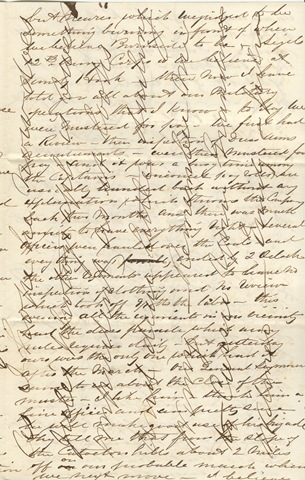
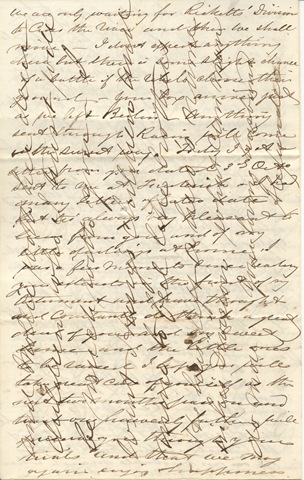
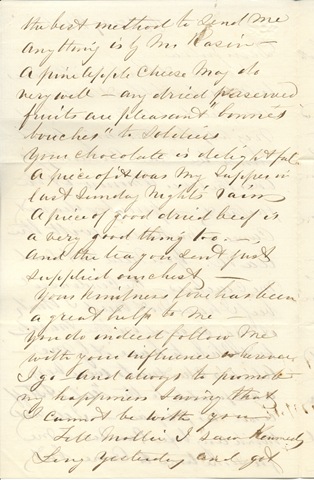
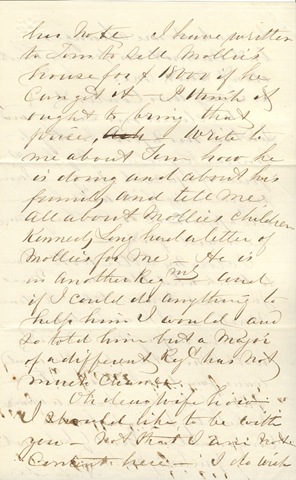
We are at Berlin with orders to march at short notice. We expected to march last night, this morning and think we shall certainly go over the river tomorrow at the farthest. Your box dearest came by Mr. Rasin with the tea &c. You need not send me crackers – the condensed beef I have not tried I think it may be good on the march but I like to have it by me. Alick’s chestnuts were very acceptable to the Field Staff and his papa. I do not think any boxes can reach me for some time to come but the best method to send me anything is by Mr. Rasin. A pine apple cheese may also do very well – any dried preserved fruits are pleasant “bonnés bouches” to soldiers.

Your chocolate is delightful. A piece of it was my supper in last Sunday night’s rain. A piece of good dried beef is a very good thing too. And the tea you sent just supplied our chest.

Your kindness love has been a great help to me.

You do indeed follow me with your influence wherever I go and always to promote my happiness saving that I cannot be with you.

Tell mother I saw Kennedy Long yesterday and got her note I have written to Tom to sell Mollie’s house for $18000 if he can get it. I think it ought to bring that price, Ask Write to me about Tom how he is doing and about his family and tell me all about Mollie’s children. Kennedy Long had a letter of Mollie’s for me. He is in another Regmt and if I could do anything to help him I would and so told him but a major of a different Reg has not much chance.

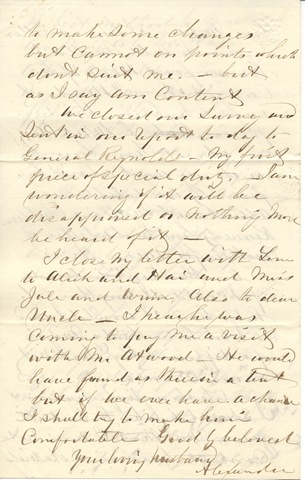
Oh dear with how I should like to be with you – not that I am not content here – I do with to make some changes but cannot on points which don’t suit me – but as I say am content.

We closed our Survey and sent in one report to day to General Reynolds – my first price of special duty. I am wondering if it will be disapproved or nothing more be heard of it.

I close my letter with Love to Alick and Hai and Miss Julia and loving Also to dear Uncle. I hear he was coming to pay me a visit with Mr. Atwood. He would have found as there in a tent but if we ever have a chance I shall try to make him comfortable

Good by beloved

Your loving husband

Alexander

Citation: Alexander Biddle (1819-1899), autograph letter signed to Julia Williams Rush Biddle. 29 October 1862. Rush:IV:30:24

October 27, 1862: Alexander Biddle to Julia Williams Rush Biddle

Alexander Biddle was a member of the prominent Philadelphia Biddle family and was married to Julia Williams Rush,  the granddaughter of Dr. Benjamin Rush. A businessman and member of the First Troop Philadelphia City Calvary before the war, Biddle entered Civil War service with the 121st Pennsylvania Volunteer Infantry on  September 1, 1862. Starting out as a a major, he would fight at Fredericksburg and Gettysburg, among other engagements, and would leave the service as a lieutenant colonel. (He was commissioned, but never mustered, as colonel)

[Note: this statement has been updated to reflect that Biddle was not mustered as a colonel. It also originally mistakenly stated Biddle was also at Chancellorsville, but he was on leave]

Rush IV-30-24 p1 A Biddle ALS to Julia William Rush, Oct 27 Rush IV-30-24 p2 A Biddle ALS to Julia William Rush, Oct 27 Rush IV-30-24 p3 A Biddle ALS to Julia William Rush, Oct 27 Rush IV-30-24 p4 A Biddle ALS to Julia William Rush, Oct 27

Transcript (excerpt):

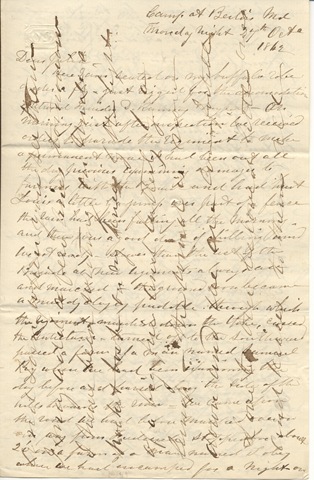
Camp at Berlins Md

Monday Night 27th Oct 1862

Dear Julia,

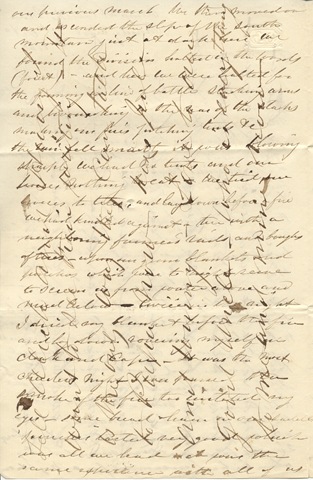
Here I am seated on my buffalo robe under a fly just rigged for the accommodation of Atwood Ferriday Do Ramsay & myself. Morning just after inspection we received orders to parade the regiment to make a permanent move I had been out all the day previous examining damages to farmers with the Board and had hurt Louis a little by a jump over part of a fence the rain had been falling all the morning and there was a good deal of drilling and we got ready – slower than the rest of the Brigade as new regiments always are and marched – the ground soon became a muddy clayey puddle through which the Antietam turned off to the Southward passed a farm of a man named Samuel Pry when we had been examining the day before and passed long the side of the hills towards the river – we came upon the road we had before marched over on our way from Frederick stopped for about 20 on a farm of a man named Tobey when we had encamped for a night on our previous march We then marched on and undid the slope of the south mountain just at dark here and formed the division halted in the woody forest…

Citation: Alexander Biddle (1819-1899), autograph letter signed to Julia Williams Rush Biddle. 27 October 1862. Rush:IV:30:24