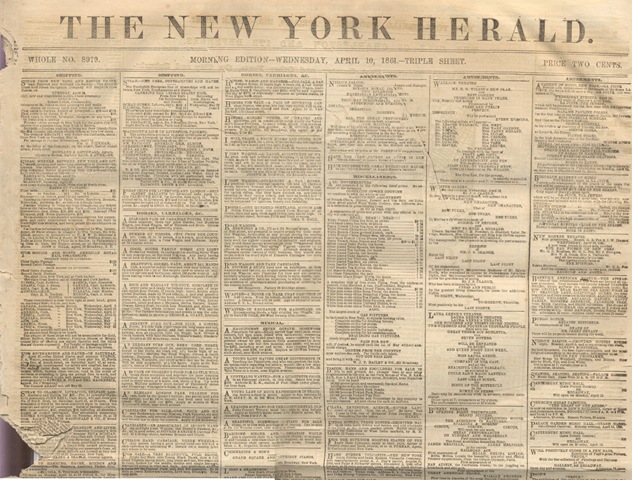
April 10, 1861: New York Herald

top

Transcript (excerpt):

Page 2, Lower Half

Interesting From Virginia.

Our Richmond Correspondence.

Richmond, Va., April 6, 1861.

The Present Attitude of Virginia – How Long is She to Remain in the Union? – The Union Men in the Convention Endeavoring to Escape from the Rising Tide of Revolution, &c., &c.

The cord which binds Virginia to the Union at this moment is so slight as to need but the pressure of any little emergency to snap it forever. It is fast yielding under the natural strain of Southern interest and Southern sympathy; and any sudden emergency which would abruptly rend it would but anticipate by a few months a result that is not inevitable.

Citation:New York Herald. 10 April 1861. Gift of Steven and Susan Raab. AN .N56792

April 9, 1861: John Henry Brown’s Journal

John Henry Brown was a painter of portrait miniatures, living and working in Philadelphia. He had met Lincoln in August of 1860 when he was commissioned to paint Lincoln’s portrait for a supporter, but although Brown liked Lincoln personally, he did not agree with Republican policies.


1861-04-09

Transcript:

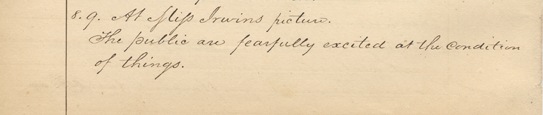
At Miss Irwins picture.

The public are fearfully excited at the condition of things.

Citation: John Henry Brown (1818-1891), autograph journal/account book. Philadelphia, 1844-1890. AMs 574/14.1

April 8, 1861: Confederate Commissioners’ Telegrams

During March and April 1861, after seven states had seceded and formed the Confederate States of America but before war broke out, Confederate Secretary of State Robert Toombs appointed Martin J. Crawford, John Forsyth, and A.B. Roman as Commissioners of the Confederate States to Washington, DC. Their purpose was to seek diplomatic recognition from the United States and negotiate peace—at least for a while. Central to the question of peace or war was whether the United States would continue to retain claim over federal forts located in the southern states that had seceded, including Fort Pickens in Florida and Fort Sumter in South Carolina. This item is transcribed from a letter book maintained by J.T. Pickett, secretary to the commissioners, containing copies of 72 letters, dispatches, and telegrams sent and received by the commissioners from the time of their appointment to the demand for the evacuation of Fort Sumter. 

AMs 811-20 p213 Confederate Letter Book 4-8-1861 telegram edited


AMs 811-20 p215 Confederate Letter Book 4-8-1861 telegram edited2

AMs 811-20 p217 Confederate Letter Book 4-8-1861 telegrams edited

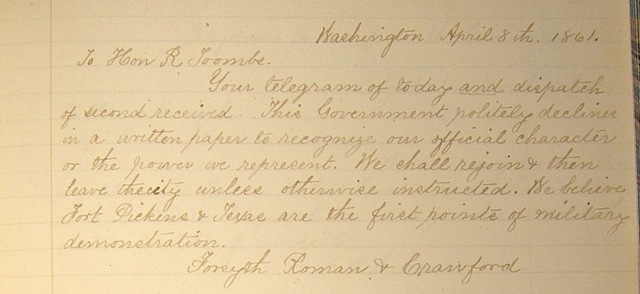
Washington April 8th. 1861.

To Hon R Toombs.

Your telegram of today and dispatch of second received. This Government politely declines in a written paper to recognize our official character or the power we represent. We shall rejoin & then leave the city unless otherwise instructed. We believe Fort Pickens & Texas are the first points of military demonstration.

Forsyth Roman & Crawford


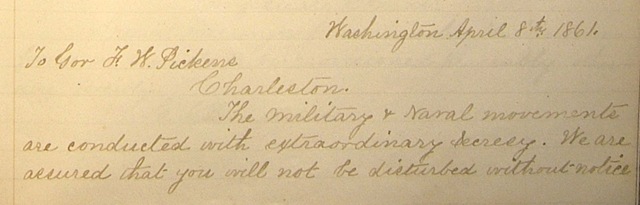
Washington April 8th 1861.

To Gov F. W. Pickens

Charleston.

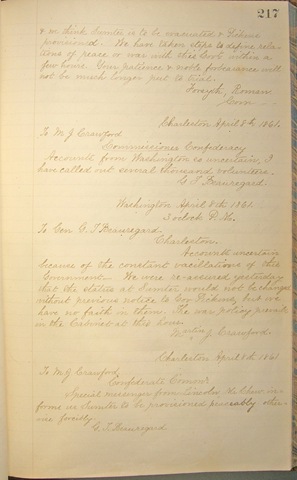
The military & naval movements are conducted with extraordinary secrecy. We are assured that you will not be disturbed without notice & we think Sumter is to be evacuated & Pickens provisioned. We have taken steps to define relations of peace or war with this Govt within a few hours. Your patience & noble forbearance will not be much longer put to trial.

Forsyth, Roman.

Com——


Charleston April 8th 1861.

To M J Crawford

Commissioner Confederacy

Accounts from Washington so uncertain, I have called out several thousand volunteers.

G T Beauregard.


Washington April 8th 1861.

3 o’clock P.M.

To Gen G.T. Beauregard.

Charleston.

Accounts uncertain because of the constant vacillations of this Government—We were re-assured yesterday that the status at Sumter would not be changed without previous notice to Gov Pickens, but we have no faith in them. The war policy prevails in the Cabinet at this hour.

Martin J. Crawford.


Charleston April 8th 1861

To M. J. Crawford.

Confederate Commr

Special messenger from Lincoln, Mr Chew informs us Sumter to be provisioned peaceably otherwise forcibly.

G.T. Beauregard


Citation:Commissioners of the Confederate States of America to the Government of the United States, letter book.Washington, D.C., Feb 27-April 11, 1861.AMS 811/20

April 7, 1861: Confederate Commissioners Telegrams

During March and April 1861, after seven states had seceded and formed the Confederate States of America but before war broke out, Confederate Secretary of State Robert Toombs appointed Martin J. Crawford, John Forsyth, and A.B. Roman as Commissioners of the Confederate States to Washington, DC. Their purpose was to seek diplomatic recognition from the United States and negotiate peace—at least for a while. Central to the question of peace or war was whether the United States would continue to retain claim over federal forts located in the southern states that had seceded, including Fort Pickens in Florida and Fort Sumter in South Carolina. This item is transcribed from a letter book maintained by J.T. Pickett, secretary to the commissioners, containing copies of 72 letters, dispatches, and telegrams sent and received by the commissioners from the time of their appointment to the demand for the evacuation of Fort Sumter. 

AMs 811-20 p211 Confederate Letter Book 4-7-1861 telegram

Transcript:

Washington April 7th 1861.

To Hon R Toombs.

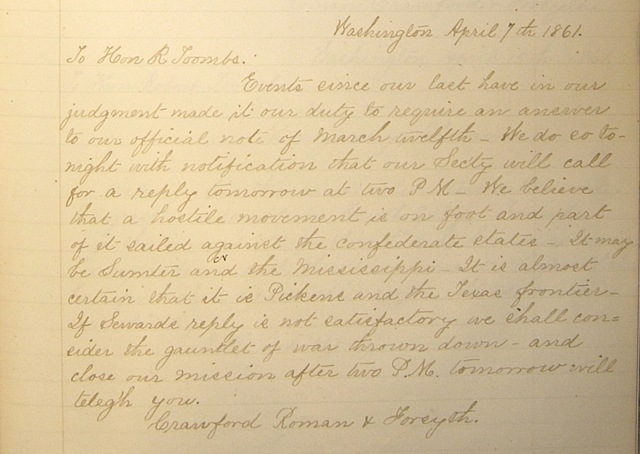
Events since our last have in our judgment made it our duty to require an answer to our official note of March Twelfth—We do so tonight with notification that our Sec’ty will call for a reply tomorrow at two PM—We believe that a hostile movement is on foot and part of it sailed against the confederate states—It may be Sumter and [inserted: or] the Mississippi—It is almost certain that it is Pickens and the Texas frontier—If Sewards reply is not satisfactory we shall consider the gauntlet of war thrown down—and close our mission after two P.M . tomorrow will teleg’h you.

Crawford Roman & Forsyth.


letter book

To Hon Mess. Crawford & Forsyth

Commissioners

We have so many extraordinary telegrams I would be glad to know from you if it is true that they have determined to reinforce Sumter & if a naval force is sent to our harbor.

Be so good as to answer as soon as convenient for something desired to govern our conduct.

F. W. Pickens.


Citation:Commissioners of the Confederate States of America to the Government of the United States, letter book.Washington, D.C., Feb 27-April 11, 1861.AMS 811/20

April 6, 1861: New York Herald

top

Transcript (excerpt):

Page 3, Lower Half

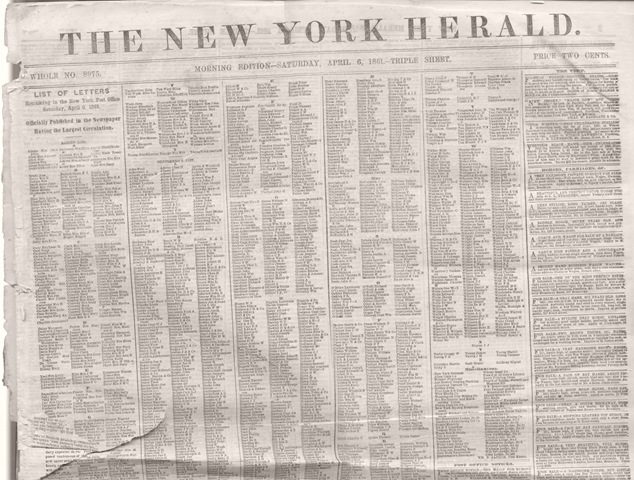
Important News from Charleston

Charleston, April 5, 1861

A terrible moment is evidently at hand. The news from Washington and New York to-night corroborates the general impression, that within twenty-four hours war will be upon us.

Every man has been ordered on duty, and the utmost activity prevails. The State is prepared for any emergency.

The highest officials say the present state of things cannot last but a short time longer.

The excitement throughout is intense, and everything wears a warlike aspect.

Citation: New York Herald. 6 April 1861. Gift of Steven and Susan Raab. AN .N56792

April 5, 1861: John Henry Brown’s Journal

John Henry Brown was a painter of portrait miniatures, living and working in Philadelphia. He had met Lincoln in August of 1860 when he was commissioned to paint Lincoln’s portrait for a supporter, but although Brown liked Lincoln personally, he did not agree with Republican policies.

1861-04-05

Transcript:

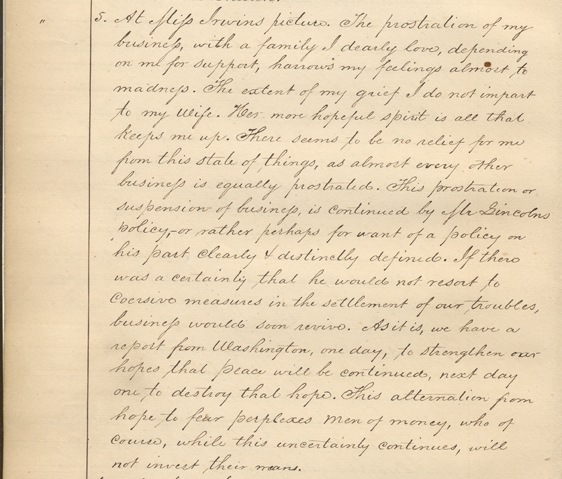
At Miss Irwin’s picture. The prostration of my business, with a family I dearly love, depending on me for support, harrows my feelings almost to madness. The extent of my grief I do not impart to my wife. Her more hopeful spirit is all that keeps me up. There seems to be no relief for me from this state of things, as almost ever other business is equally prostrated. This prostration or suspension of business, is continued by Mr. Lincolns policy, or rather perhaps for want of a policy on his part clearly & distinctly defined. If there was a certainty that he would not resort to coercive measures in the settlement of our troubles, business would soon revive. As it is, we have a report from Washington, one day, to strengthen our hopes that peace will be continued, next day one to destroy that hope. This alternation from hope to fear perplexes men of money, who of course, while this uncertainty continues, will not invest their means.

Citation: John Henry Brown (1818-1891), autograph journal/account book. Philadelphia, 1844-1890. AMs 574/14.1

April 4, 1861: Confederate Commissioners to Robert Toombs

During March and April 1861, after seven states had seceded and formed the Confederate States of America but before war broke out, Confederate Secretary of State Robert Toombs appointed Martin J. Crawford, John Forsyth, and A.B. Roman as Commissioners of the Confederate States to Washington, DC. Their purpose was to seek diplomatic recognition from the United States and negotiate peace—at least for a while. Central to the question of peace or war was whether the United States would continue to retain claim over federal forts located in the southern states that had seceded, including Fort Pickens in Florida and Fort Sumter in South Carolina. This item is transcribed from a letter book maintained by J.T. Pickett, secretary to the commissioners, containing copies of 72 letters, dispatches, and telegrams sent and received by the commissioners from the time of their appointment to the demand for the evacuation of Fort Sumter. 

AMs 811-20 p209 Confederate Letter Book 4-4-1861 telegram Transcript:

Washington April 4th 1861.

To Hon R Toombs.

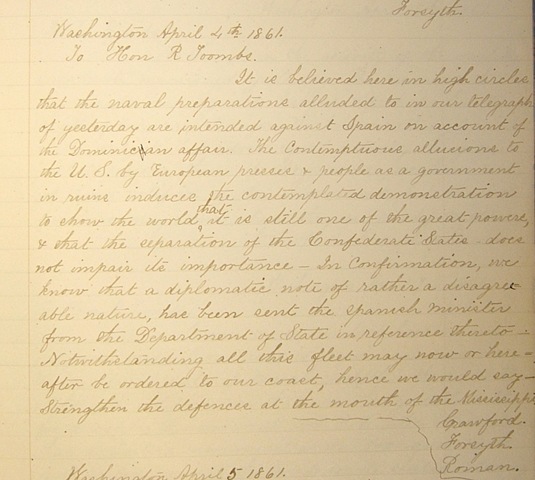
It is believed here in high circles that the naval preparations alluded to in our telegraph of yesterday are intended against Spain on account of the Dominican affair. The Contemptuous allusions to the U.S. by European presses & people as a government in ruins induces the contemplated demonstration to show the world that it is still one of the great powers, & that the separation of the Confederate States does not impair its importance—In Confirmation, we know that a diplomatic note of rather a disagreeable nature, has been sent the spanish minister from the Department of State in reference thereto—Notwithstanding all this fleet may now or hereafter be ordered to our coast, hence we would say—Strengthen the defences at the mouth of the Mississippi.

Crawford.

Forsyth.

Roman.


Citation:Commissioners of the Confederate States of America to the Government of the United States, letter book.Washington, D.C., Feb 27-April 11, 1861.AMS 811/20

April 3, 1861: Confederate Commissioners to Robert Toombs

During March and April 1861, after seven states had seceded and formed the Confederate States of America but before war broke out, Confederate Secretary of State Robert Toombs appointed Martin J. Crawford, John Forsyth, and A.B. Roman as Commissioners of the Confederate States to Washington, DC. Their purpose was to seek diplomatic recognition from the United States and negotiate peace—at least for a while. Central to the question of peace or war was whether the United States would continue to retain claim over federal forts located in the southern states that had seceded, including Fort Pickens in Florida and Fort Sumter in South Carolina. This item is transcribed from a letter book maintained by J.T. Pickett, secretary to the commissioners, containing copies of 72 letters, dispatches, and telegrams sent and received by the commissioners from the time of their appointment to the demand for the evacuation of Fort Sumter. 

 AMs 811-20 p207 Confederate Letter Book 4-3-1861 telegram edited


AMs 811-20 p209 Confederate Letter Book 4-3-1861 telegram p2


Transcript:

Washington April 3rd 1861.

To Hon R Toombs.

Much activity to-day in the war & navy depts—It is said the “Minnesota at Boston has been ordered to the mouth of the Mississippi—“Powhattan” suddenly put in Commission to Sail next week—four companies now here, three artillery—one sappers & miners ordered to New York—Report says these movements have reference to the San Domingo question—“Pawnee” will not be ready for sea until Saturday—Our intermediary says—they dare not deceive him, as they knew we don’t rely upon them, but upon him.

Crawford.

Roman.

Forsyth.

Citation:Commissioners of the Confederate States of America to the Government of the United States, letter book.Washington, D.C., Feb 27-April 11, 1861.AMS 811/20

April 2, 1861: Robert Toombs to Confederate Commissioners

During March and April 1861, after seven states had seceded and formed the Confederate States of America but before war broke out, Confederate Secretary of State Robert Toombs appointed Martin J. Crawford, John Forsyth, and A.B. Roman as Commissioners of the Confederate States to Washington, DC. Their purpose was to seek diplomatic recognition from the United States and negotiate peace—at least for a while. Central to the question of peace or war was whether the United States would continue to retain claim over federal forts located in the southern states that had seceded, including Fort Pickens in Florida and Fort Sumter in South Carolina. This item is transcribed from a letter book maintained by J.T. Pickett, secretary to the commissioners, containing copies of 72 letters, dispatches, and telegrams sent and received by the commissioners from the time of their appointment to the demand for the evacuation of Fort Sumter. 

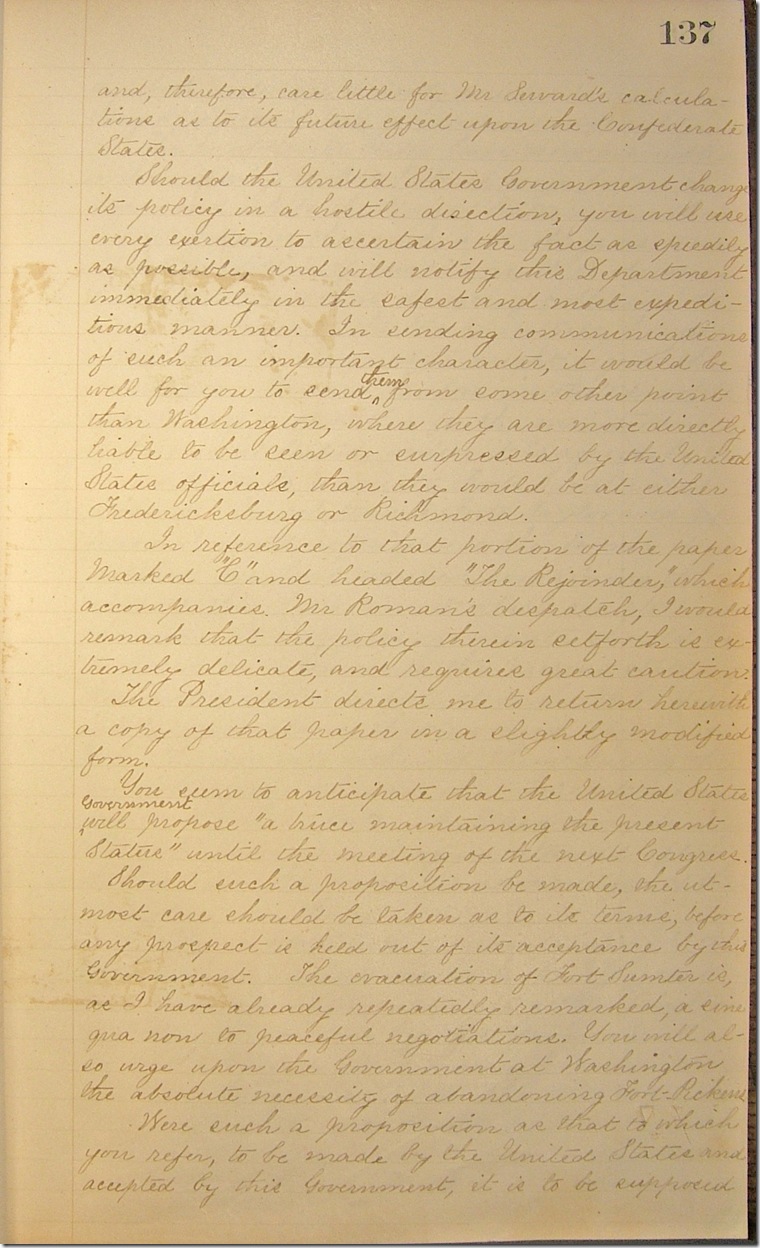
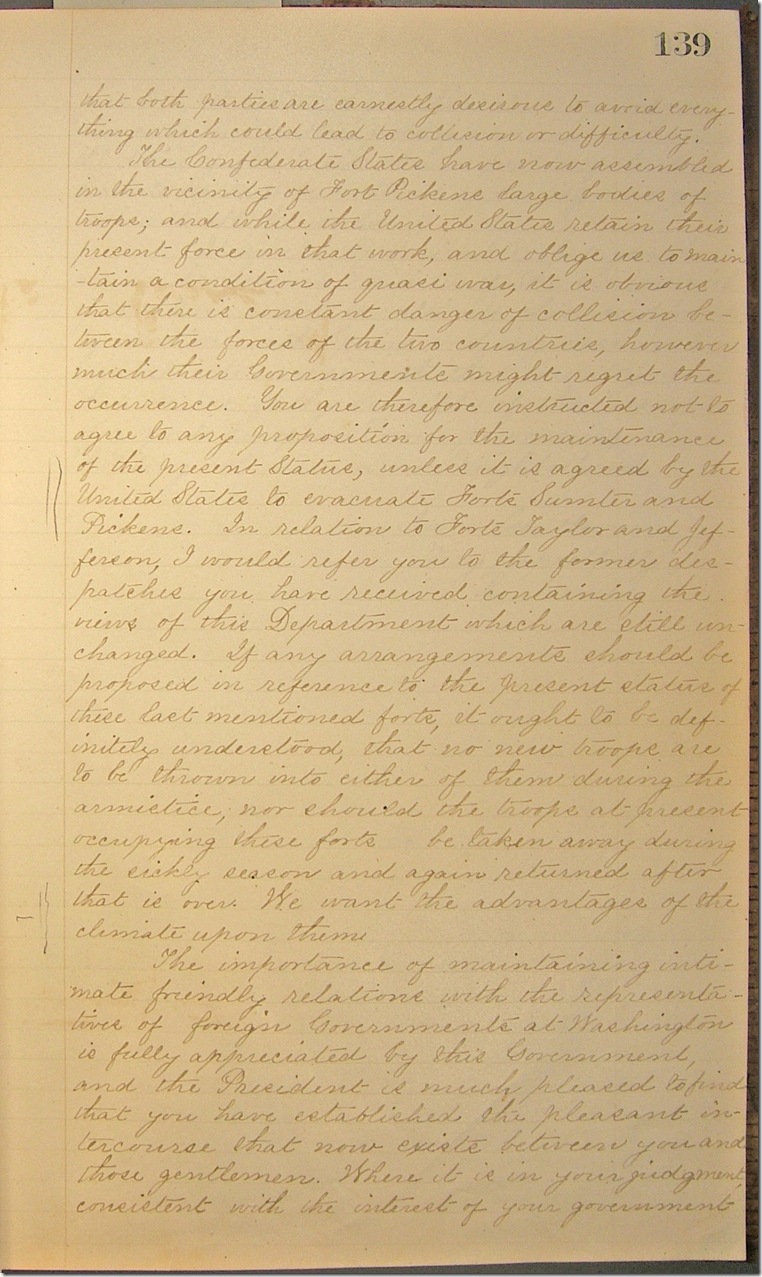
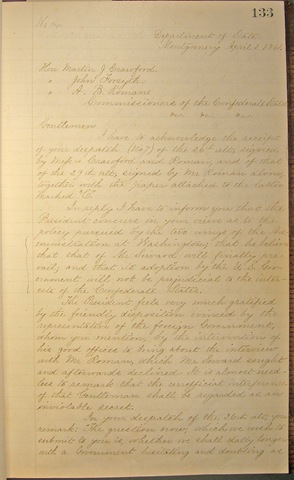
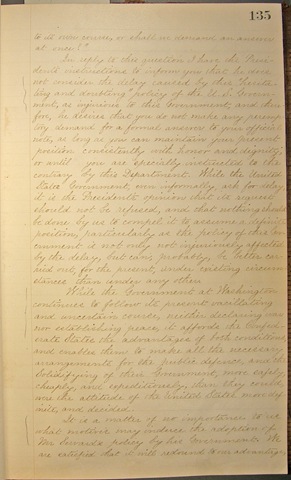
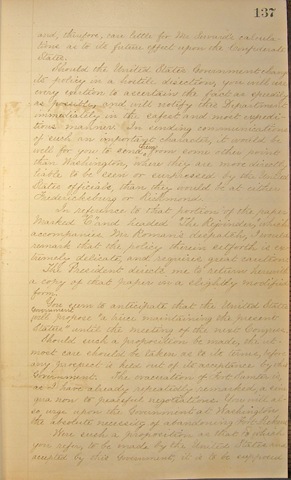
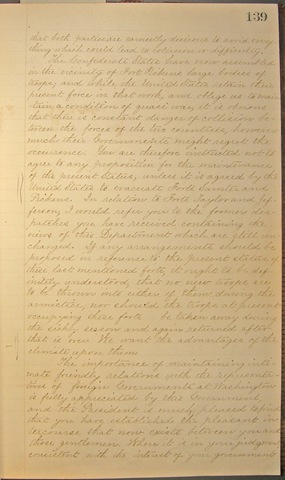
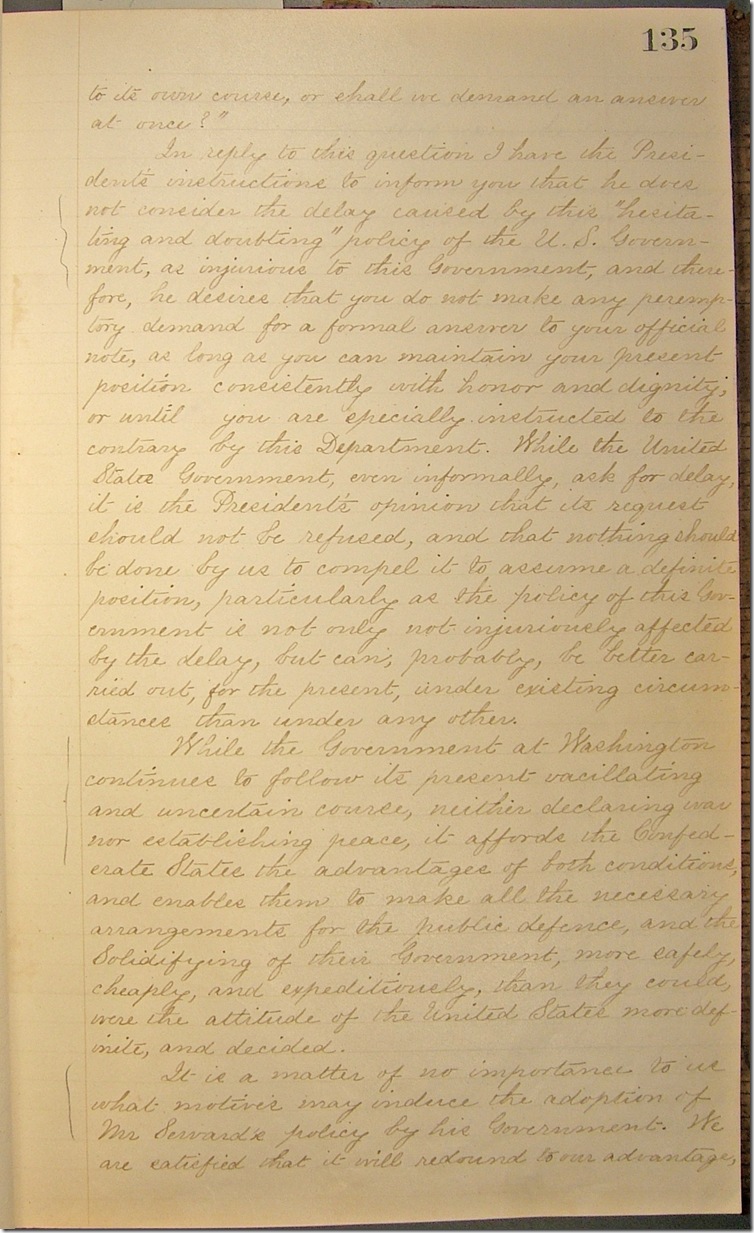
 AMs 811-20 p133 Confederate Letter Book 4-2-1861 edited AMs 811-20 p135 Confederate Letter Book 4-2-1861 p2 edited AMs 811-20 p137 Confederate Letter Book 4-2-1861 p3 edited AMs 811-20 p139 Confederate Letter Book 4-2-1861 p4 edited

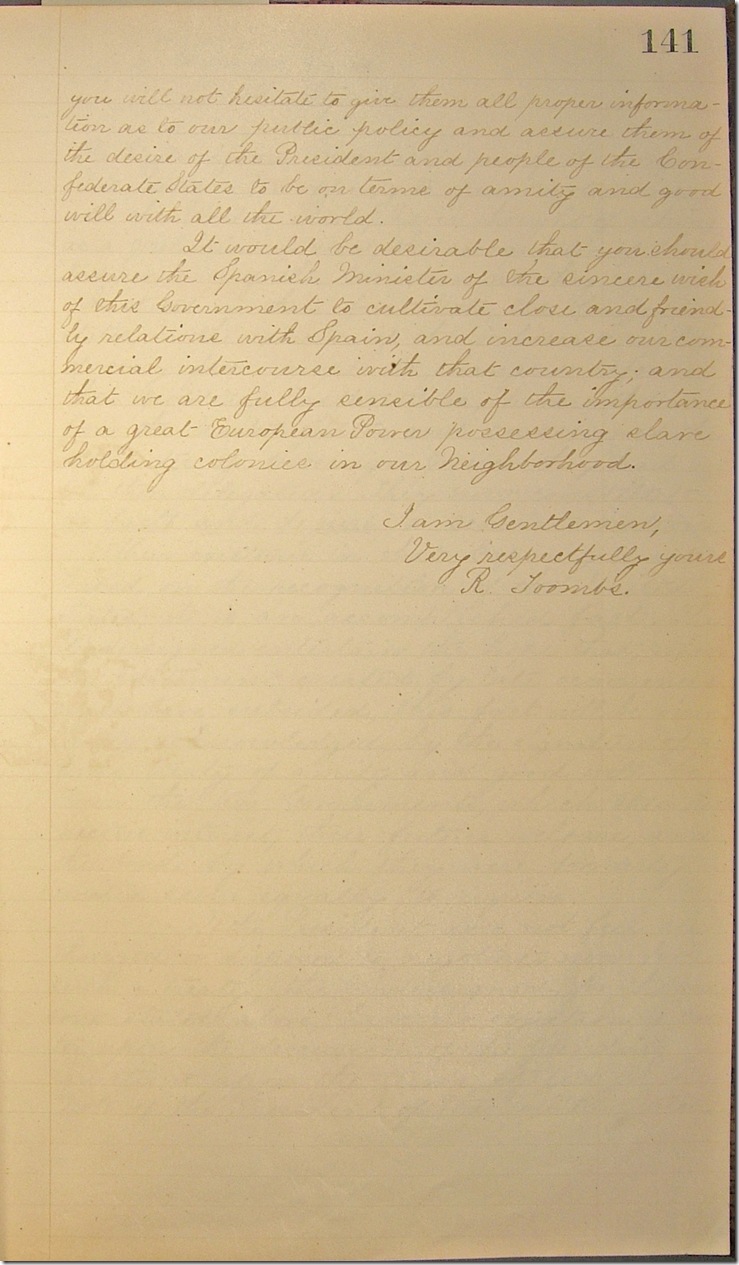
AMs 811-20 p141 Confederate Letter Book 4-2-1861 p5 edited

Transcript (excerpt):

No 2.

Department of State.

Montgomery April 2 1861

Hon Martin J Crawford.

“ John Forsyth.

“ A. B. Roman.

Commissioners of the Confederate States.

&c. &c. &c.

Gentlemen

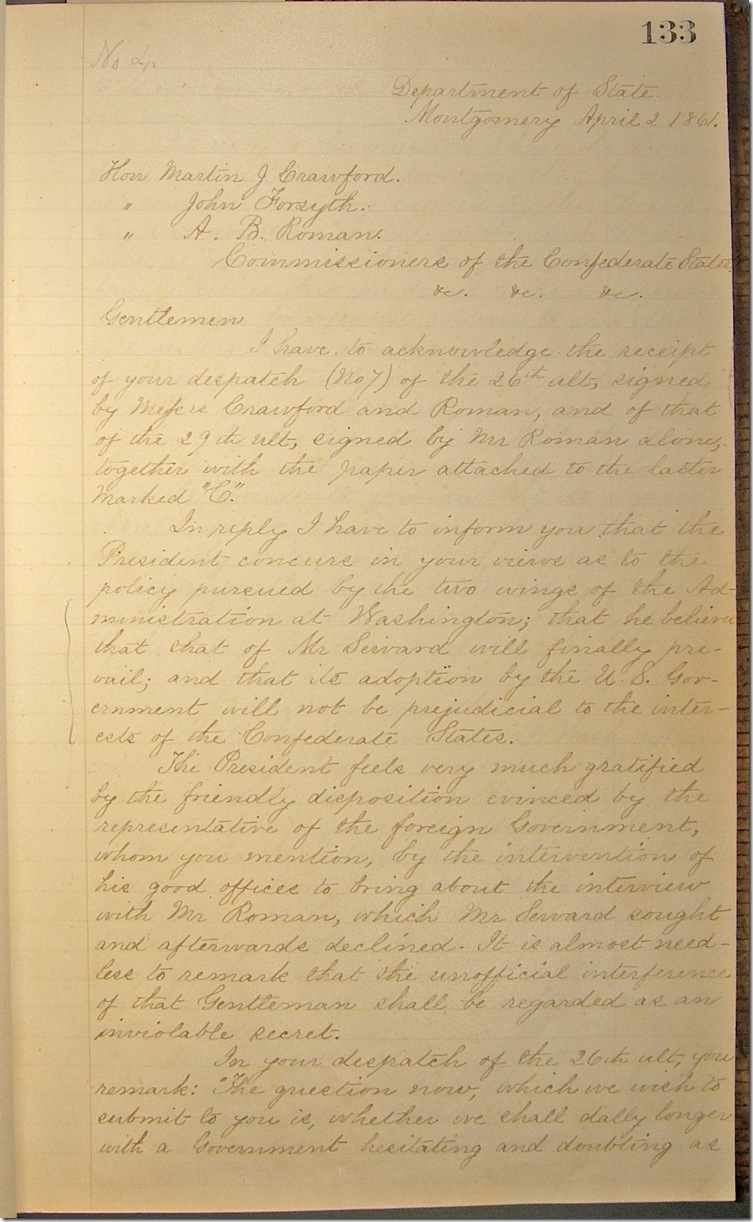
I have to acknowledge the receipt of your dispatch (No 7) of the 26th ult, signed by Messrs Crawford and Roman, and of that of the 29th ult, signed by Mr Roman alone, together with the paper attached to the latter marked “C.”

[…]

The President feels very much gratified by the friendly disposition evinced by the representative of the foreign Government, whom you mention, by the intervention of his good offices to bring about the interview with Mr Roman, which Mr Seward sought and afterwards declined. It is almost needless to remark that the unofficial interference of that Gentleman shall be regarded as an inviolable secret.

In your dispatch of the 26th ult, you remark: “The question now, which we wish to submit to you is, whether we shall dally longer with a Government hesitating and doubting as to its own course, or shall we demand an answer at once?”

In reply to this question I have the President’s instructions to inform you that he does not consider the delay caused by this “hesitating and doubting” policy of the U.S. Government, as injurious to this Government, and therefore, he desires that you do not make any peremptory demand for a formal answer to your official note, as long as you can maintain your present position consistently with honor and dignity, or until you are especially instructed to the contrary by this Department. […]

While the Government at Washington continues to follow its present vacillating and uncertain course, neither declaring war nor establishing peace, it affords the Confederate State the advantages of both conditions, and enables them to make all the necessary arrangement for the public defence, and the Solidifying of their Government, more safely, cheaply, and expeditiously, than they could, were the attitude of the United State more definite, and decided.

[…]

You seem to anticipate that the United States Government will propose “a truce maintaining the present Status” until the meeting of the next Congress.

[…]

Were such a proposition as that to which you refer, to be made by the United States and accepted by this Government, it is to be supposed that both parties are earnestly desirous to avoid everything which could lead to collision or difficulty.

The Confederate States have now assembled in the vicinity of Fort Pickens large bodies of troops; and while the United States retain their present force in that work, and oblige us to maintain a condition of quasi war, it is obvious that there is constant danger of collision between the forces of the two countries, however much their governments might regret the occurrence. You are therefore instructed not to agree to any proposition for the maintenance of the present Status, unless it is agreed by the United States to evacuate Forts Sumter and Pickens. […]

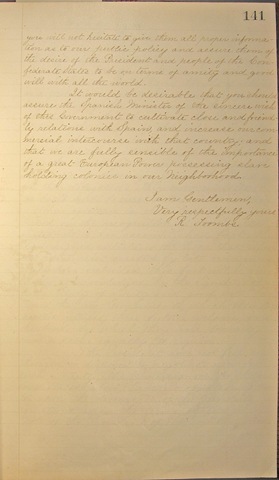
The importance of maintaining intimate friendly relations with the representatives of foreign Governments at Washington is fully appreciated by this Government, and the President is much pleased to find that you have established the pleasant intercourse that now exists between you and those gentlemen. Where it is in your judgment consistent with the interests of your government you will not hesitate to give them all proper information as to our public policy and assure them of the desire of the President and people of the Confederate States to be on terms of amity and good will with all the world.

[…]

I am Gentlemen,

Very Respectfully yours

R. Toombs.

Citation:Commissioners of the Confederate States of America to the Government of the United States, letter book.Washington, D.C., Feb 27-April 11, 1861.AMS 811/20

April 1, 1861: Martin Crawford to Robert Toombs

During March and April 1861, after seven states had seceded and formed the Confederate States of America but before war broke out, Confederate Secretary of State Robert Toombs appointed Martin J. Crawford, John Forsyth, and A.B. Roman as Commissioners of the Confederate States to Washington, DC. Their purpose was to seek diplomatic recognition from the United States and negotiate peace—at least for a while. Central to the question of peace or war was whether the United States would continue to retain claim over federal forts located in the southern states that had seceded, including Fort Pickens in Florida and Fort Sumter in South Carolina. This item is transcribed from a letter book maintained by J.T. Pickett, secretary to the commissioners, containing copies of 72 letters, dispatches, and telegrams sent and received by the commissioners from the time of their appointment to the demand for the evacuation of Fort Sumter.
 

 AMs 811-20 p145 Confederate Letter Book 4-1-1861 edited AMs 811-20 p147 Confederate Letter Book 4-1-1861 p2 edited AMs 811-20 p149 Confederate Letter Book 4-1-1861 p3 edited AMs 811-20 p151 Confederate Letter Book 4-1-1861 p3 edited AMs 811-20 p153 Confederate Letter Book 4-1-1861 p4 edited AMs 811-20 p155 Confederate Letter Book 4-1-1861 p5 edited

 AMs 811-20 p157 Confederate Letter Book 4-1-1861 p6 edited

Transcript (excerpt):

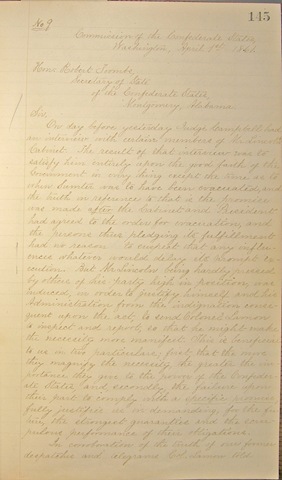
No 9

Commission of the Confederate States

Washington, April 1st 1861.

Hon: Robert Toombs,

Secretary of State

of the Confederate States,

Montgomery, Alabama.

Sir,

[…]

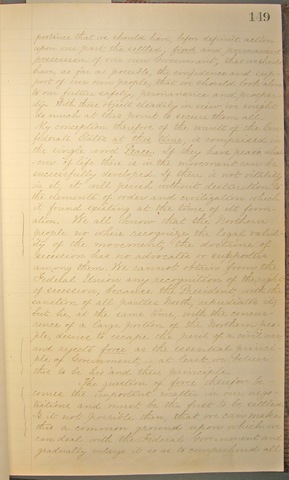
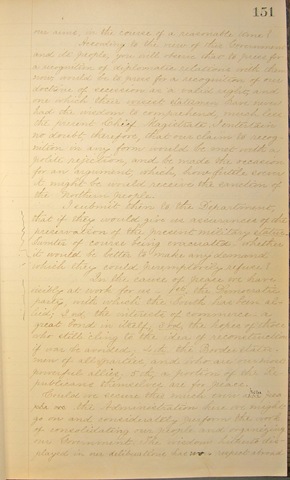
I have thought it of the highest importance that we should have, before definite action upon our part, the settled, fixed and permanent possession of our own Government; that we should have, as far as possible, the confidence and support of our own people; that we should look alone to our future safety, permanence and prosperity. With these objects steadily in view we might do much at this point to secure them all. My conception therefore of the wants of the Confederate States at this time, is comprised in the single word Peace. If they have peace whatever of life there is in the movement can be successfully developed. If there is not vitality in it, it will perish without destruction to the elements of order and civilization which it found existing at the time of its formation. We all know that the Northern people no where recognize the legal validity of the movement, the doctrine of secession has no advocates or supporters among them. We cannot obtain from the Federal union any recognition of the right of secession, because the President, with the sanction of all parties North, repudiates it; but he, at the same time, with the concurrence of a large portion of the Northern people, desires to escape the peril of a civil war, and rejects force as the essential principle of Government,—at least we believe this to be his and their principle.

The question of force therefore becomes the important matter in our negotiations and must be the first to be settled. Is it not possible then, that we can make this a common ground upon which we can deal with the Federal Government and gradually enlarge it so as to comprehend all our aims, in the course of a reasonable time?

[…]

In the cause of peace we have visibly at work for us—1st, the Democratic party, with which the South has been allied; 2nd, the interests of commerce—a great bond in itself; 3rd, the hopes of those who still cling to the idea of reconstruction if war be avoided; 4th, The Border states, men of all parties, and who are our most powerful allies; 5th, a portion of the Republicans themselves are for peace.

[…]

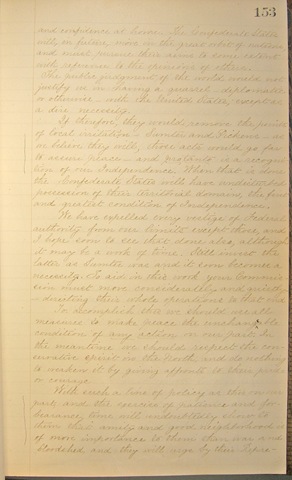
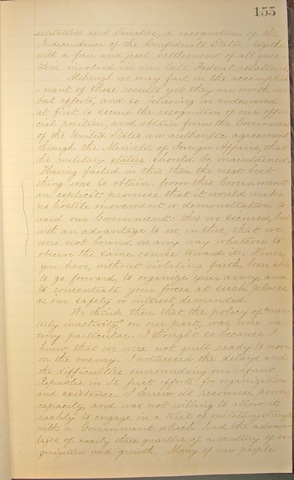
We think then that the policy of “masterly inactivity,” on our part, was wise in every particular. I thought so because I knew that we were not quite ready to move on the enemy. I witnessed the delays and the difficulties surrounding our infant Republic in its first efforts for organization and existence. I knew its resources, power, capacity, and was not willing to allow it rashly to engage in a trial of military strength with a Government which had the advantages of nearly three quarters of a century of organization and growth. Many of our people rely upon the forbearance of the United States.

This will not do now; that time has passed, and whatsoever be done in future must be done only as we are able to maintain it at the cannon’s mouth.

[…]

I am, Very Respectfully,

Sir,

Your most obt: svt:

Martin J Crawford

Citation:Commissioners of the Confederate States of America to the Government of the United States, letter book.Washington, D.C., Feb 27-April 11, 1861.AMS 811/20