July 4, 1861: Hopkins’ New Orleans Songbook

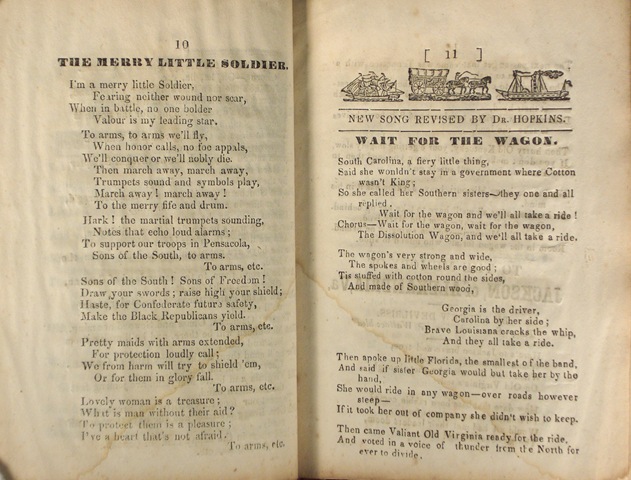
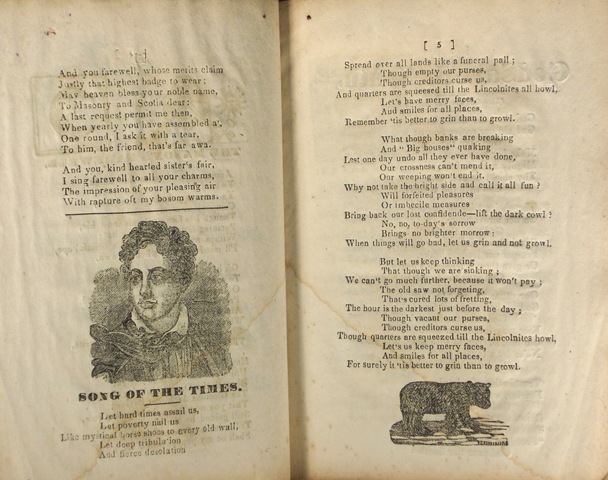
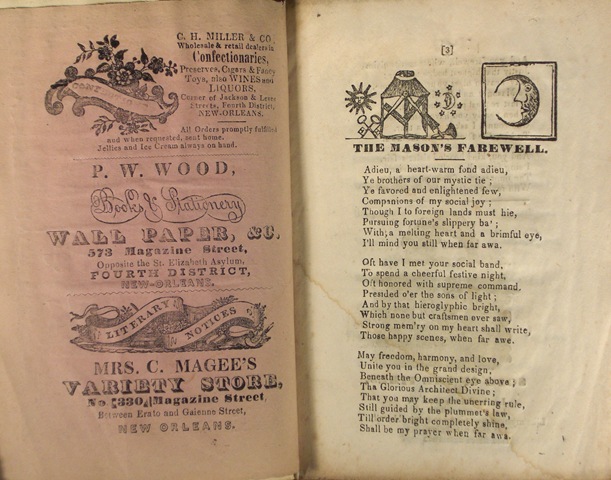
The Civil War spawned an outpouring of music of all kinds, from sentimental parlor songs, to stirring patriotic tunes, to soldier’s campfire ditties. Hopkins’ 5 Cent Song-book, probably published in 1861, was one of the three most popular “songsters” carried by Confederate troops.


A 861h p7


Citation: Hopkins’ New Orleans 5 cent song-book. [New Orleans, John Hopkins, 1861?] A 861h

July 3, 1861: Henry Warner to John Warner

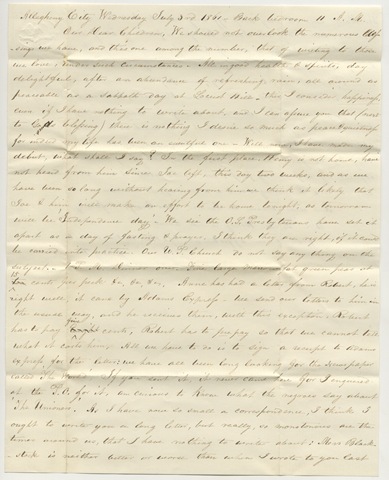
Henry and Mary Warner lived in Allegheny City, Pennsylvania, now part of Pittsburgh. They are the great-grandparents of poet Marianne Moore.  By the 1860s they had three surviving children:  John, Henry, and Annie. Their letters to John, a Presbyterian minister living in Gettysburg, are preserved as part of Marianne Moore’s family papers.
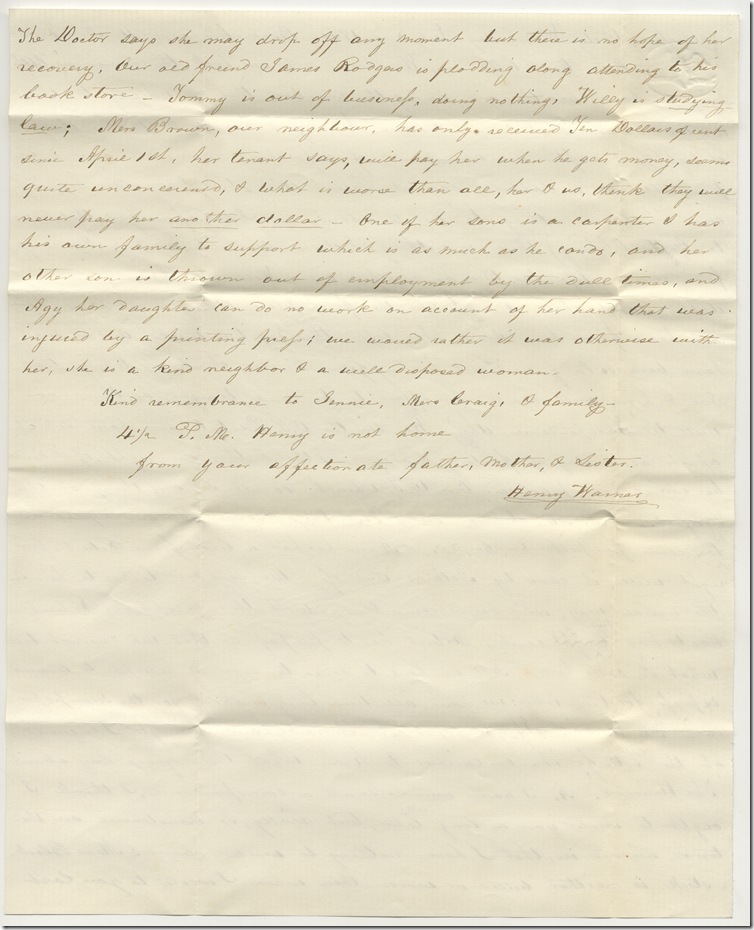
Moore VI-4-20 p1 Henry and Mary Warner to Children 7-3-61

Moore VI-4-20 p2 Henry and Mary Warner to Children 7-3-61


Transcript:


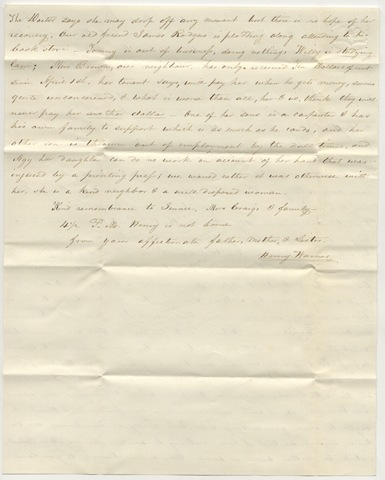
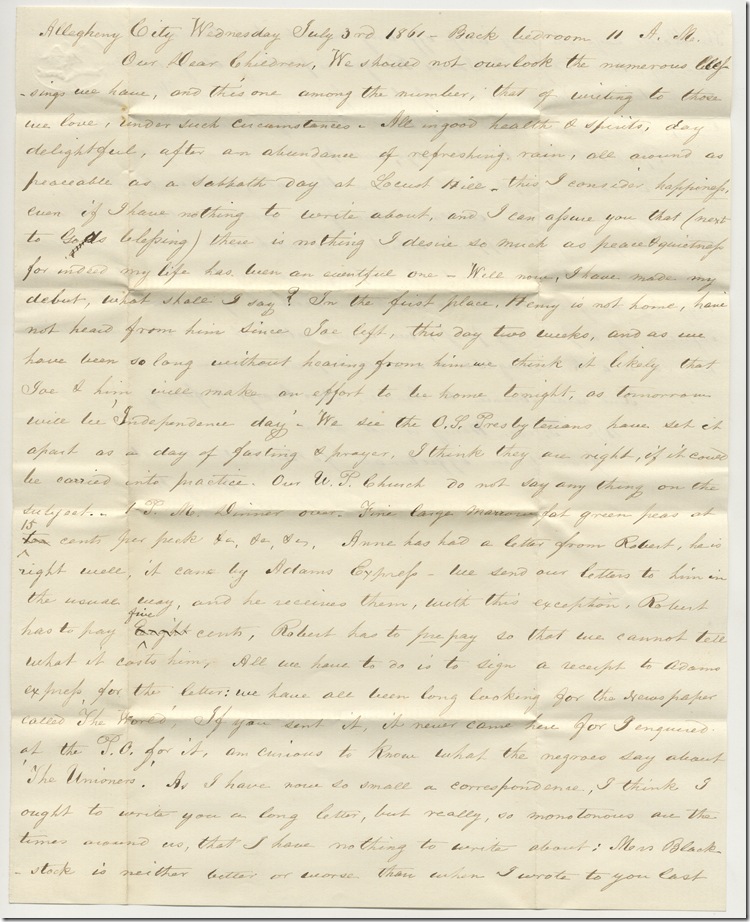
Allegheny City Wednesday July 3rd 1861—Back bedroom 11 A.M.


Our Dear Children, We should now overlook the numerous blessings we have, and this one among the number, that of writing to those we love, under such circumstances—All in good health & spirits, day delightful, after an abundance of refreshing rain, all around as peaceable as a Sabbath day at Locust Hill—this I consider happiness, even if I have nothing to write about, and I can assure you that (next to Gods blessing) there is nothing I desire so much as peace & quietness for indeed my life has been an eventful one—Well now, I have made my debut, what shall I say? In the first place, Henry is not home, have not heard from him since Joe left, this day two weeks, and as we have been so long without hearing from him we think it likely that Joe & him will make an effort to be home tonight, as tomorrow will be ‘Independence day’. We see the O.L. Presbyterians have set it apart as a day of fasting & prayer, I think they are right, if it could be carried into practice. Our U.P. Church do not say any thing on the subject. 1 P.M. Dinner over. Fine large marrow fat green peas at 15 cents per pack &c&c&c. Anne has had a letter from Robert, he is right well, it came by Adams Express—we send our letters to him in the usual way, and he receives them, with this exception. Robert has to pay five cents, Robert has to prepay so that we cannot tell what it costs him. All we have to do is to sign a receipt to Adams Express, for the letter: we have all been long looking for the Newspaper called ‘The World,’ If you sent it, it never came here for I enquired at the P.O. for it, am curious to know what the negroes say about ‘The Unioners.’ As I have now so small a correspondence, I think I ought to write you a long letter, but really, so monstrous are the times around us, that I have nothing to write about: Mrs Blackstock is neither better or worse than when I wrote to you last. The Doctor says she may drop off any moment but there is no hope of her recovery. Our old friend James Rodgers is plodding along attending to his book store—Tommy is out of business, doing nothing, Willy is studying law; Mrs Brown, our neighbour, has only received Ten Dollars of rent since April 1st, her tenant says, will pay her when he gets money, seems quite unconcerned, & what is worse than all, her & us, think they will never pay her another dollar—One of her sons is a carpenter & has his own family to support which is as much as he can do, and her other son is thrown out of employment by the dull times, and Agy her daughter can do no work on account of her hand that was injured by a printing press; we would rather it was otherwise with her, she is a kind neighbor & a well disposed woman.

Kind remembrance to Jennie, Mrs Craig, & family—

4 ½ P.M. Henry is not home

From your affectionate father, mother & sister

Henry Warner

Citation: Henry Warner, autograph letter signed to John Riddle Warner. Allegheny City [Pittsburgh], 3 July 1861. Moore VI:04:20
July 2, 1861: Hopkins’ New Orleans Songbook

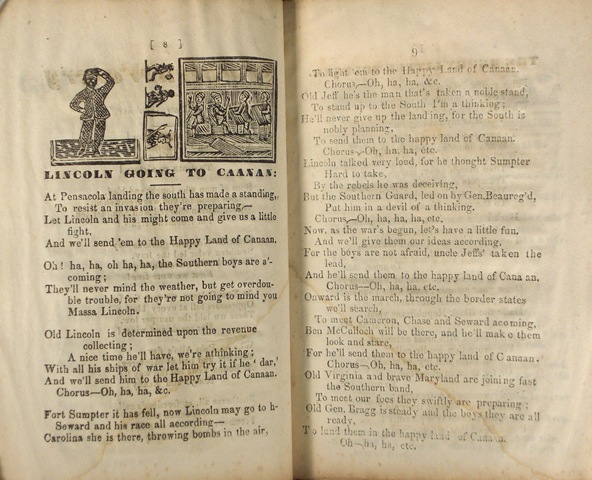
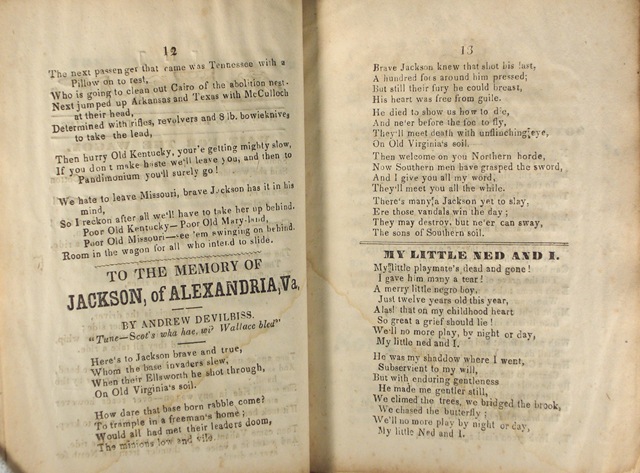
The Civil War spawned an outpouring of music of all kinds, from sentimental parlor songs, to stirring patriotic tunes, to soldier’s campfire ditties. Hopkins’ 5 Cent Song-book, probably published in 1861, was one of the three most popular “songsters” carried by Confederate troops.


A 861h p6


Citation: Hopkins’ New Orleans 5 cent song-book. [New Orleans, John Hopkins, 1861?] A 861h

July 1, 1861: Hopkins’ New Orleans Songbook

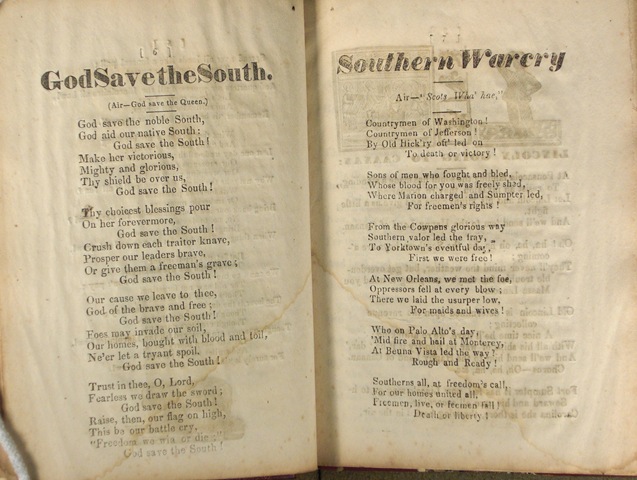
The Civil War spawned an outpouring of music of all kinds, from sentimental parlor songs, to stirring patriotic tunes, to soldier’s campfire ditties. Hopkins’ 5 Cent Song-book, probably published in 1861, was one of the three most popular “songsters” carried by Confederate troops.


A 861h p5


Citation: Hopkins’ New Orleans 5 cent song-book. [New Orleans, John Hopkins, 1861?] A 861h

June 30, 1861: Hopkins’ New Orleans 5 Cent Songbook

The Civil War spawned an outpouring of music of all kinds, from sentimental parlor songs, to stirring patriotic tunes, to soldier’s campfire ditties. Hopkins’ 5 Cent Song-book, probably published in 1861, was one of the three most popular “songsters” carried by Confederate troops.

A 861h p4


Citation: Hopkins’ New Orleans 5 cent song-book. [New Orleans, John Hopkins, 1861?] A 861h

June 28, 1861: John Henry Brown’s Journal

John Henry Brown was a painter of portrait miniatures, living and working in Philadelphia. He had met Lincoln in August of 1860 when he was commissioned to paint Lincoln’s portrait for a supporter, but although Brown liked Lincoln personally, he did not agree with Republican policies.

1861-06-28

Transcript:

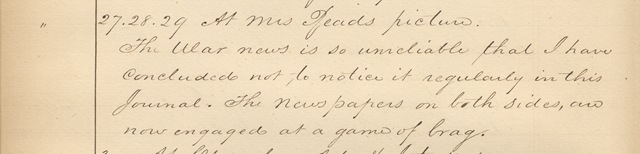
At Mrs Reeds picture.

The War news is so unreliable that I have concluded not to notice it regularly in this journal. The newspapers on both sides are now engaged at a game of brag.


Citation: John Henry Brown, autograph journal/account book. Philadelphia, 1844-1890. AMs 574/14.1

June 27, 1861: Hopkins’ New Orleans 5 Cent Songbook

The Civil War spawned an outpouring of music of all kinds, from sentimental parlor songs, to stirring patriotic tunes, to soldier’s campfire ditties. Hopkins’ 5 Cent Song-book, probably published in 1861, was one of the three most popular “songsters” carried by Confederate troops.

 A 861h p3


Citation: Hopkins’ New Orleans 5 cent song-book. [New Orleans, John Hopkins, 1861?] A 861h

June 26, 1861: Hopkins New Orleans 5 Cent Songbook

The Civil War spawned an outpouring of music of all kinds, from sentimental parlor songs, to stirring patriotic tunes, to soldier’s campfire ditties. Hopkins’ 5 Cent Song-book, probably published in 1861, was one of the three most popular “songsters” carried by Confederate troops.


A 861h p2


Citation: Hopkins’ New Orleans 5 cent song-book. [New Orleans, John Hopkins, 1861?] A 861h

June 25, 1861: Anne Warner Armstrong to Jennie Craig Warner

Jennie Craig Warner was the grandmother of the poet Marianne Moore and during the Civil War, she lived in Gettysburg, Pennsylvania. Anne Warner Armstrong was his sister-in-law; at the beginning of the war she was living in Tennessee with her husband. These letters are preserved as part of Marianne Moore’s family papers. 

 Moore VI-4-19 p1 Anne to her sister 6-25-61 Moore VI-4-19 p2 Anne to her sister 6-25-61 Moore VI-4-19 p3 Anne to her sister 6-25-61 Moore VI-4-19 p4 Anne to her sister 6-25-61

Tuesday June 25

Dear Sister

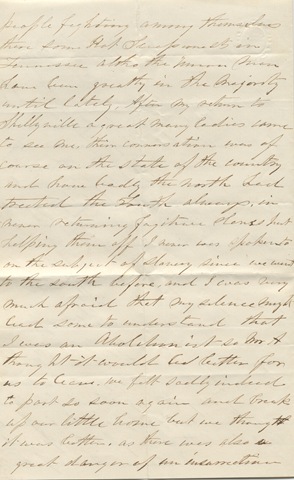
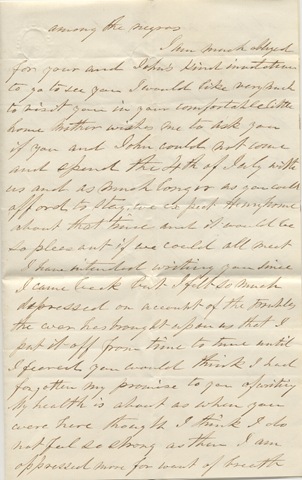
I received John’s letter of the 18th for which I am very grateful to you both I am glad you are both well, and I hope you are also contented and happy. Contentment is one of the greatest blessings which we can enjoy in this changing world it sometimes pleases our Heavenly father to withhold this from some of His children either on account of their unworthiness or that they may fix their affections upon things above where disappointments do not come. I received a letter from Mr A. on last Saturday morning by Adams Express as the mails between this and S. are stopped he does not say any thing about how times are there as I suppose he is afraid lest his letters may be opened there is great danger there of the people fighting among themselves there [illeg.] some Secessionists in Tennessee altho the Tenn men have been greatly in the majority until lately. After my return to Shelbyville a great many ladies came to see me, their conversation was of course on the state of the country and how badly the North had treated the South always, in never returning fugitive slaves but helping them off I never was spoken to on the subject of slavery since we went to the South before, and I was very much afraid that my silence might lead some to understand that I was an Abolitionist so Mr A thought it would be better for us to leave. We felt sadly indeed to part so soon again and break up our little home but we thought it was better, as there was also great danger of an insurrection among the negros.

I am much obliged for your and John’s kind invitation to go to see you I would like very much to visit you in your comfortable little home Mother wishes me to ask you if you and John could not come and spend the 4th of July with us and as much longer as you could afford to stay. We expect Henry home about that time and it would be so pleasant if we could all meet.

I have intended visiting you since I came back but I felt so much depressed on account of the troubles the war has brought upon us that I put it off from time to time until I feared you would think I had forgotten my promise to you of writing. My health is about as when you were here though I think I do not feel so strong as then. I am oppressed more for want of breath at times more than I was then

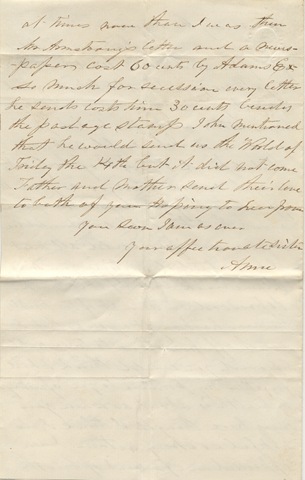
Mr Armstrong is better and a newspaper cost 60 cents by Adams Ex—so much for secession every letter he sends costs him 30 cents besides the package stamp John mentioned that he would send us the World of Friday the Kid but it did not come

Father and Mother send their love to both of you Hoping to hear from you soon as I am ever

Your affectionate sister

Anne


Citation: Anne Warner Armstrong, autograph letter signed to Jennie Craig Warner.  25 June 1861. Moore VI:04:19

June 24, 1861: Philadelphia Inquirer

top

Transcript (excerpt):

Page 1, Upper Half

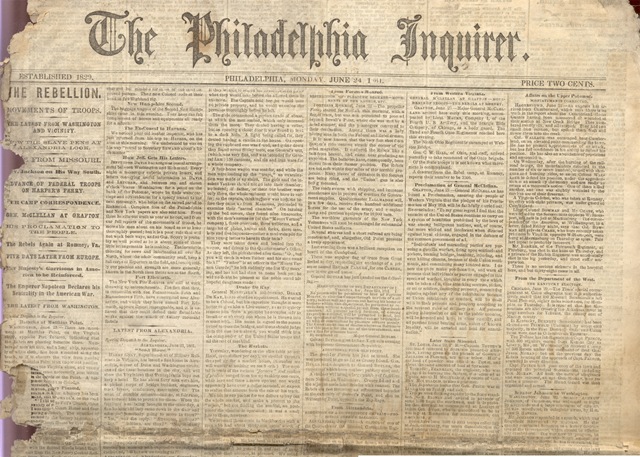
How Jeff. Gets His Letters

Jefferson Davis has a regular postal arrangement between Washington and Richmond. Every night a messenger collects private letters, and letters conveying useful information to Davis and Letcher, and between ten and eleven o’clock leaves Washington for a point on the bank of the Potomac, where he finds water carriage and conveniences for a speedy transit to the next messenger, who helps on the sacred parcel to Richmond. Complete files of the Philadelphia and New York papers are also sent him. From these he sifts out truth as near as he can, and from our full reports of the movements of troops, he moves his men about on his board so as to keep thoroughly posted; but it is a poor rule that will not work both ways, and so Gen. Scott is probably as well posted as he is about some of those little arrangements he is making. The insatiable thirsting for news and information all over the North, where the whole community read, keep, a full corps of Reporters in the field, and consequently our position and strength are more generally known in the North than theirs are in the South.

Citation: Philadelphia Inquirer. 24 June 1861. Gift of Steven and Susan Raab. AN .P5546