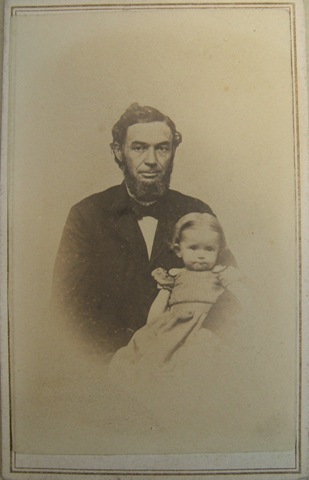
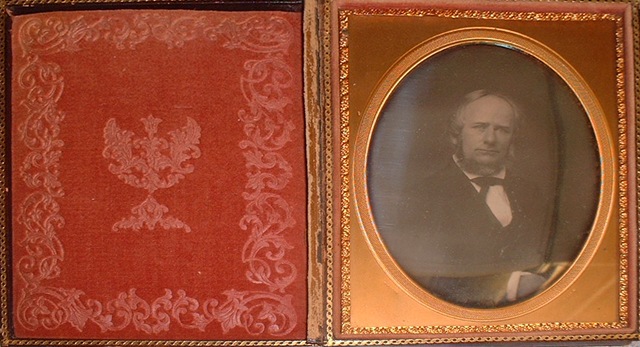
November 5, 1861: Daguerreotype, Probably of Thomas Powers

20010007001

This daguerreotype by James McClees was taken to assist miniature painter John Henry Brown in painting a portrait. Brown frequently utilized photography, freeing both parties from tedious sittings.  Brown’s account book names the sole male sitter in 1861 (if the list is complete) as Thomas H. Powers, Esq., making him the likely subject.  A wealthy industrialist, Powers, with others in the city’s elite, was reported by the Philadelphia Tribune in 1871 as protesting race riots that resulted in the murders of several of Philadelphia’s black residents.


Citation:  James E. McClees (1821-1887), portrait of male sitter. Daguerreotype; leather case. Philadelphia, 1861. 2001.7

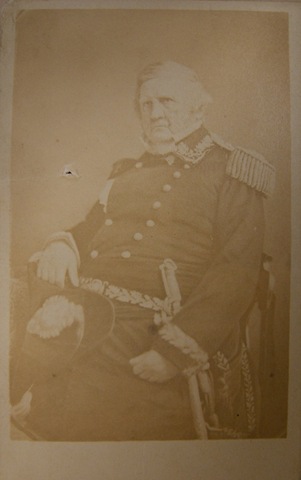
November 1, 1861: Photograph of Winfield Scott

This photograph is undated, but November 1, 1861 marks Scott’s retirement from the service.

20060677

Sticker on the reverse: “EARLES’/GALLERIES & LOOKING  GLASS/WARE-ROOMS/ 816/ CHESTNUT ST/PHILADELPHIA”


Citation: Earles Galleries, carte de visite of Winfield Scott. Philadelphia, n.d. Library Storage: Rush V:42:03          

October 22, 1861: Photograph of Jenny Craig Warner

20064638

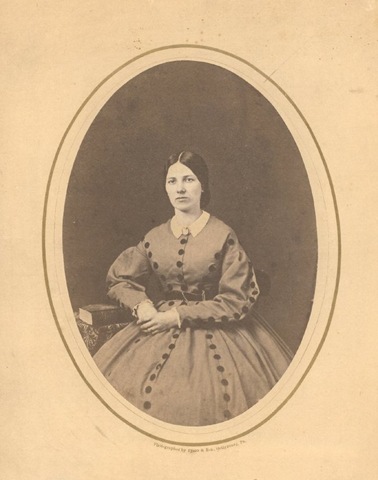
Jennie Craig Warner lived in Gettysburg with her husband Rev. John Riddle Warner. She would be the grandmother of poet Marianne Moore. The photograph is undated, but her hairstyle and bodice suggest a date in the early 1860s. Jennie would die of typhoid in 1863.


Citation: Unknown photographer, photograph of Jennie Craig Warner.  ca. 1860. Moore XII:01:12.                                                                                                                                                                                                                                

October 19, 1861: Home Importation for the Troops vs. Imports

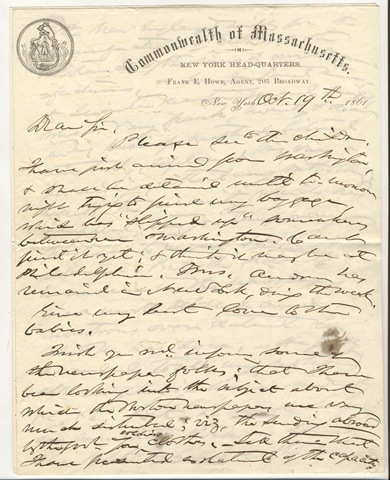
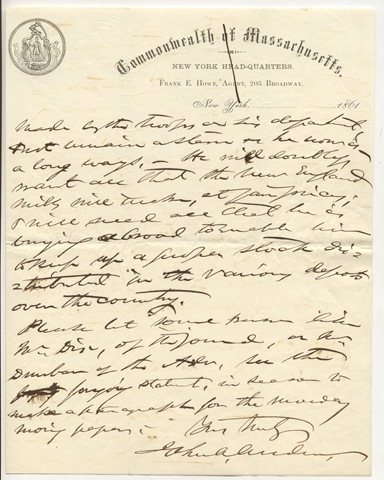
AMs 356-1 p1 John Andrew to unknown 300 dpi AMs 356-1 p2 John Andrew to unknown 300 dpi AMs 356-1 p3 John Andrew to unknown 300 dpi

Transcript:

New York Oct. 19th 1861

Dear Sir

Please see to the children. I have just arrived from Washington, & shall be detained until to-morrow night trying to  to find my baggage, which has “slipped up” somewhere between here & Washington. Cant find it yet; & think it may be at Philadelphia. Mrs. Andrew has remained in New York, during the week. Give my best love to the babies.

I wish you would inform some of the newspaper folks; that I have been looking into the subject about which the Northern newspapers are very much disturbed; viz. the sending abroad by the gov’t for soldiers clothes. Tell them that I have presented a statement of the capacity of the New England mills for the manufacture of these clothes, & the insistence of the views of our manufacturers of clothes and the substance of the views of our manufacturer or [illeg.] men to Quartermaster General Meigs, who is very frank, manly & clear in his business methods, listened attentively, explained his views & proceedings, without any withholding: regrets the necessity which has compelled him for temporary purposes to invest some money abroad. But the statements I have seen in the newspapers are a most absurd and monstrous over statement of what he has done. He fully acceded to all my notions of employing home manufacturing &c &c. But he must have an immediate stock on hand, & be kept ahead of the demands made by the troops on his department [& not] remain [astern?] [or he would] a long ways. He will doubtless want all that the New England mills will make, at fair prices; & will need all that he is buying abroad to enable him to keep up a proper stock distributed in the various depots over the country.

Please let some person like Wm Din of the Journal, or Mr. Dunbar of the Adv, see the foregoing statement, in order to make a letter agreeable for the Monday morn’g papers.

Yours Truly,

John A. Andrew

October 15, 1861: Portrait of Jennie Craig Warner

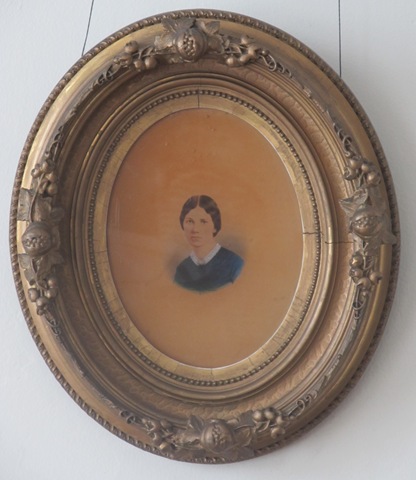
IMG_1609

Jennie Craig Warner lived in Gettysburg with her husband Rev. John Riddle Warner. She would be the grandmother of poet Marianne Moore. This portrait is undated, but her hairstyle and bodice suggest a date in the early 1860s. Jennie would die of typhoid in 1863.


Citation: Unknown artist, portrait of Jennie Craig Warner.  n.d. 2006.3007.1

October 12, 1861: Ambrotype of Jennie Craig Warner

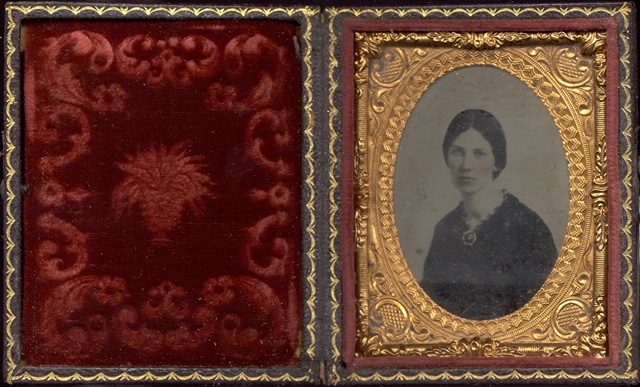
2006.7633  Jennie Craig Warner

Jennie Craig Warner lived in Gettysburg with her husband Rev. John Riddle Warner. She would be the grandmother of poet Marianne Moore. The photograph is undated, but her hairstyle and bodice suggest a date in the 50s or early 1860s. Jennie would die of typhoid in 1863.


Citation: Unknown photographer, ambrotype of Jennie Craig Warner.  n.d. 2006.7633

October 9, 1861: Henry and Mary Warner letter to John Warner

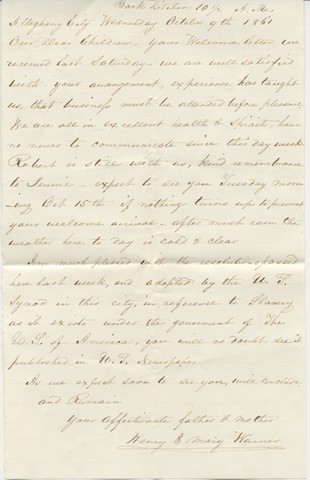
Henry and Mary Warner lived in Allegheny City, Pennsylvania, now part of Pittsburgh. They are the great-grandparents of poet Marianne Moore.  By the 1860s they had three surviving children:  John, Henry, and Anne. Their letters to John, a Presbyterian minister living in Gettysburg, are preserved as part of Marianne Moore’s family papers.
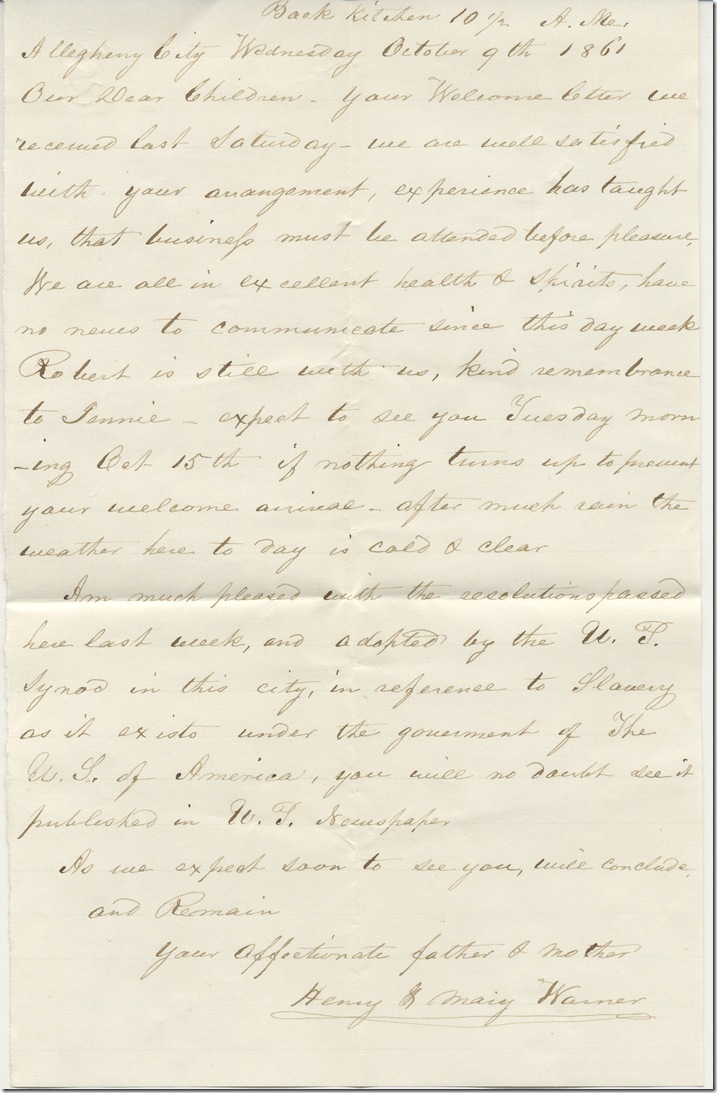
 

Moore VI-4-23 Henry and Mary Warner to Children 10-9-61

Transcript:

Back kitchen 10 ½ A.M.

Allegheny City Wednesday October 9th 1861

Our Dear Children—your Welcome letter we received last Saturday—we are all well satisfied with your arrangement, experience has taught us, that business must be attended before pleasure. We are all in excellent health & spirits, have no news to communicate since this day week. Robert is still with us, kind remembrance to Jennie—expect to see you Tuesday morning bet 15th if nothing turns up to prevent your welcome arrival—after much rain the weather here to day is cold & clear

Am much pleased with the resolutions passed here last week, and adopted by the U.P. Synod in this city, in reference to Slavery as it exists under the government of The U.S. of America, you will no doubt see it published in U.S. Newspaper

As we expect soon to see you, will conclude and Remain

Your affectionate father & mother

Henry & Mary Warner


Citation: Henry and Mary Warner, autograph letter signed to John Riddle Warner. Allegheny City [Pittsburgh], 9 October 1861. Moore VI:04:23
October 4, 1861: Abraham Lincoln Warrant to Affix Seal to Treaty

AMs 563-24_1

Transcript:

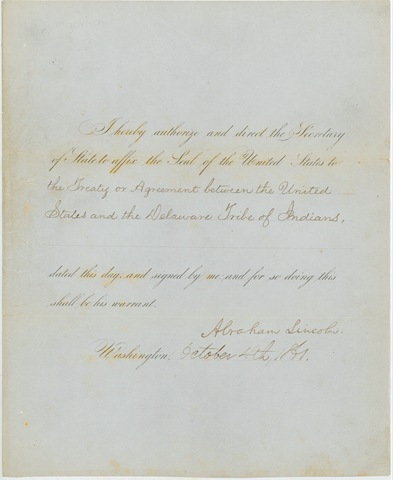
I hereby authorize and direct the Secretary of State to affix the Seal of the United States to the Treaty or Agreement between the United States and the Delaware Tribe of Indians, dated this day, and signed by me, and for so doing this shall be his warrant.

Abraham Lincoln

Washington, October 4th, 1861


Citation: United States. President (1861-1865 : Lincoln) Warrant. Washington, D. C., 4 October 1861. AMs 563/24.1