February 16, 1862: Telegram to Leonidas Polk

Pierre Gustave Toutant Beauregard was a Louisiana-born general of the Confederate States Army. He had graduated second in his class from West Point in 1838 and was an admirer of Napoleon. He achieved fame early in the Civil War for commanding the Fort Sumter bombardment and as the victor of the first battle of Manassas. He later served in the Western Theater (including Shiloh and Corinth), Charleston, and the defense of Richmond, but his career was hampered by friction with Jefferson Davis and other generals.

This is one of approximately 1000 military telegrams in P.G.T. Beauregard’s papers at the Rosenbach.
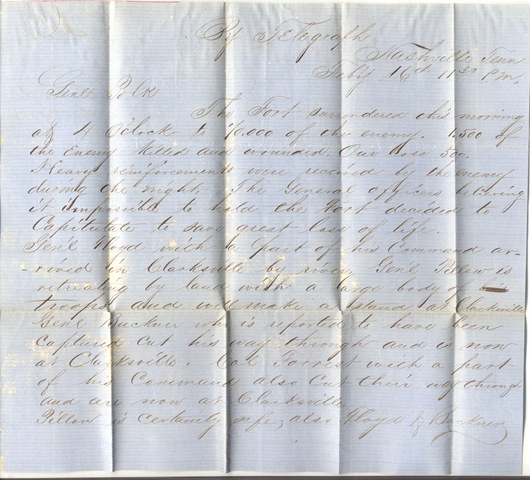
AMs 1168-11 1862-02-16


Transcript:

By Telegraph

Nashville Tenn

Feby 16th 11:30 PM

Genl Polk

The Fort surrendered this morning at 4 O’clock to 70,000 of the enemy. 1,500 of the Enemy killed and wounded. Our loss 500. Heavy reinforcement were received by the enemy during the night. The General officers believing it impossible to hold the Fort decided to Capitulate to save great loss of life.

Genl’ Floyd with a part of his Command arrived in Clarksville by river. Gen’l Pillow is retreating by land with a large body of troops and will make a stand at Clarksville. Genl Buckner who is reported to have been captured cut his way through and is now at Clarksville. Col. Forrest with a part of his Command also cut their way through and are now at Clarksville. Pillow is certainly safe, also Floyd & Buckner


Citation: Unknown author, telegram to Leonidas Polk. Nashville,16 February 1862. AMs 1168/11

February 14, 1861: John Henry Brown’s journal

John Henry Brown was a painter of portrait miniatures, living and working in Philadelphia. He had met Lincoln in August of 1860 when he was commissioned to paint Lincoln’s portrait for a supporter, but although Brown liked Lincoln personally, he did not agree with Republican policies.

1862-02-14

Transcript:

No painting.

Congress has passed a Treasury note bill with a clause making these notes a legal tender, another unconstitutional act.


Citation: John Henry Brown, autograph journal/account book. Philadelphia, 1844-1890. AMs 573/14.1

February 12, 1861: John Henry Brown’s Journal

John Henry Brown was a painter of portrait miniatures, living and working in Philadelphia. He had met Lincoln in August of 1860 when he was commissioned to paint Lincoln’s portrait for a supporter, but although Brown liked Lincoln personally, he did not agree with Republican policies.

1862-02-12

Transcript:

At Mr Shobers picture. The reported capture of Roanoke island by our troops has created great joy.


Citation: John Henry Brown, autograph journal/account book. Philadelphia, 1844-1890. AMs 573/14.1

February 11, 1862: John Henry Brown’s Journal

John Henry Brown was a painter of portrait miniatures, living and working in Philadelphia. He had met Lincoln in August of 1860 when he was commissioned to paint Lincoln’s portrait for a supporter, but although Brown liked Lincoln personally, he did not agree with Republican policies.

1862-02-11

Transcript:

At Mr Shobers picture.

Our troops have taken Fort Henry in Tennessee .


Citation: John Henry Brown, autograph journal/account book. Philadelphia, 1844-1890. AMs 573/14.1

January 30, 1862: Report of the Home Guard of the City of Philadelphia

A 862r 001

This pamphlet was published in 1862, but the exact date is uncertain.

Excerpt:

The assault upon Fort Sumpter and its subsequent capture in April last, awakened the loyal people of the North from their political lethargy, and disclosed to them the fact that rebellion was a reality, and not a menace.

The President of the United States issued his proclamation on the 15th of April, calling into activity 75,000 volunteers; and thereupon the Gov. of Pennsylvania ordered into service, among others, Major Gen. Patterson and the volunteer regiments of the First Division of Pennsylvania Militia. This requisition stripped Philadelphia of its organized military force; and the sense of insecurity which the departure of the troops of the First Division aroused, prompted the municipal authorities to encourage and direct the immediate organization of a special military force that would be adequate to the protection of the City, and that should not be liable to be withdrawn from it, except for its own defence upon any of the approaches thereto.

Citation: Report of Brigadier Gen’l A. J. Pleasonton, commanding the Home guard of the city of Philadelphia, to the Hon. Alexander Henry, mayor … for the year 1861. Philadelphia: Ringwalt & Brown, 1862. A 862r

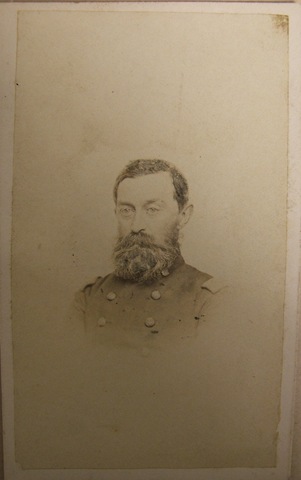
January 27, 1862: Unidentified Civil War Soldier

20060678

CORRECTION: Since this post was listed, we have determined that this is a photograph of Alexander Biddle. The citation below has been updated to reflect this.

Backstamp: “J. KOLBECK/S.E. Cor. 8th and Sansom Sts.,/Below Chestnut,/PHILADELPHIA.”

Citation: Joseph Kolbeck, carte de visite of Alexander Biddle. Philadelphia, ca. 1862? Rush V:42:03

January 24, 1862: Edwin Stanton to Charles Dana

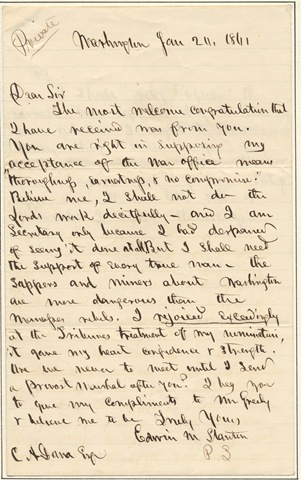
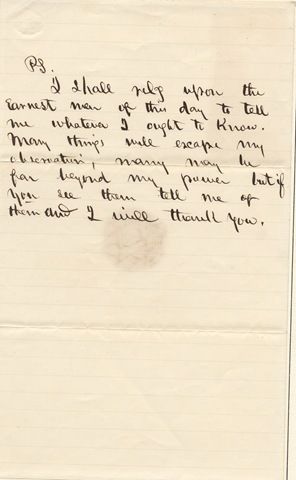
AMs 780-11 p1 Edwin M Stanton to Charles A Dana AMs 780-11 p2 Edwin M Stanton to Charles A Dana

Transcript:

Washington Jan 24, 1861 [i.e. 1862]

Dear Sir

The most welcome congratulations that I have received were from you. You are right in supposing my acceptance of the War office means “thoroughness, earnestness, & no compromise.” Believe me, I shall not do the Lords work deceitfully—and I am Secretary only because I had despaired of seeing it done at all. But I shall need the support of every true man—the sappers and miners about Washington are more dangerous than the Manassas rebels. I rejoiced exceedingly at the Tribunes treatment of my nomination, it gave my heart confidence & strength. Are we never to meet until I send a Provost Marshal after you? I beg you to give my compliments to Mr Greely & believe me to be Truly Yours

Edwin M Stanton

PS

I shall rely upon the earnest men of the day to tell me whatever I ought to know. Many things will escape my observation, many may be far beyond my power but if you see them tell me of them and I will thank you.

Citation: Edwin McMasters Stanton (1814-1869), autograph letter signed to Charles A. Dana. Washington, D.C., 24 Jan. 1861 [i.e., 1862]. AMs 780/11