August 26, 1864: U.S. Grant to George G. Meade

AMs 357-28 p1 U.S. Grant to George G. Meade

Transcript:

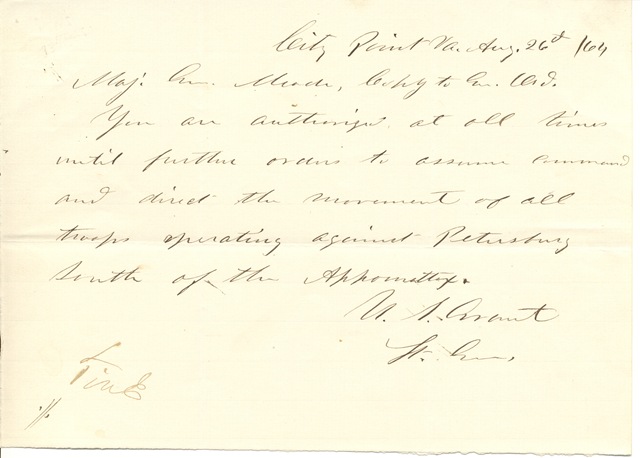
City Point Va. Aug. 26th / 64

Maj. Gen. Meade, Copy to Gen. Ord.

You are authorized at all times until further orders to assume command and direct the movement of all troops operating against Petersburg South of the Appomattox.

U. S. Grant

Lt. Gen.

Citation: Ulysses S. Grant (1822-1885), autograph letter signed to George G. Meade. City Point, Va., 26 August 1864. AMs 357/28

August 25, 1864: Henry and Mary Warner to John Warner

Henry and Mary Warner lived in Allegheny City, Pennsylvania, now part of Pittsburgh. They are the great-grandparents of poet Marianne Moore.  By the 1860s they had three surviving children:  John, Henry, and Anne. Their letters to John, a Presbyterian minister living in Gettysburg, are preserved as part of Marianne Moore’s family papers. 

 Moore VI-6-8 p1 letter to John from Henry and Mary 8-25-64 300 dpi Moore VI-6-8 p2 letter to John from Henry and Mary 8-25-64 300 dpi

Transcript:

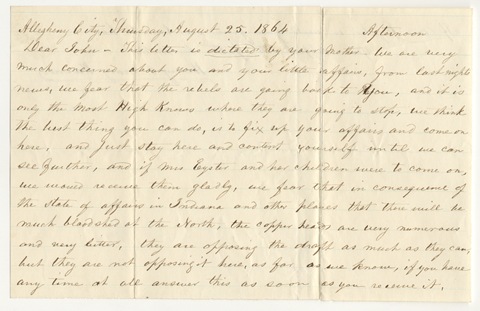
Allegheny City, Wednesday, August 25, 1864 Afternoon

Dear John, This letter is dictated by your Mother. We are very much concerned about you and your little affairs, from last nights news, we fear that the rebels are going back to you, and it is only the Most High knows where they are going to stop. We think the best thing you can do, is to fix up your affairs and come on here, and just stay here and content yourself until we can see further, and if Mrs Eyster and her children were to come on, we would receive them gladly, we fear that in consequence of the state of affairs in Indiana and other places that there will be much bloodshed at the North, the copper heads are very numerous and very bitter, they are opposing the draft as much as they can, but they are not opposing it here, as far as we know, if you have any time at all answer this as soon as you receive it. If Mrs Eyster is with you give our love to her

Your affectionate father & mother

Henry & Mary Warner


Citation: Henry and Mary Warner, autograph letter signed to John Riddle Warner.  Allegheny City [Pittsburgh],25 August 1864. Moore VI:06:8

August 24, 1864: Henry and Mary Warner to John Warner

Henry and Mary Warner lived in Allegheny City, Pennsylvania, now part of Pittsburgh. They are the great-grandparents of poet Marianne Moore.  By the 1860s they had three surviving children:  John, Henry, and Anne. Their letters to John, a Presbyterian minister living in Gettysburg, are preserved as part of Marianne Moore’s family papers. Moore VI-6-8 p1 letter to John from Henry and Mary 8-24-64 300 dpi Moore VI-6-8 p2 letter to John from Henry and Mary 8-24-64 300 dpi
Transcript:

Allegheny City, Wednesday, August 24, 1864 Afternoon

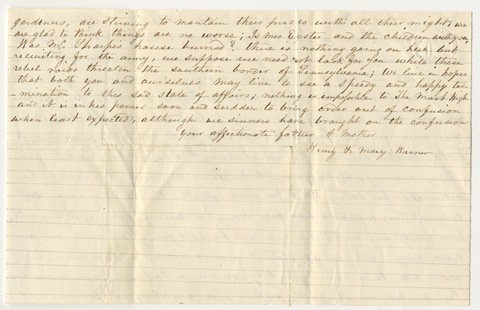
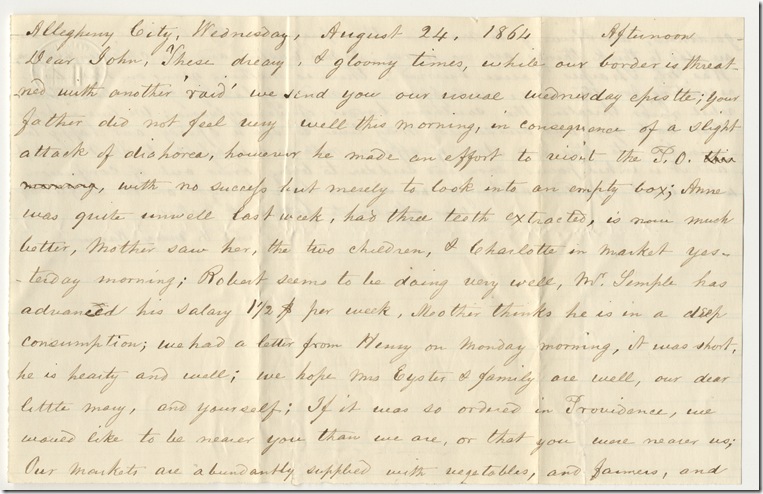
Dear John, These dreary, & gloomy times, while our border is threatened with another ‘raid’ we send you our usual Wednesday epistle; your father did not feel very well this morning, in consequence of a slight attack of diahorea, however he made an effort to visit the P.O., with no success but merely to look into an empty box; Anne was quite unwell last week, had three teeth extracted, is now much better. Mother saw her, the two children, & Charlotte in market yesterday morning; Robert seems to be doing very well. Mr. Temple has advanced his salary 1 ½ $ per week. Mother thinks he is in a deep consumption; we had a letter from Henry on Monday morning, it was short, he is hearty and well; we hope Mrs Eyster & family are well, our dear little Mary, and yourself; If it was so ordered in Providence, we would like to be nearer you than we are, or that you were nearer us; Our markets are abundantly supplied with vegetables, and farmers, and gardeners, are striving to ma[i]ntain their fruits with all their might; we are glad to think things are no worse; Is Mrs Eyster and the children with you, Was Mr. Sharpe’s house burned? There is nothing going on here but recruiting for the army, we suppose we need not look for you while these rebel raids threaten the southern border of Pennsylvania; We live in hopes that both you and ourselves may live to see a speedy and happy termination to this sad state of affairs; nothing is impossible to the Most High and it is in his power soon and sudden to bring order out of confusion when least expected, although we sinners have brought on the confusion

Your affectionate father & mother

Henry & Mary Warner


Citation: Henry and Mary Warner, autograph letter signed to John Riddle Warner.  Allegheny City [Pittsburgh],124 August 1864. Moore VI:06:8

August 23, 1864: New Book of Nonsense

The New Book of Nonsense was published for sale at the Philadelphia Great Central Sanitary Fair, which ran from June 7 to June 29, 1864. It is an imitation of Edward Lear’s Book of Nonsense.

A 864n New Book of Nonsense (42)


  Transcript:

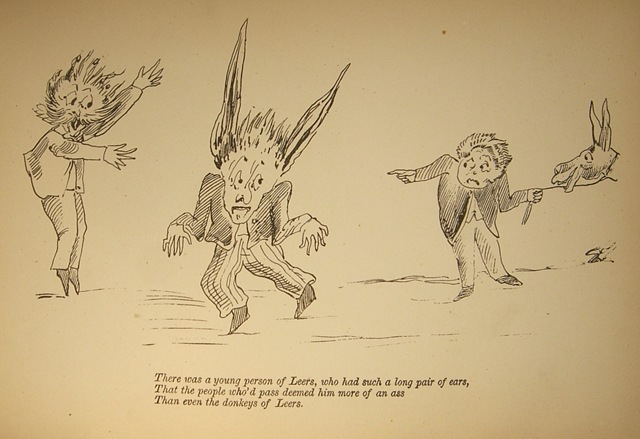
There was a young person of Leers,

Who had such a long pair of ears,

That the people who’d pass,

Deemed him more an ass,

Than even the donkeys of Leers.


Citation: The new book of nonsense. A contribution to the Great Central Fair in aid of the Sanitary Commission. Philadelphia: Ashmead & Evans, 1864. A 864n

August 22, 1864: New Book of Nonsense

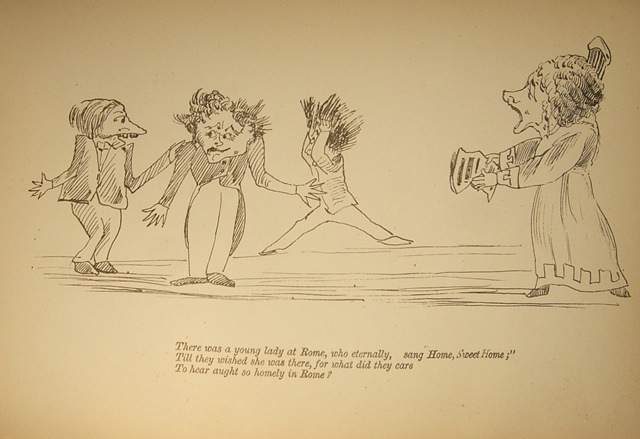
The New Book of Nonsense was published for sale at the Philadelphia Great Central Sanitary Fair, which ran from June 7 to June 29, 1864. It is an imitation of Edward Lear’s Book of Nonsense.

A 864n New Book of Nonsense (41)


  Transcript:

There was a young lady at Rome,

Who eternally, sang Home, Sweet Home;”

Till they wished she was there,

For what did they care

To hear aught so homely in Rome?


Citation: The new book of nonsense. A contribution to the Great Central Fair in aid of the Sanitary Commission. Philadelphia: Ashmead & Evans, 1864. A 864n

August 21, 1864: U.S. Grant to George Meade

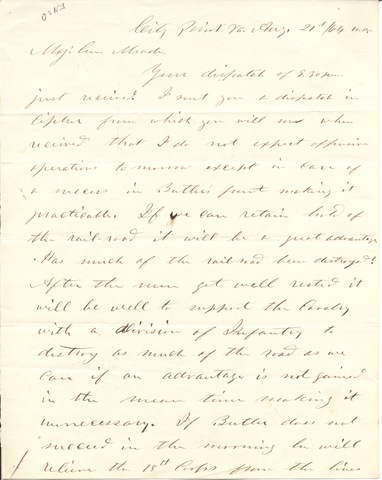
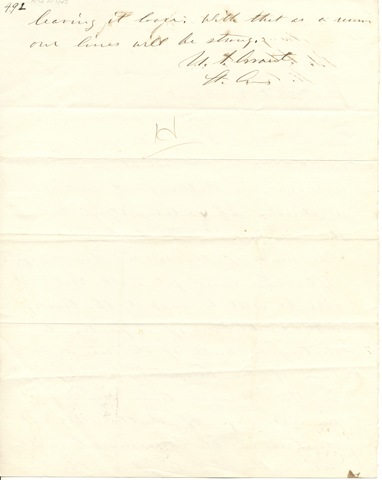
 AMs 357-25 p1 U.S. Grant to George G. Meade AMs 357-25 p2 U.S. Grant to George G. Meade

Transcript:

City Point Va. Aug. 21st / 64 10. am

Maj. Gen. Meade,

Your dispatch of 9.30 pm. just received. I sent you a dispatch in cipher from which you will use when received that I do not expect offensive operations tomorrow except in care of a success in Butler’s front making it practicable. If we can retain hold of the rail-road it will be a great advantage. Has much of the rail-road been destroyed? After the men get well rested it will be well to support the Cavalry with a division of Infantry to destroy as much of the road as we can if an advantage is not gained in the mean time making it unnecessary. If Butler does not succeed in the morning he will relieve the 18th Corps from the lines leaving it loose. With that as a reserve our lines will be strong.

U. S. Grant

Lt. Gen.

Citation: Ulysses S. Grant (1822-1885), autograph letter signed to George G. Meade. City Point, Va.,21 August [18]64. AMs 357/25.

August 20, 1864: Lee Telegram to Beauregard

Pierre Gustave Toutant Beauregard was a Louisiana-born general of the Confederate States Army. He had graduated second in his class from West Point in 1838 and was an admirer of Napoleon. He achieved fame early in the Civil War for commanding the Fort Sumter bombardment and as the victor of the first battle of Manassas. He later served in the Western Theater (including Shiloh and Corinth), Charleston, and the defense of Richmond, but his career was hampered by friction with Jefferson Davis and other generals.


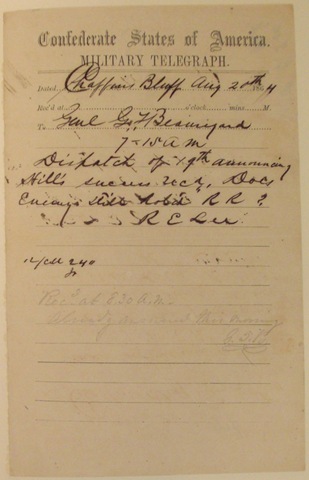
This telegram is from The Telegraphic History of the Civil War; a compiled album of telegrams to Beauregard from Davis, Lee, Johnston and others.

 Telegram 8-20-64 (1) Lee to Beauregard 10 mp  

Transcript:

Dated Chaffins Bluff Aug 20th 1864

To Genl G T Beauregard

7-15 am

Dispatch of 19th announcing Hill’s success rec’d. Does Enemy still hold RR?

R E Lee

12/cu 24


Rec’d at 8.30 a.m.

Already answered this morning

G.T.B.


Citation:Robert E. Lee (1807-1870), telegrams to G.T. Beauregard. 20 August 1864. In The telegraphic history of the Civil War, 1861-1865. AMs 434/16

August 19, 1864: U.S. Grant to Winfield Scott Hancock

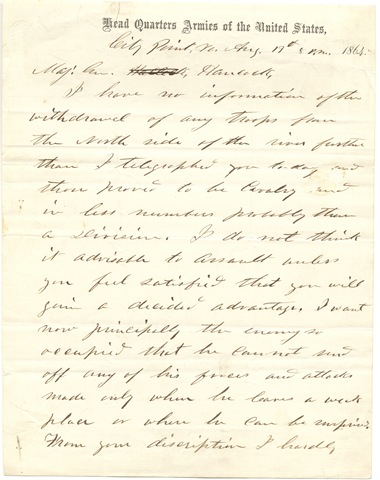
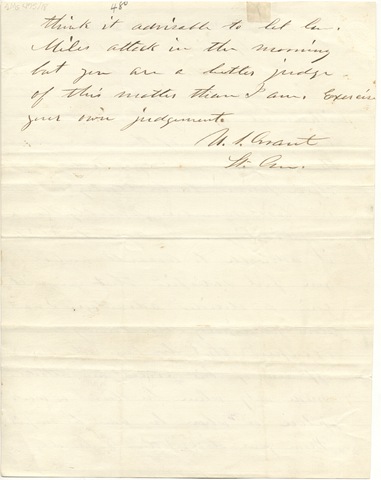
 AMs 475-18 p1 US Grant to Winfield Scott Hancock AMs 475-18 p2 US Grant to Winfield Scott Hancock

Transcript:

City Point, Va. Aug 19th 8 P.M. 1864

Maj. Gen. Hancock

I have no information of the withdrawal of any troops from the North side of the river further than I telegraphed you to-day and then proved to be Cavalry and in less numbers probably than a Division. I do not think it advisable to assault unless you feel satisfied that you will gain a decided advantage. I want now principally the enemy so occupied that he cannot send off any of his forces and attacks made only when he leaves a weak place or when he can be surprised. From your description I hardly think it advisable to let Gen. Miles attack in the morning but you are a better judge of this matter than I am. Exercise your own judgment.

U.S. Grant

Lt. Gen.


Citation: Grant, Ulysses S. (Ulysses Simpson), 1822-1885.ALS, 1864 Aug. 19, City Point, Va., to Winfield Scott Hancock.AMs 475/18

August 18, 1864: Lee Telegram to Beauregard

Pierre Gustave Toutant Beauregard was a Louisiana-born general of the Confederate States Army. He had graduated second in his class from West Point in 1838 and was an admirer of Napoleon. He achieved fame early in the Civil War for commanding the Fort Sumter bombardment and as the victor of the first battle of Manassas. He later served in the Western Theater (including Shiloh and Corinth), Charleston, and the defense of Richmond, but his career was hampered by friction with Jefferson Davis and other generals.


This telegram is from The Telegraphic History of the Civil War; a compiled album of telegrams to Beauregard from Davis, Lee, Johnston and others.

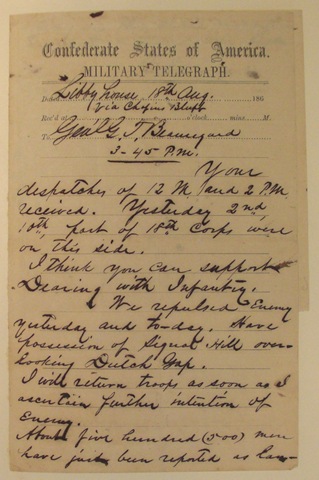
   Telegram 8-18-64 (2) Lee to Beauregard 10 mp

Transcript:

Dated Libby house 18th Aug. 186

Via Chafins Bluff

To Gen’l G. T. Beauregard

3-45 P.M.

Your dispatches of 12 M and 2 P.M. received. Yesterday 2nd, 10th, part of 18th corps were on this side.

I think you can support Dearing with Infantry.

We repulsed Enemy yesterday and to-day. Have possession of Signal Hill over-looking Dutch Gap.

I will return troops as I ascertain further intention of Enemy.

About five hundred (500) more have just been reported as landing on this side river from transport & moved our left.

R. E. Lee

74/collect 1480


Citation:Robert E. Lee (1807-1870), telegrams to G.T. Beauregard. 18 August 1864. In The telegraphic history of the Civil War, 1861-1865. AMs 434/16

August 17, 1864: Henry and Mary Warner to John Warner

Henry and Mary Warner lived in Allegheny City, Pennsylvania, now part of Pittsburgh. They are the great-grandparents of poet Marianne Moore.  By the 1860s they had three surviving children:  John, Henry, and Anne. Their letters to John, a Presbyterian minister living in Gettysburg, are preserved as part of Marianne Moore’s family papers.
 

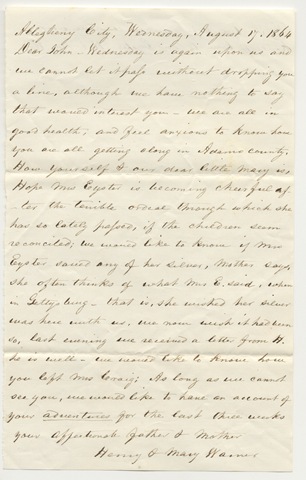
  Moore VI-6-8 p1 letter to John from Henry and Mary 8-17-64 300 dpi Moore VI-6-8 p2 letter to John from Henry and Mary 8-17-64 300 dpi

Transcript:

Allegheny City, Wednesday, August 17, 1864

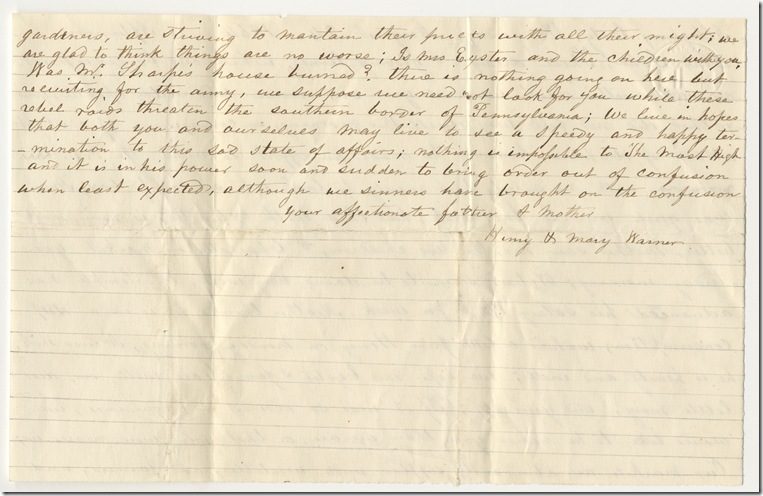
Dear John, Wednesday is again upon us and we cannot let it pass without dropping you a line, although we have nothing to say that would interest you. We are all in good health; and feel anxious to know how you are all getting along in Adams county. How yourself & our dear little Mary is. Hope Mrs Eyster is becoming cheerful after the terrible ordeal through which she has so lately passed, if the children seem reconciled; we would like to know if Mrs Eyster saved any of her silver, Mother says, she often thinks of what Mrs E. said, when in Gettysburg – that is, she wished her silver was here with us, we now wish it had been so. Last evening we received a letter from H. he is well – we would like to know how you left Mrs Craig; As long as we cannot see you, we would like to have an account of your adventures for the last three weeks

Your affectionate father & mother

Henry & Mary Warner

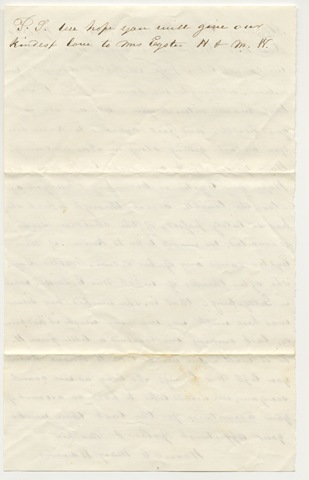
P.S. We hope you will give our kindest love to Mrs Eyster H & M.W.


Citation: Henry and Mary Warner, autograph letter signed to John Riddle Warner.  Allegheny City [Pittsburgh],17 August 1864. Moore VI:06:8