June 24, 1862: John Timothy Trezevant telegram to Thomas Jordan

Pierre Gustave Toutant Beauregard was a Louisiana-born general of the Confederate States Army. He had graduated second in his class from West Point in 1838 and was an admirer of Napoleon. He achieved fame early in the Civil War for commanding the Fort Sumter bombardment and as the victor of the first battle of Manassas. He later served in the Western Theater (including Shiloh and Corinth), Charleston, and the defense of Richmond, but his career was hampered by friction with Jefferson Davis and other generals.

This is one of approximately 1000 military telegrams in P.G.T. Beauregard’s papers at the Rosenbach.

AMs 1168-11 1862-06-24 (Large)

  Transcript:

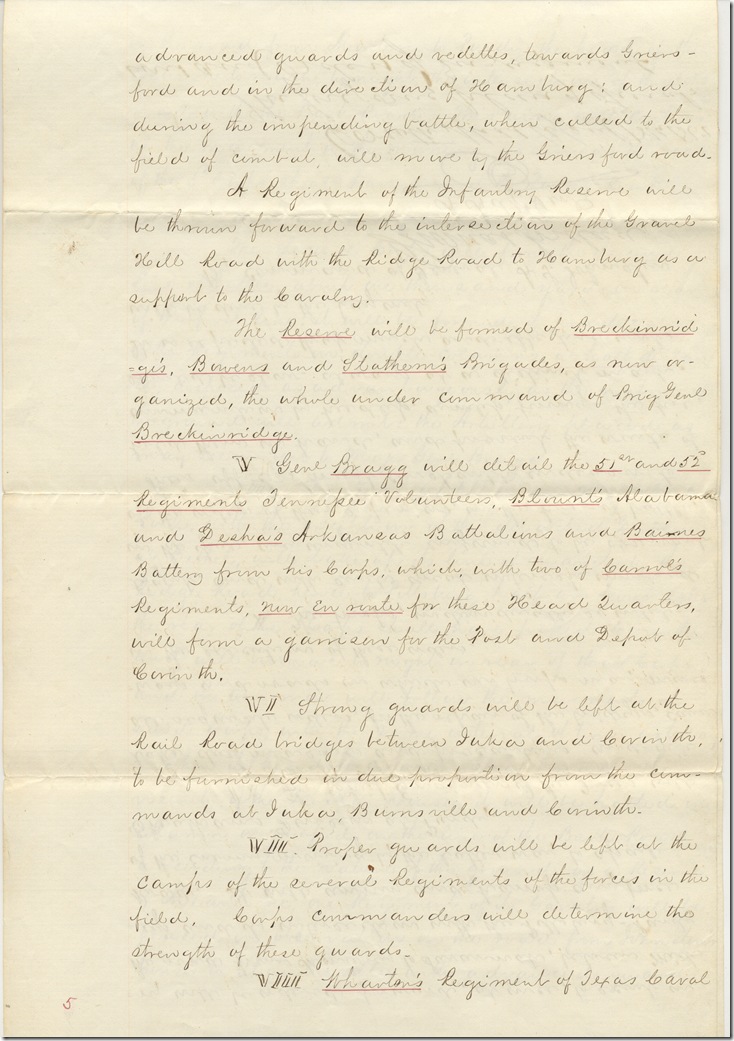
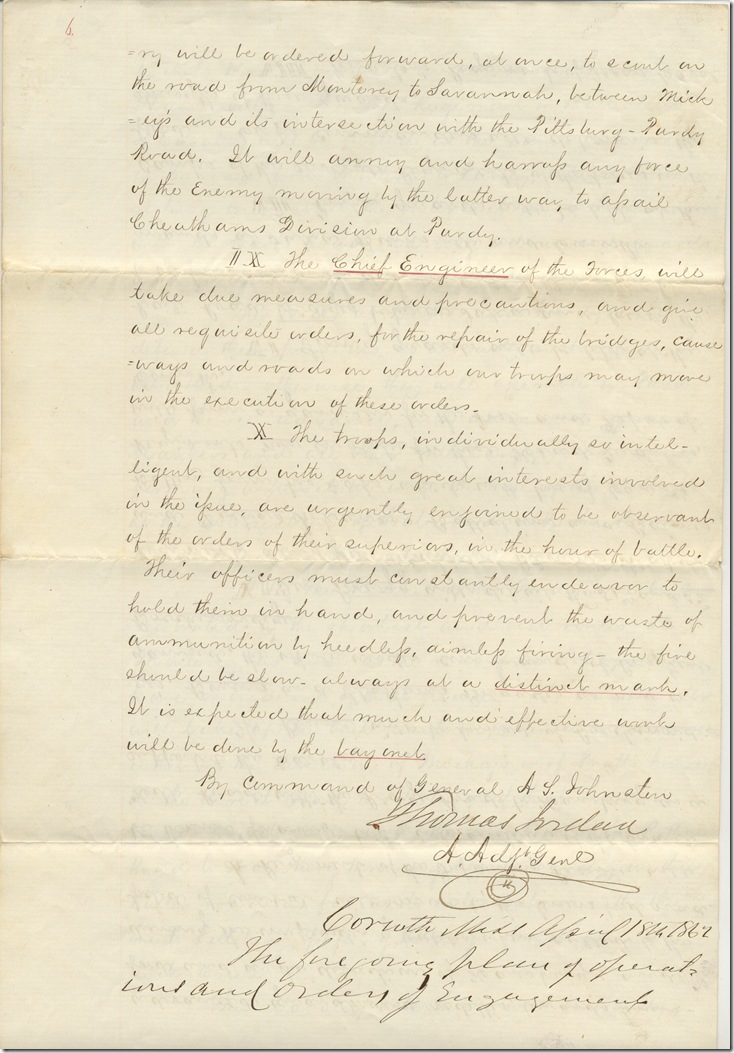
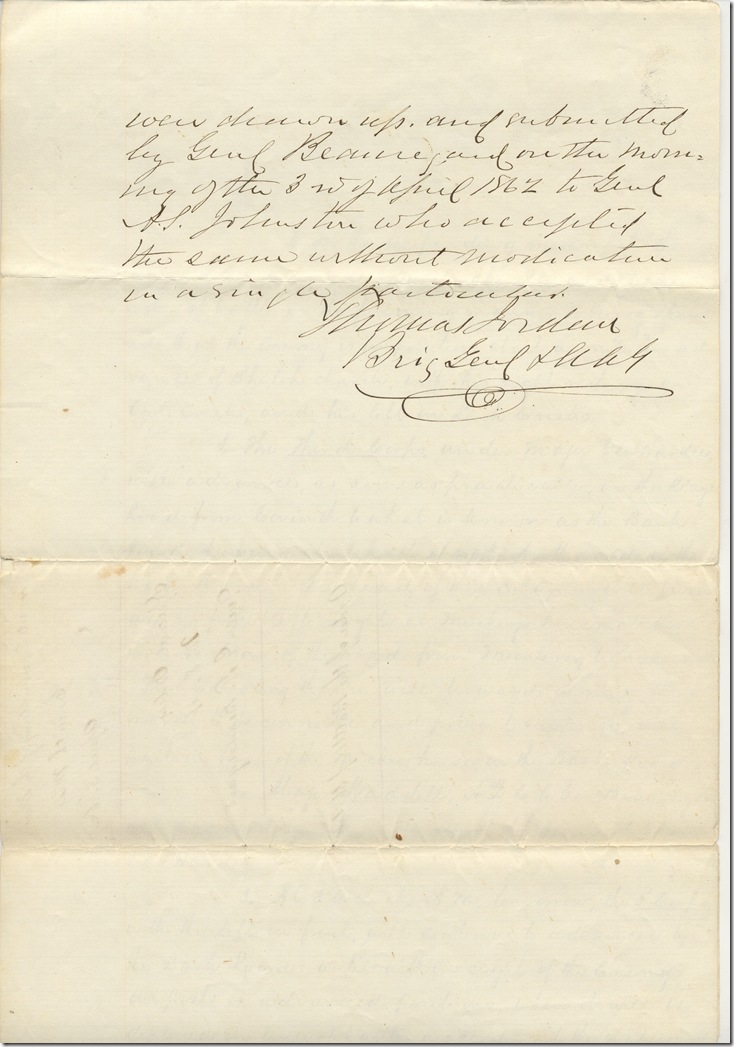
Tupelo, June 24th 1862

By Telegraph from Columbus 24th 1862

To Thos Jordan

Chf. of Staff

Fifteen six pound guns two twelve pounder rifle guns bronze and one twelve pounder gun iron.

John Timothy Trezevant

Actg Ord Ofcr 

Citation:John Timothy Trezevant, telegram to Thomas Jordan. Tupelo, Miss.; 24 June 1862. AMs 1168/11

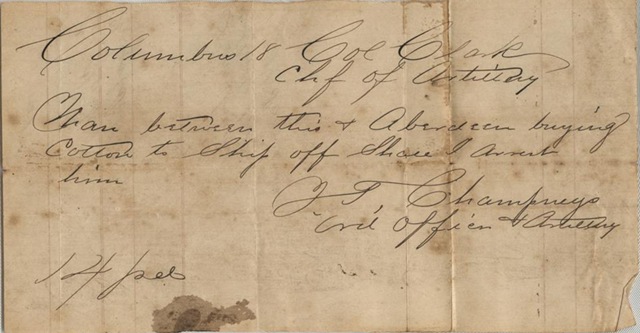
June 18, 1862: J. S. Champreys telegram to Col. Clark

Pierre Gustave Toutant Beauregard was a Louisiana-born general of the Confederate States Army. He had graduated second in his class from West Point in 1838 and was an admirer of Napoleon. He achieved fame early in the Civil War for commanding the Fort Sumter bombardment and as the victor of the first battle of Manassas. He later served in the Western Theater (including Shiloh and Corinth), Charleston, and the defense of Richmond, but his career was hampered by friction with Jefferson Davis and other generals.

This is one of approximately 1000 military telegrams in P.G.T. Beauregard’s papers at the Rosenbach.

AMs 1168-11 1862-06-18 (Large)

  Transcript:

Columbus 18 Col Clark

Chf of Artillery

Man between this & Aberdeen buying cotton to ship off Shall I arrest him

J. S. Champreys

[Ord.?] Officer of Artillery


Citation:J. S. Champreys, telegram to Col. Clark. Columbus, Miss.; 18 June 1862. AMs 1168/11

May 10, 1862: Telegram to Governor Letcher

Pierre Gustave Toutant Beauregard was a Louisiana-born general of the Confederate States Army. He had graduated second in his class from West Point in 1838 and was an admirer of Napoleon. He achieved fame early in the Civil War for commanding the Fort Sumter bombardment and as the victor of the first battle of Manassas. He later served in the Western Theater (including Shiloh and Corinth), Charleston, and the defense of Richmond, but his career was hampered by friction with Jefferson Davis and other generals.

This is one of approximately 1000 military telegrams in P.G.T. Beauregard’s papers at the Rosenbach.

AMs 1168-11 1862-05-10


Transcript:

By Telegraph from Richmond 10

To Telegram Gov Letcher

This morning from Staunton states Gen’l Jackson dispatches that we gained brilliant victory. Enemy full flight, hotly pursued.

Our loss 40 killed, 200 wounded. Enemies loss heavy. Left all their dead, wounded on field.

Dixie


Citation: “Dixie”, telegram to John Letcher. Richmond, 10 May 1862. AMs 1168/11

May 6, 1862: E. J. Gardiner telegram to Sterling Price

Pierre Gustave Toutant Beauregard was a Louisiana-born general of the Confederate States Army. He had graduated second in his class from West Point in 1838 and was an admirer of Napoleon. He achieved fame early in the Civil War for commanding the Fort Sumter bombardment and as the victor of the first battle of Manassas. He later served in the Western Theater (including Shiloh and Corinth), Charleston, and the defense of Richmond, but his career was hampered by friction with Jefferson Davis and other generals.

This is one of approximately 1000 military telegrams in P.G.T. Beauregard’s papers at the Rosenbach.

AMs 1168-11 1862-05-06


Transcript:

Head Quarters, Corinth May 1862

By Telegraph from Grand Junction 1862

To Genl Price

Permit me to go & see my son who is very sick at your Head Qrs.

E. J Gardiner


Respectfully [upward?] to Genl Beauregard

By order of Maj Genl Price


Bg. Gen. Thomas Jordan


Citation: E. J Gardiner, telegram to Sterling Price. Grand Junction, [Tenn.?]; 6 May 1862. AMs 1168/11

April 27, 1862: Telegram on Naval Positions in the Lower Mississippi

Pierre Gustave Toutant Beauregard was a Louisiana-born general of the Confederate States Army. He had graduated second in his class from West Point in 1838 and was an admirer of Napoleon. He achieved fame early in the Civil War for commanding the Fort Sumter bombardment and as the victor of the first battle of Manassas. He later served in the Western Theater (including Shiloh and Corinth), Charleston, and the defense of Richmond, but his career was hampered by friction with Jefferson Davis and other generals.

This is one of approximately 1000 military telegrams in P.G.T. Beauregard’s papers at the Rosenbach.

 AMs 1168-11 1862-04-27 AMs 1168-11 1862-04-27 p2


Transcript:

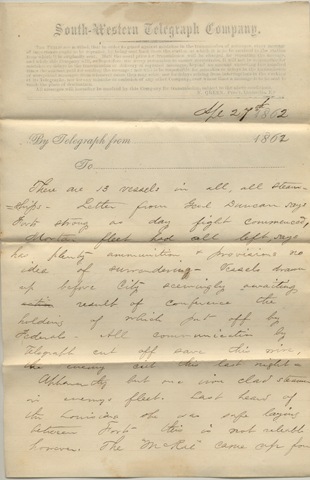
Apl 27, 1862

There are 13 vessels in all, all steamships. Letter from Genl Duncan says Forts strong as day fight commenced, Mortar fleet had all left, says has plenty ammunition & provisions no idea of surrendering. Vessels drawn up before City seemingly awaiting result of conference the holding of which put off by Federals. All communication by Telegraph cut off save this wire. The enemy cut this last night.

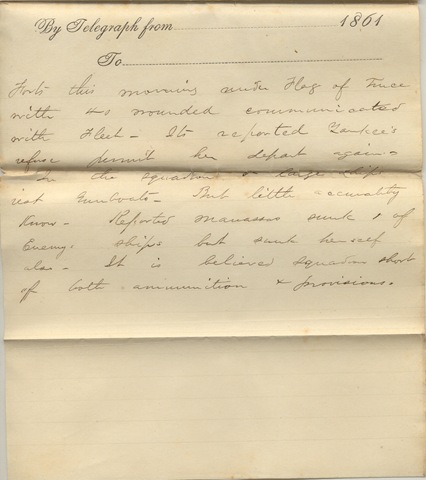
Apparently but one iron clad steamer in enemy fleet. Last heard of the Louisiana she was safe laying between Forts this is not reliable however. The “McRae” came up from Forts this morning under Flag of Truce with 40 wounded communicated with Fleet. It reported Yankee’s refuse permit her depart again.

In the squadron 5 large ships not Gunboats. But little accurately know. Reported Manassas sunk 1 of Enemy’s ships but sunk herself also. It is believed squadron short of both ammunition & provisions”


Citation: Unknown author, telegram on naval positions in the lower Mississippi. 27 April 1862. AMs 1168/11

April 23, 1862: Unknown Author partial telegram to Thomas Jordan

Pierre Gustave Toutant Beauregard was a Louisiana-born general of the Confederate States Army. He had graduated second in his class from West Point in 1838 and was an admirer of Napoleon. He achieved fame early in the Civil War for commanding the Fort Sumter bombardment and as the victor of the first battle of Manassas. He later served in the Western Theater (including Shiloh and Corinth), Charleston, and the defense of Richmond, but his career was hampered by friction with Jefferson Davis and other generals.

This is one of approximately 1000 military telegrams in P.G.T. Beauregard’s papers at the Rosenbach.

AMs 1168-11 1862-04-23


Transcript:

Apl 23, 1862

By Telegraph from N Orleans 23, 1862

To Col Thos Jordan

Gen Duncan telegraphs Gen Lovell for T. Jackson April 23d 8.15 am. Heavy & continued bombardment all night & still progressing no further casualties excepting 2 men slightly wounded God is certainly protecting us we are still cheerful have an abiding faith ultimate success are making repairs as we can best guns still good working order health troops good Generally better spirits than in more quiet times so much for discipline from 20 to 25. “”” thirteen inch shells have been fired by the enemy


Citation: Unknown author, partial telegram to Thomas Jordan. New Orleans;  23 April 1862. AMs 1168/11

April 13, 1862: John Adams telegram to Thomas Jordan

Pierre Gustave Toutant Beauregard was a Louisiana-born general of the Confederate States Army. He had graduated second in his class from West Point in 1838 and was an admirer of Napoleon. He achieved fame early in the Civil War for commanding the Fort Sumter bombardment and as the victor of the first battle of Manassas. He later served in the Western Theater (including Shiloh and Corinth), Charleston, and the defense of Richmond, but his career was hampered by friction with Jefferson Davis and other generals.

This is one of approximately 1000 military telegrams in P.G.T. Beauregard’s papers at the Rosenbach.

AMs 1168-11 1862-04-13

Transcript:

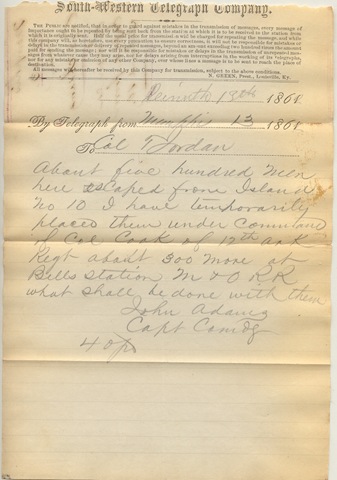
Corinth 13th 1862

By Telegraph from Memphis 13 1862

To Col Jordan

About five hundred men here escaped for Island No 10 I have temporarily placed them under command of Col Cook of 12th Ark Regt about 300 more at Bills station M & O RR What shall be done with them

John Adams

Capt Comdg


Citation: John Adams(1825-1864), telegram to Thomas Jordan. Memphis, Tenn.; 13 April 1862. AMs 1168/11

April 5, 1862: Tennessee Map

AMs 1168-11 forked deer river

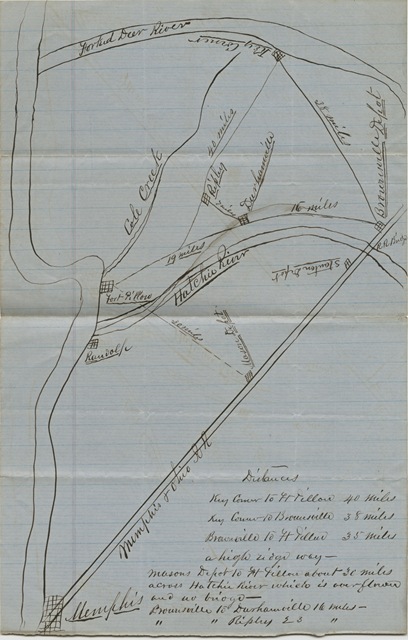
This map of the area between Memphis and Forked Deer River in Tennessee is one of twenty-four military maps and drawings  in a collection of papers from Confederate General P.G.T. Beauregard. The map dates from April 1862.


Citation: Unknown artist, Sketch of country around forked deer river. Tennessee, April 1862. AMs 1168/11

April 3, 1862: Confederate Orders for the Battle of Shiloh

 AMs 359-15 p1 CSA Army of the Miss for Battle of Shiloh AMs 359-15 p2 CSA Army of the Miss for Battle of Shiloh AMs 359-15 p3 CSA Army of the Miss for Battle of Shiloh AMs 359-15 p4 CSA Army of the Miss for Battle of Shiloh AMs 359-15 p5 CSA Army of the Miss for Battle of Shiloh AMs 359-15 p6 CSA Army of the Miss for Battle of Shiloh AMs 359-15 p7 CSA Army of the Miss for Battle of Shiloh

Transcript:

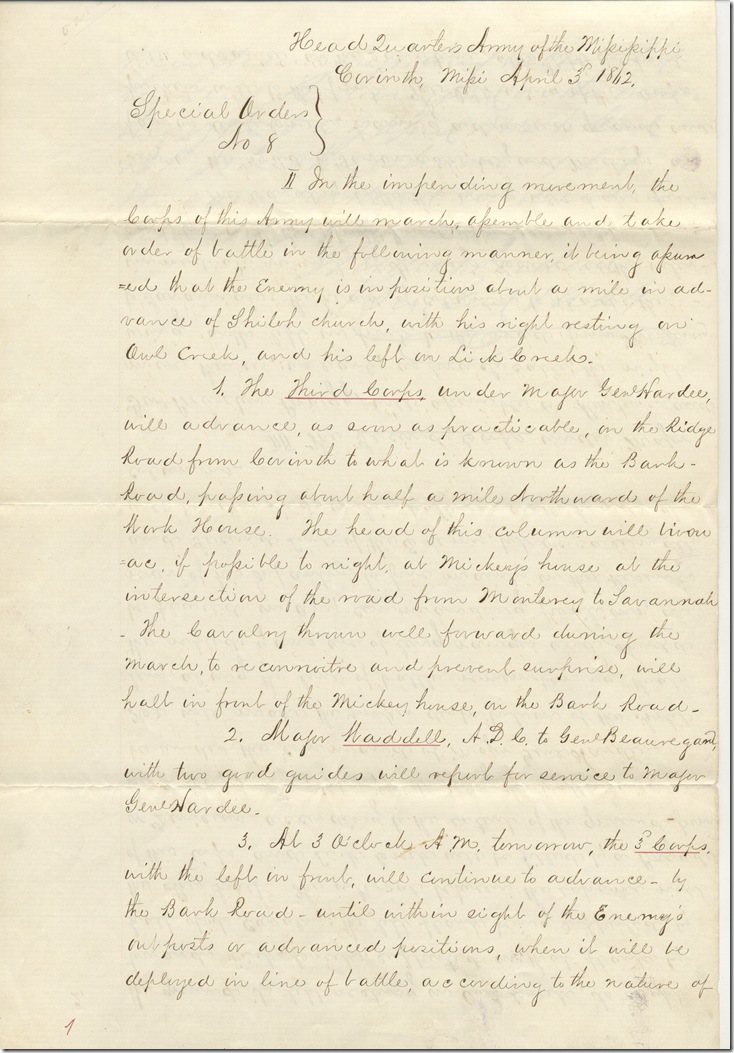
Head Quarters Army of the Mississippi

Corinth, Missi April 3 1862

Special Orders

No 8

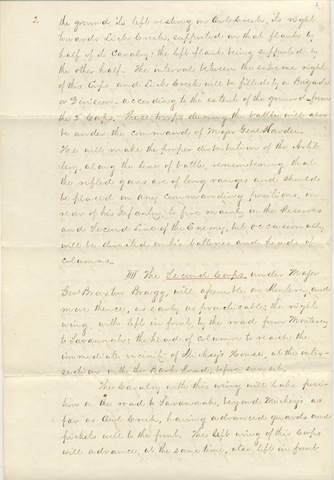
I. In the impending movement, the Corps of this Army will march, assemble and take order of battle in the following manner, it being assumed that the enemy is in position about a mile in advance of Shiloh church, with his right resting on Owl Creek, and his left on Lick Creek.

1. The Third Corps, under Major Genl. Hardee, will advance, as soon as practicable, on the Ridge Road from Corinth to what is known as the Bank Road, passing about half a mile Northward of the __ House. The head of this column will bivouac, if possible tonight, at Mickey’s house at the intersection of the road from Monterey to Savannah. The Cavalry thrown well forward during the march, to reconnoitre and prevent surprise, will halt in front of Mickey house, on the Bank Road.

2. Major Waddell, A.D.C. to Genl. Beauregard, with two good guides will report for service to Major Genl. Hardee

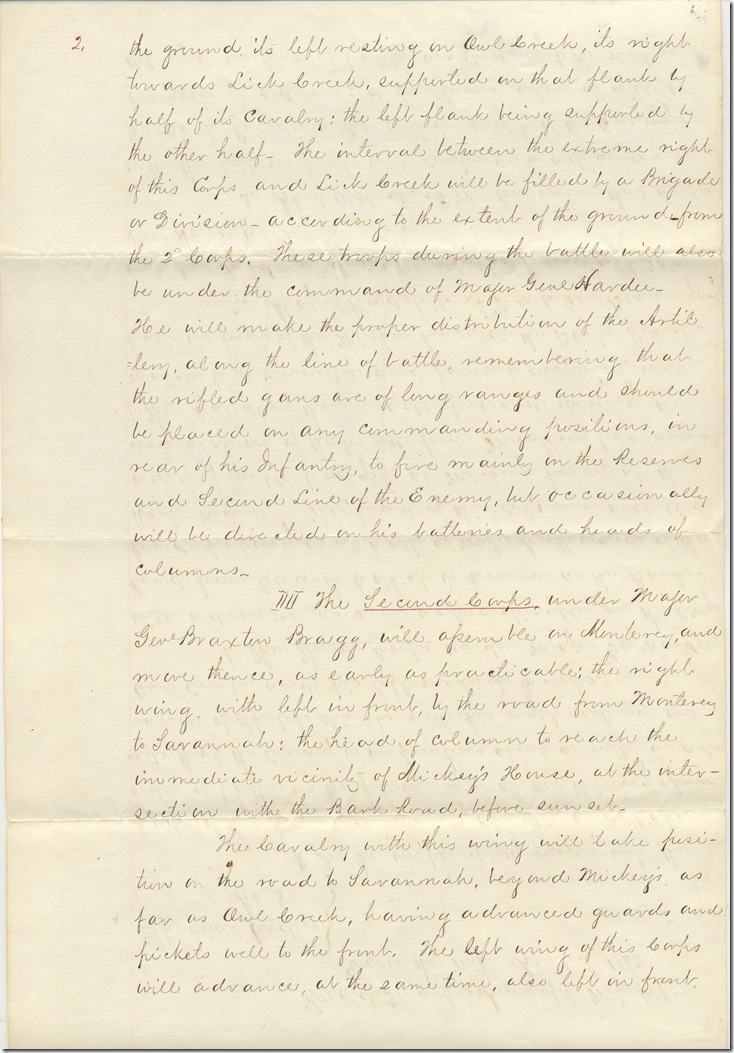
3. At 3 o’clock A.M. tomorrow, the 3 Corps with the left in front will continue to advance—by the Bank Road—until within sight of the Enemy’s outposts or advanced positions, when it will be deployed in line of battle, according to the nature of the ground, its left resting on Owl Creek, its right towards Lick Creek, supported on the flank by half of its Cavalry: the left flank being supported by the other half—The interval between the extreme right of this Corps and Lick Creek will be filled by a Brigade or Division—according to the extent of the ground—from the 2 Corps. These troops during the battle will also be under the command of Major Genl. Hardee—He will make the proper distribution of the Artillery, along the line of battle, remembering that the rifled guns are of long ranges and should be placed in any commanding positions, in rear of his Infantry, to five mainly in the Reserves and Second Line of the Enemy, but occasionally will be directed on his batteries and heads of columns.

II. The Second Corps, under Major Genl. Braxton Bragg, will assemble on Monterey, and move thence, as early as practicable; the right wing, with left in front, by the road from Monterey to Savannah: the head of column to reach the immediate vicinity of Mickey’s House, at the intersection with the Bank Road, before sunset.

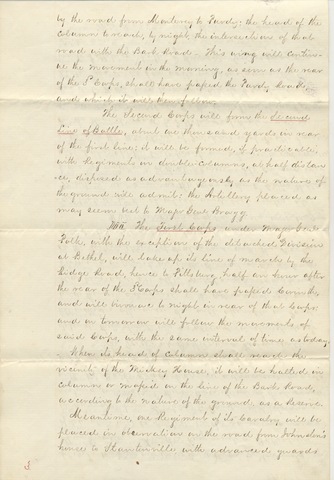
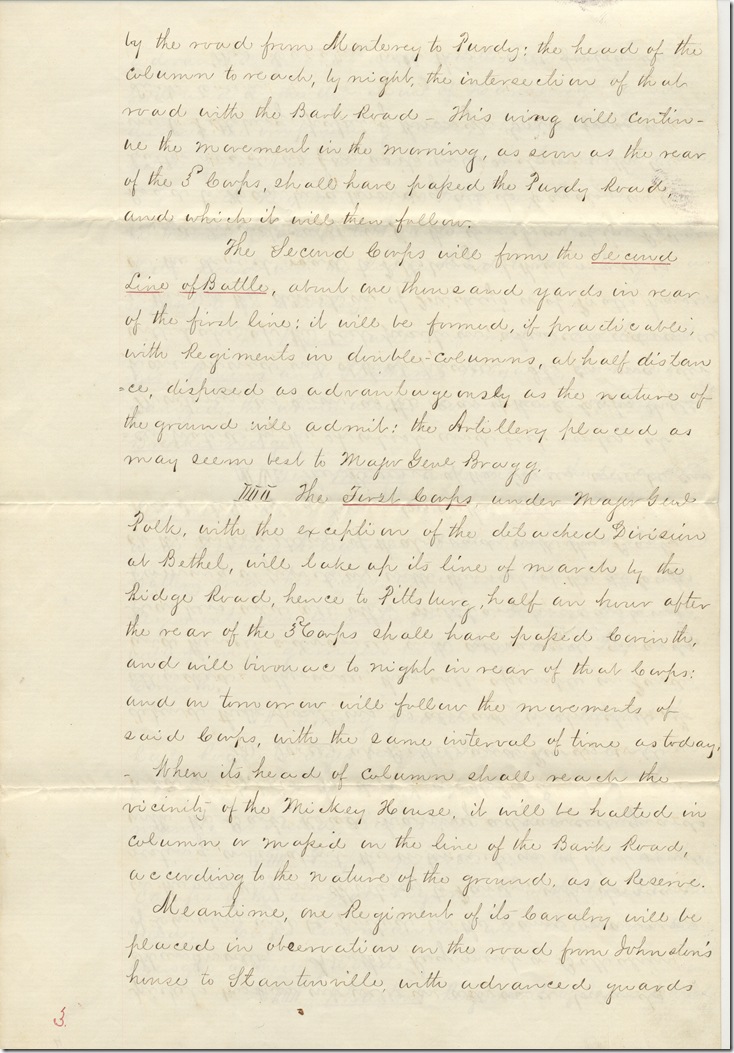
The Cavalry with this wing will take position on the road to Savannah, beyond Mickey’s as far as Owl Creek, having advanced guards and pickets well to the front. The left wing of this Corps will advance, at the same time, also left in front, by the road from Monterey to Purdy: the head of the column to reach, by night, the intersection of that road with the Bank Road—This wing will continue the movement in the morning, as soon as the rear of the 3 Corps shall have passed the Purdy Road and which it will then follow.

The Second Corps will form the Second Line of Battle, about one thousand yards in rear of the first line: it will be formed, if practicable, with Regiments in double columns, at half distance, dispersed as advantageously as the nature of the ground will admit: the Artillery placed as may seem best to Major Genl. Bragg.

III. The First Corps, under Major Genl. Polk, with the exception of the detached Division at Bethel, will take up its line of march by the Ridge Road, hence to Pittsburg, half an hour after the rear of the 3 Corps shall have passed Corinth, and will bivouac tonight in rear of that Corps: and on tomorrow will follow the movement of said Corps, with the same interval of time as today.

When its head of column shall reach the vicinity of the Mickey House, it will be halted in column or massed on the line of the Bank Road, according to the nature of the ground, as a Reserve.

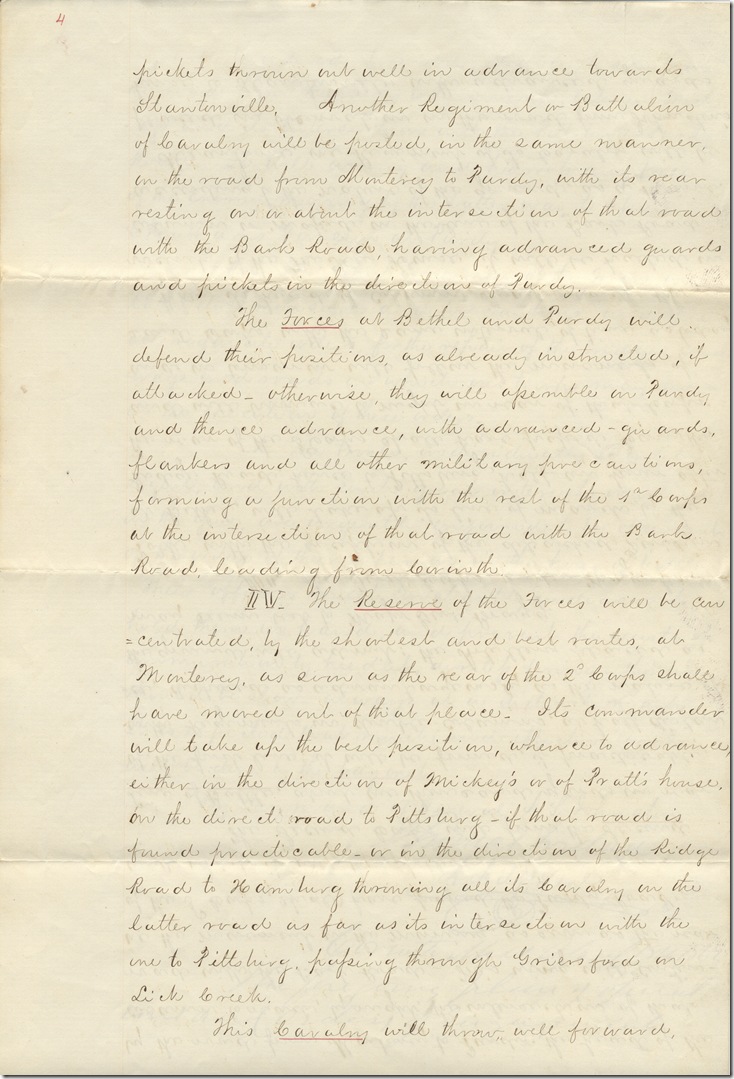
Meantime, one Regiment of its Cavalry will be placed in observation on the road from Johnston’s house to Stantonville, with advanced guard pickets thrown out well in advance towards Stantonville. Another Regiment or Battalion of Cavalry will be posted, in the same manner, on the road from Monterey to Purdy, with its rear resting on or about the intersection of that road with the Bank Road, having advanced guards and pickets in the direction of Purdy.

The forces at Bethel and Purdy will defend their positions, as already instructed, if attacked—otherwise, they will assemble on Purdy and thence advance, with advanced-guards, flankers, and all other military precautions, forming a junction with the rest of the 1s Corps at the intersection of that road with the Bank Road, leading from Corinth.

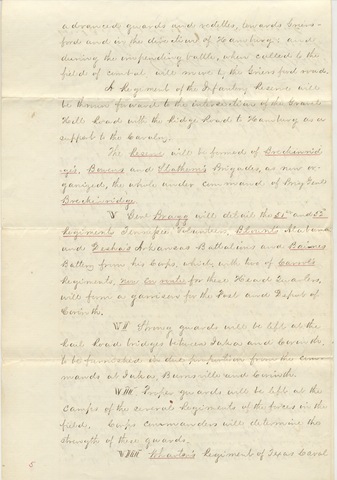
IV. The Reserve of the forces will be concentrated, by the shortest and best routes, at Monterey, as soon as the rear of the 2 Corps shall have moved out of that place. Its commander will take up the best position, whence to advance, either in the direction of Mickey’s or of Pratt’s house, on the direct road to Pittsburg—if that road is found practicable—or in the direction of the Ridge Road to Hamburg throwing all its Cavalry on the latter road as far as its intersection with the one to Pittsburg passing through Griersford on Lick Creek.

This Cavalry will throw well forward advanced guards and vedettes, towards Griersford and in the direction of Hamburg: and during the impending battle, when called to the field of combat, will move by the Griersford road.

A Regiment of the Infantry Reserve will be thrown forward to the intersection of the Gravel Hill Road with the Ridge Road to Hamburg as a support to the Cavalry.

The Reserve will be formed of Breckinridge’s Bowers and Stathem’s Brigades, as now organized, the whole under command of Brig Genl Breckinridge.

V. Genl. Bragg will detail the 51 and 52 Regiments Tennessee Volunteers, Blount’s Alabama and Desha’s Arkansas Battallions and Baines Battery from his Corps, which with two of Carvel’s Regiments, now en route for these Head Quarters, will form a garrison fro the Post and Depot of Corinth.

VI. Strong guards will be left at the Rail Road bridges between Luka and Corinth, to be furnished in due proportion from the commands at Luka, Burnsville and Corinth.

VII. Proper guards will be left at the camps of the several Regiments of the forces in the field. Camp commanders will determine the strength of these guards.

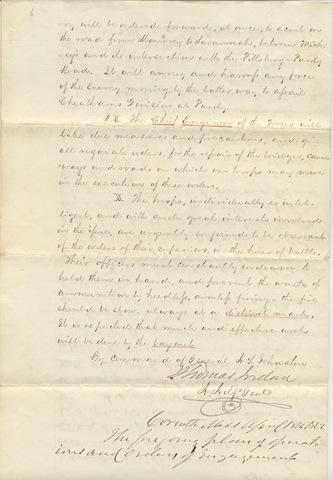
VIII. Wharton’s Regiment of Texas Cavalry will be ordered forward, at once, to scout the road from Monterey to Savannah, between Mickey’s and its intersection with the Pittsburg-Purdy Road. It will annoy and harass any force of the Enemy moving by the latter way, to assail Chathams Division at Purdy.

IX. The Chief Engineer of the Forces will take due measures and precautions, and give all requisite orders, for the repair of the bridges, causeways and roads on which our troops may move in the execution of these orders.

X. The troops, individually so intelligent, and with such great interests involved in the issue, are urgently enjoined to be observant of the orders of their superiors, in the hour of battle. Their officers must constantly endeavor to hold them in hand, and prevent the waste of ammunition by heedless, aimless firing—the fire should be slow—always at a distinct mark. It is expected that much and effective work will be done by the bayonet.

By command of General Johnston


Citation: Confederate States of America. Army of the Mississippi, orders for the battle of Shiloh. Corinth, Miss; 3 April 1862. AMs 359/15
March 24, 1862: John Dahlgren letter to Senator John P. Hale

John Dahlgren was the head of ordinance for the Union through the Civil War. John P. Hale was a Republican senator from New Hampshire.In this letter Dahlgren addresses the question of whether Ordnance should be a Bureau or a Directorship.

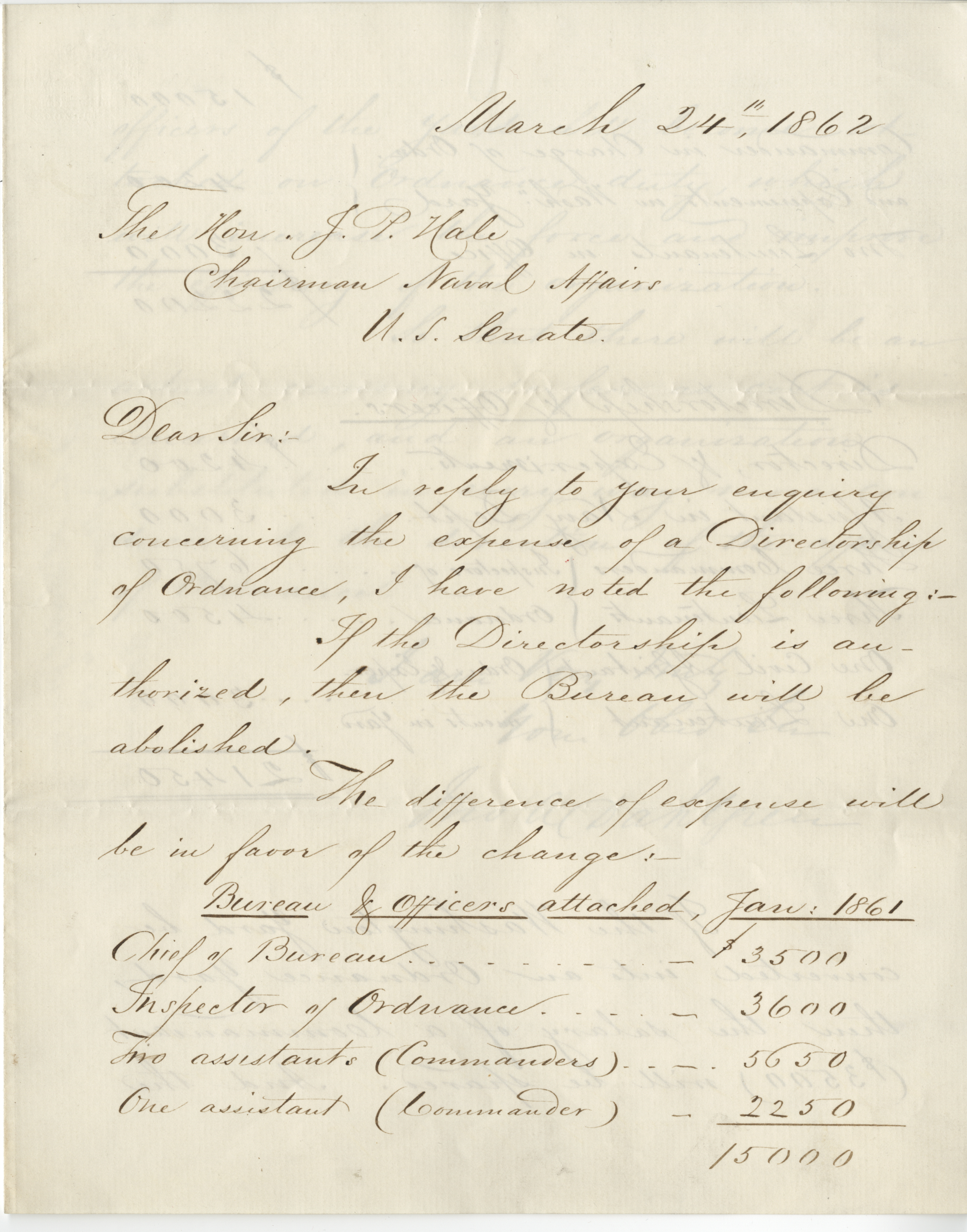
March 24th, 1862

The Hon. J. P. Hale

Chairman Naval Affairs

U.S. Senate

Dear Sir: In reply to your enquiry concerning the expense of a Directorship of ordnance,I have the following:

If the Directorship is authorized, then the Bureau will be abolished.

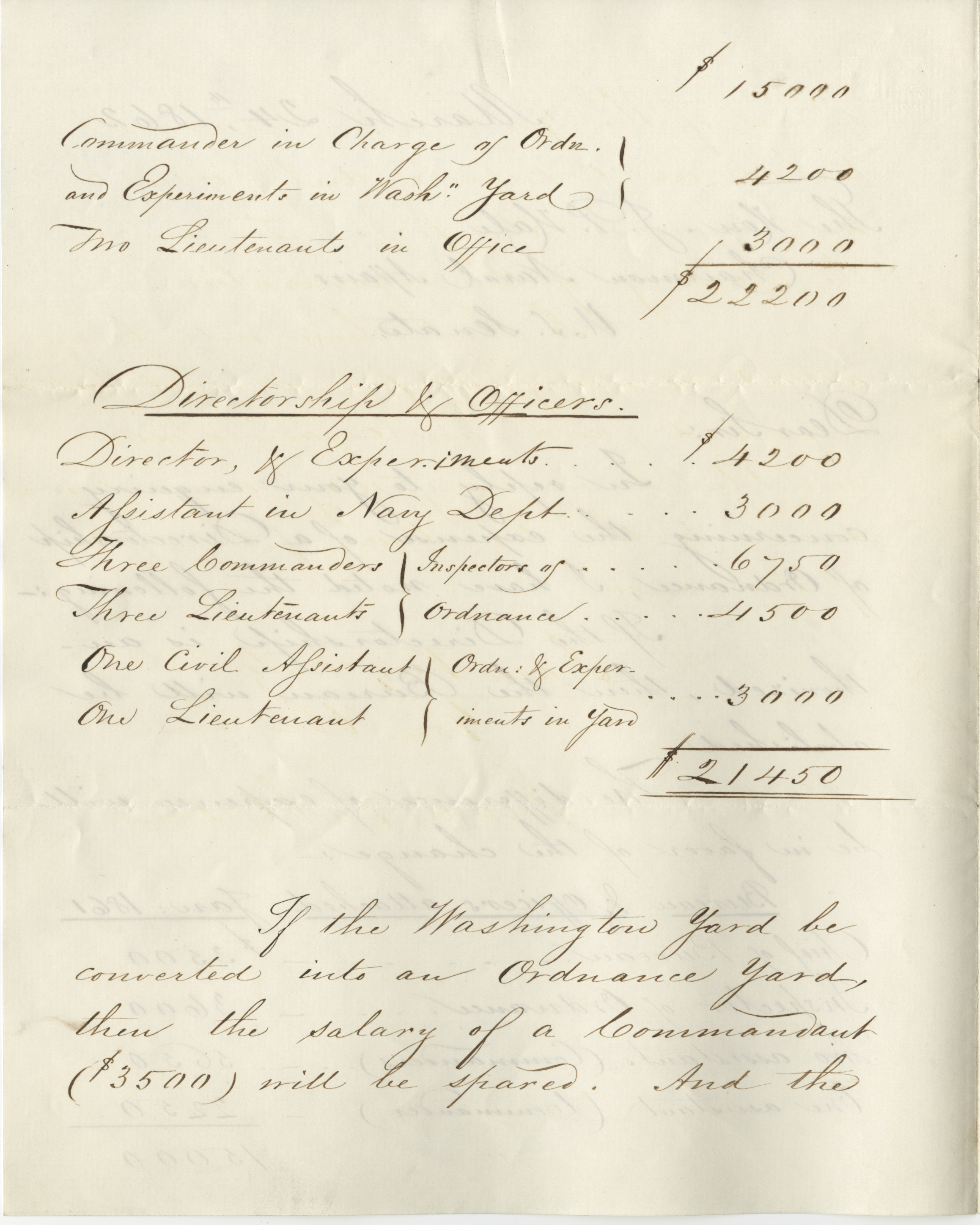
The differences of expense will be in favor of the change:…

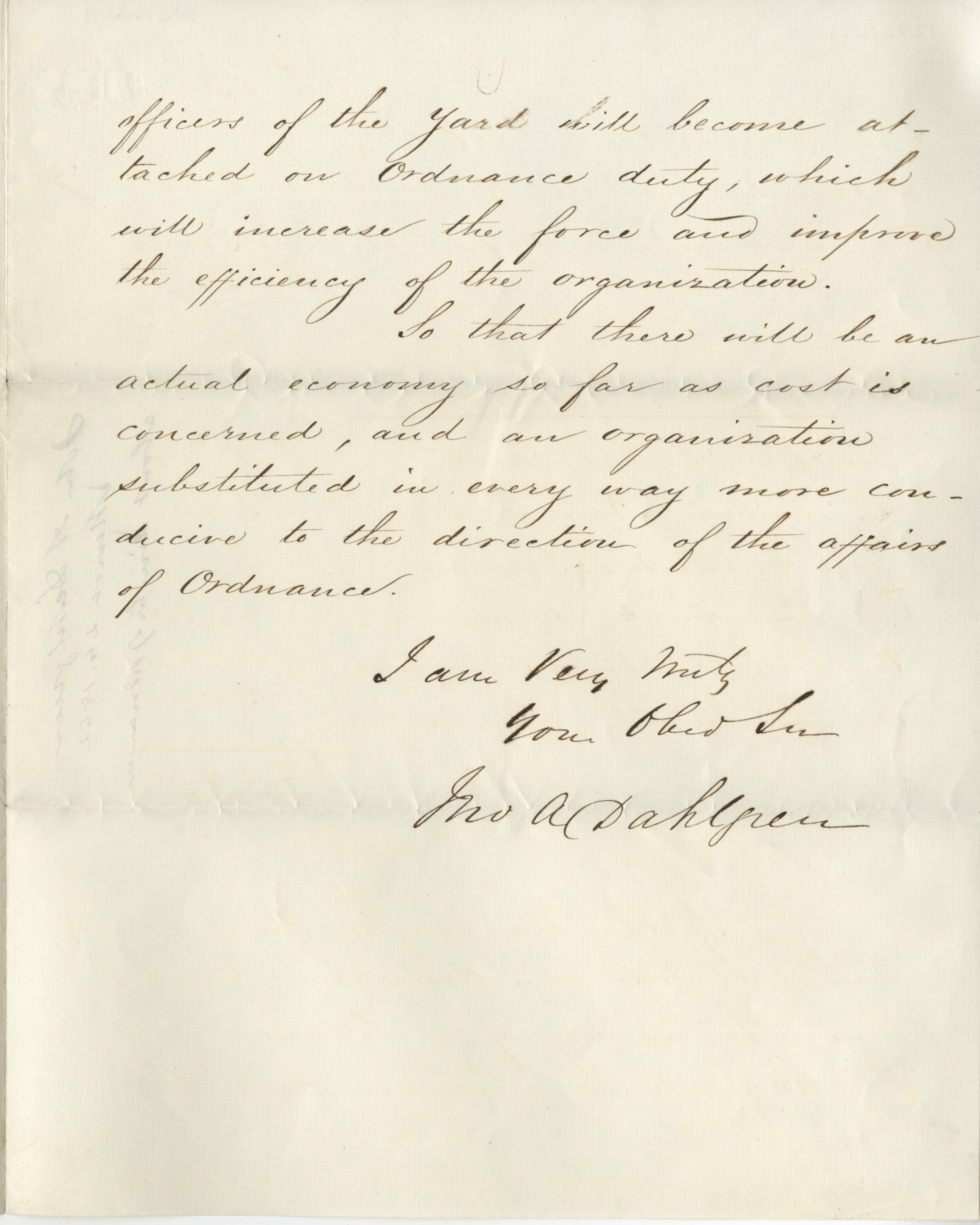
…If the Washington Yard be converted into an Ordnance Yard, then the salary of a Commandant ($3500) will be spared. And the officers of the yard will become attached on Ordnance duty, which will increase the force and improve the efficiency of the organization.

So that there will be an actual economy so far as cost is concerned, and an organization substituted in every way more conducive to the direction of the affairs of Ordnance.

I am very truly

Yr Obed. Ser,

Jno A Dahlgren

Citation: Washington Navy Yard, Records 1859-1862. AMs 1202/11