September 3, 1863: Henry Warner to John Riddle Warner

Henry Warner Jr. was the younger brother of John Riddle Warner, the grandfather of the poet Marianne Moore.  Henry served in  Independent Battery G from August 1862 until June 1865.These family letters are preserved as part of the Marianne Moore family papers.

Moore VI-5-23 p1 Henry Warner to John Riddle Warner 9-3-63 Moore VI-5-23 p2 Henry Warner to John Riddle Warner 9-3-63

Transcript:

Fort Delaware

Sept. 3/63

Dear Brother

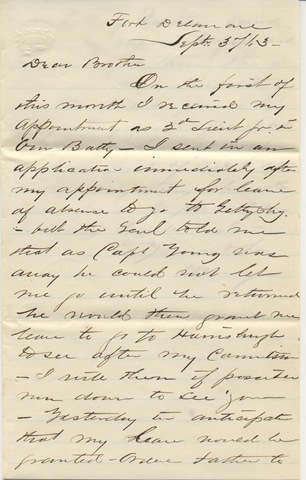
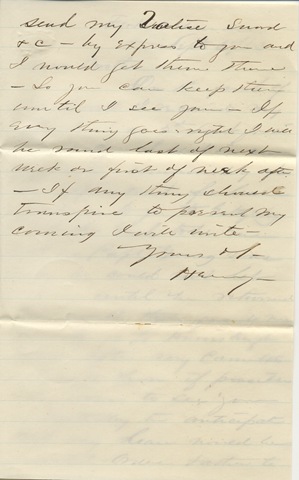
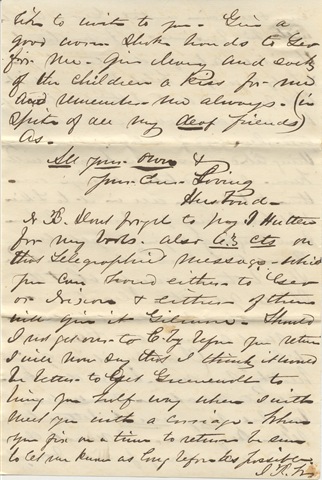
On the first of this month I received my appointment as 3d Lieut. Jr in our Battry—I sent in an application immediately after my appointment for leave of absence to go to Gettysbg.—but the Genl told me that as Capt Young was away he could not let me go until he returned he would then grant me leave to go to Harrisburgh to see after my Commission—I will then if possible move down to see you—Yesterday in anticipation that my leave would be granted—Ordered father to send my Valise sword &c—by express to you and I would get them there—So you can keep them until I see you—If every thing goes right I will be round last of next week or first of next after—If any thing should transpire to prevent my coming I will write

Yours—

Henry

Citation: Citation: Henry Warner Jr., autograph letter to John Riddle Warner. Fort Delaware, 3 September 1863. Moore VI:05:23

August 14, 1863: John Riddle Warner to Jennie Craig Warne

Rev. John Riddle Warner and Jennie Craig Warner were the grandparents of the poet Marianne Moore. During the Civil War they lived in Gettysburg, Pennsylvania. Jennie would die of typhoid in September 1863.

Moore VI-5-22 p1 John Riddle Warner to Jennie Craig Warner 8-14-63 Moore VI-5-22 p2 John Riddle Warner to Jennie Craig Warner 8-14 Moore VI-5-22 p3 John Riddle Warner to Jennie Craig Warner 8-14 Moore VI-5-22 p4 John Riddle Warner to Jennie Craig Warner 8-14 Moore VI-5-22 p5 John Riddle Warner to Jennie Craig Warner 8-14 Moore VI-5-22 p6 John Riddle Warner to Jennie Craig Warner 8-14

Transcript [excerpt]:

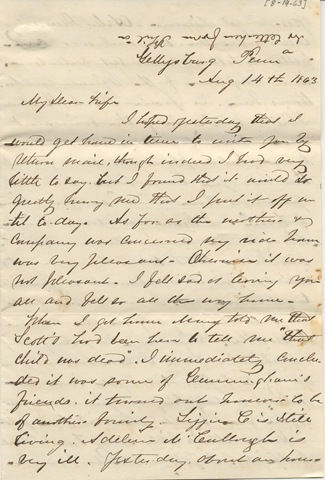
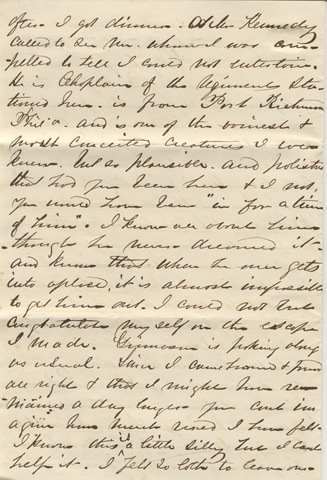
Yesterday about an hour after I got dinner, John Kennedy called to see me—whom I was compelled to tell I could not entertain. He is Chaplain of the Regiments stationed here—is from Port Richmond Phila and is one of the vainest & most conceited creatures I ever knew. but so plausible and polished that had you been here & I not, you would have been “in for a time of him.” I know all about him through the news—delivered it—and knew that when he once gets into a place, it is almost impossible to get him out. I could not but congratulate my self on the escape I made.

Citation: John Riddle Warner, autograph letter signed to Jennie Craig Warner. Gettysburg, Pa.; 14 August 1863. Moore VI:05:21

August 12, 1863: G. H. Byrd to John Riddle Warner

John Riddle Warner was the grandfather of the poet Marianne Moore and during the Civil War he lived in Gettysburg, Pennsylvania.

Moore VI-5-22 p2 GH Byrd 8-12-63

Transcript:

Batto Aug 12 1863

Dear Sir

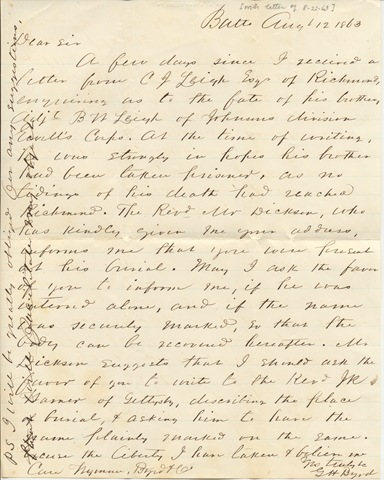
A few days since I received a letter from CJ Leigh Esq of Richmond, enquiring as to the fate of his brother, Adjt BW Leigh of Johnsons division Ewell’s Corps. At the time of writing, he was strongly in hopes his brother had been taken prisoner, as no tidings of his death had reached Richmond. The Rev’d Mr Dickson, who has kindly given me your address, informs me that you were present at his burial. May I ask the favor of you to inform me, if he was interred alone, and if the name was securely marked, so that the body can be recovered hereafter. Mr Dickson suggests that I should ask the favor of you to write to the Rev’d JR Warner of Gettysbg, describing the place of burial, & asking him to have the name plainly marked on the same. Excuse the liberty I have taken & believe me

Yrs truly

GH Byrd

Care Hyman, Byrd & Co

Citation: G. H. Byrd, autograph letter signed to John Riddle Warner. Batto, 12 August 1863.  Moore VI:05:21

July 11, 1863: Henry and Mary Warner to John Warner

Henry and Mary Warner lived in Allegheny City, Pennsylvania, now part of Pittsburgh. They are the great-grandparents of poet Marianne Moore.  By the 1860s they had three surviving children:  John, Henry, and Anne. Their letters to John, a Presbyterian minister living in Gettysburg, are preserved as part of Marianne Moore’s family papers.

Moore VI-5-21 p1 Henry and Mary Warner to Children 7-11-63 Moore VI-5-21 p2 Henry and Mary Warner to Children 7-11-63

Transcript:

Allegheny City Saturday July 11th 1863, P.M.

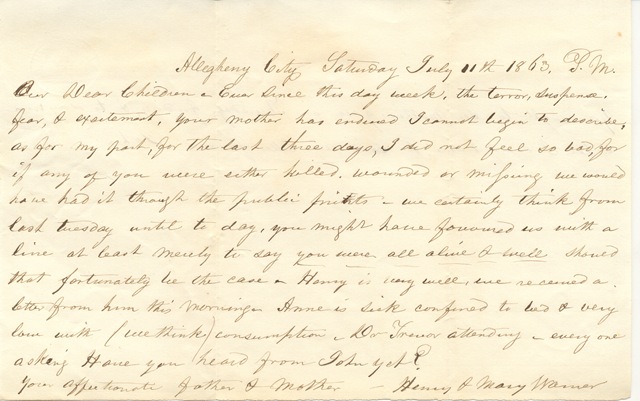
Our Dear Children—Ever since this day week, the terror, suspense, fear, & excitement, your mother has endured I cannot begin to describe. As for my part, for the last three days, I did not feel so bad, for if any of you were either killed, wounded or missing, we would have had it through the public prints—we certainly think from last tuesday until to day, you might have favoured us with a line at least merely to say you were all alive & well should that fortunately be the case—Henry is very well, we received a letter from him this morning—Anne is sick confined to bed & very low with (we think) consumption—Dr. Trevor attending—every one asking Have you heard from John yet?

Your affectionate father & mother Henry & Mary Warner

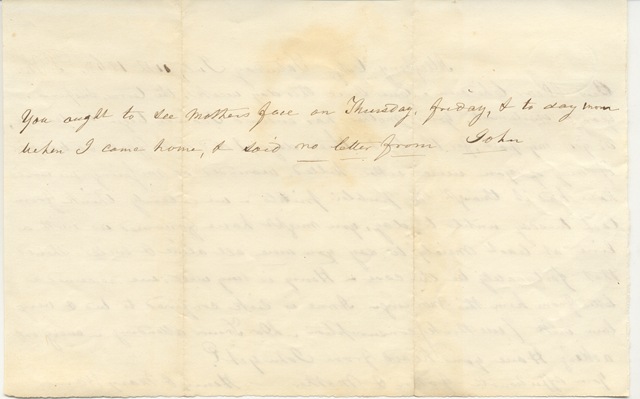
You ought to see Mothers face on Thursday, friday, & to day morn when I came home, & said no letter from John

Citation: Henry and Mary Warner, autograph letter signed to John Riddle Warner. Allegheny City [Pittsburgh], 11July 1863. Moore VI:05:21

July 8, 1863: George Eyster to John Riddle Warner

John Riddle Warner was the grandfather of the poet Marianne Moore and during the Civil War he lived in Gettysburg, Pennsylvania. George Eyster was his brother-in-law and lived in Chambersburg, where he served as Provost Marshal for the 16th district of Pennsylvania from April 1863 to June 1865. These letters are preserved as part of Marianne Moore’s family papers.

Moore VI-5-21 p1 George Eyster to John Riddle Warner 7-8-63 Moore VI-5-21 p2 George Eyster to John Riddle Warner 7-8-63 Moore VI-5-21 p3 George Eyster to John Riddle Warner 7-8-63 Moore VI-5-21 p4 George Eyster to John Riddle Warner 7-8-63

Transcript:

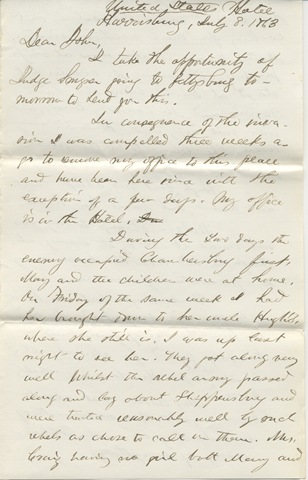
United States Hotel

Harrisburg, July 8, 1863

Dear John,

I take the opportunity of Judge [Longen?] going to Gettysburg to-morrow to send you this.

In consequence of the invasion I was compelled three weeks ago to remove my office to this place and have been here since with the exception of a few days. My office is in the Hotel.

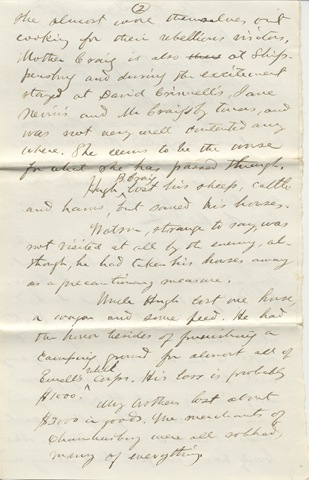
During the two days the enemy occupied Chambersburg first, Mary and the children were at home. On Friday of the same week I had her brought down to her uncle Hugh’s, where she still is. I was up last night to see her. They got along very well whilst the rebel army passed along and lay about Shippensburg and were treated reasonably well by such rebels as chose to call on them. Mrs. Craig having no girl both Mary and she almost wore themselves out cooking for their rebellious visitors. Mother Craig is also at Shippensburg and during the excitement stayed at David Griswell’s, Jove Nervis’ and Mr. Craig’s by turns, and was not very well contented any where. She seems to be the worse for what she has passed through.

Hugh B. Craig lost his sheep, cattle, and hams, but saved his horses.

Watson, strange to say, was not visited at all by the enemy, although, he had taken his horses away as a precautionary measure.

Uncle Hugh lost one horse, a wagon and some feed. He had the horror besides of furnishing a camping ground for almost all of Ewells rebel corps. His loss is probably $1000. My brothers lost about $3000 in goods. The merchants of Chambersburg were all robbed, many of everything.

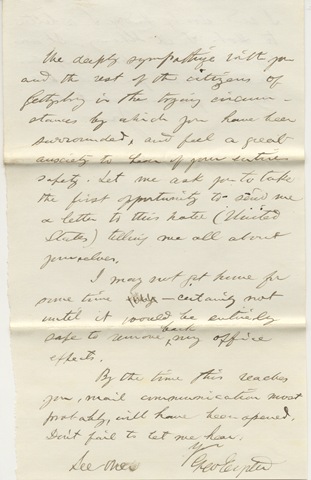
We deeply sympathize with you and the rest of the citizens of Gettysburg in the trying circumstances by which you have been surrounded, and feel a great anxiety to hear of your entire safety. Let me ask you to take the first opportunity to send me a letter to this hotel (United States) telling me all about yourselves.

I may not get home for some time—certainly not until it would be entirely safe to remove back my office effects.

By the time this reaches you, mail communication most probably, will have been opened. Don’t fail to let me hear.

Yours

See over Geo Eyster

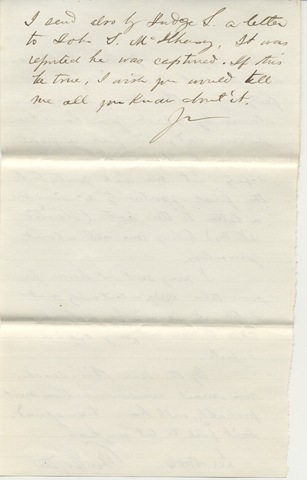
I send also by Judge L. a letter to John S. [McShany?]. It was printed he was captured. If this be true, I wish you would tell me all you know about it.

Citation: George Eyster, autograph letter signed to John Riddle Warner. Harrisburg, Pa.; 8 July 1863. Moore VI:05:21

June 24, 1863: Henry and Mary Warner to John Warner

Henry and Mary Warner lived in Allegheny City, Pennsylvania, now part of Pittsburgh. They are the great-grandparents of poet Marianne Moore.  By the 1860s they had three surviving children:  John, Henry, and Anne. Their letters to John, a Presbyterian minister living in Gettysburg, are preserved as part of Marianne Moore’s family papers.

 Moore VI-5-20 p1 Henry and Mary Warner to Children 6-24-63 Moore VI-5-20 p2 Henry and Mary Warner to Children 6-24-63

Transcript:

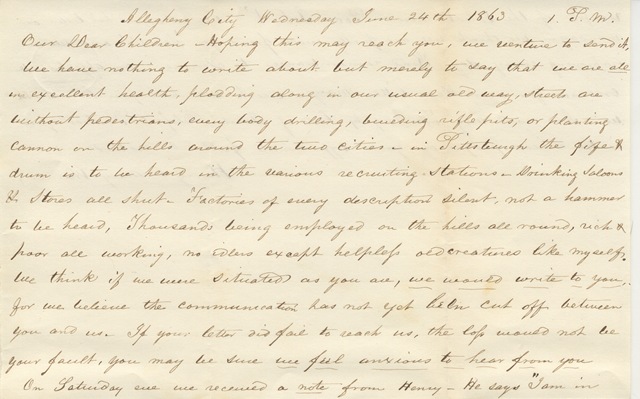
Allegheny City Wednesday June 24th 1863 1 P.M.

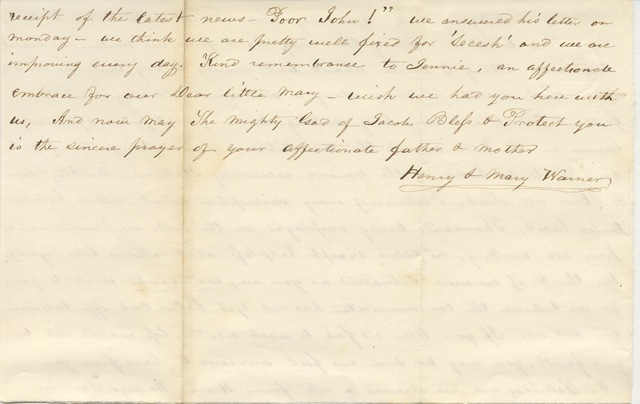
Our Dear Children—Hoping this may reach you, we venture to send it. We have nothing to write about but merely to say that we are all in excellent health, plodding along in our usual old way, streets are without pedestrians, every body drilling, building rifle pits, or planting cannon on the hills around the two cities—in Pittsburgh the fife & drum is to be heard in the various recruiting stations—Drinking saloons & Stores all shut—Factories of every description silent, not a hammer to be heard, Thousands being employed on the hills all round, rich & poor all working, no idlers except helpless old creatures like myself. We think if we were situated as you are, we would write to you, for we believe the communication has not yet been cut off between you and us. If your letter did fail to reach us, the loss would not be your fault, you may be sure we feel anxious to hear from you

On Saturday eve we received a note from Henry—He says “I am in receipt of the latest news—Poor John!” We answered his letter on Monday—we think we are pretty well fixed for ‘Secesh’ and we are improving every day. Kind remembrance to Jennie, and affectionate embrace for our Dear little Mary—wish we had you here with us, And now may The Might God of Jacob Bless & Protect you is the sincere prayer of your affectionate father & mother

Henry & Mary Warner


Citation: Henry and Mary Warner, autograph letter signed to John Riddle Warner. Allegheny City [Pittsburgh], 24 June 1863. Moore VI:05:20

June 23, 1863: John Riddle Warner to George Eyster

John Riddle Warner was the grandfather of the poet Marianne Moore and during the Civil War he lived in Gettysburg, Pennsylvania. George Eyster was his brother-in-law and lived in Chambersburg, where he served as Provost Marshal for the 16th district of Pennsylvania from April 1863 to June 1865.  These letters are preserved as part of Marianne Moore’s family papers.

Moore VI-5-20 p1 John Riddle Warner to George Eyster 6-23-63 Moore VI-5-20 p2 John Riddle Warner to George Eyster 6-23-63 Moore VI-5-20 p3 John Riddle Warner to George Eyster 6-23-63 Moore VI-5-20 p4 John Riddle Warner to George Eyster 6-23-63

Transcript:

Gettysburg Tuesday

June 23d 1863

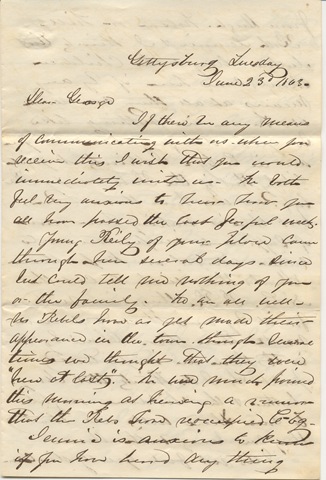
Dear George

If there be any means of communicating with us when you receive this I wish that you would immediately write us—We both feel very anxious to hear from you all how passed the last fearful weeks.

Young Reily of your place came through here several days since but could tell us nothing of you or the family. We are all well—no Rebels have as yet made their appearance in the town though several times we thought that they were “here at last”. We were much pained this morning at hearing a rumor that the Rebs have reoccupied C-bg—Jennie is anxious to know if you have heard any thing from Hugh Watson or hill. Both Jennie & I think that Mother, Mary & the children should come here if by any means at all they can reach us—We are in nothing like so great danger here as you are in C-bg—I think it quite likely that if the Rebs occupy Pa long we will have them here, but there is nothing here now of sufficient importance to either attract or keep them. Should they wish to cut the N.C.R.R. they will make for it by another & nearer route than this. Chambg. too is to them an important point. So I do think that Mary, Mother & the children ought to come here with all that they can bring with them.

I do not feel greatly discouraged, I am confident that in the Lord, a great triumph awaits us. He is just bringing us to that point in which His sovereignty in our deliverance will be made manifest. So manifest that the mouths of infidelity will not dare to speak.

His appointed time may be further-off than we think—but it cant be far off. And when it comes both we and our enemies will wonder.

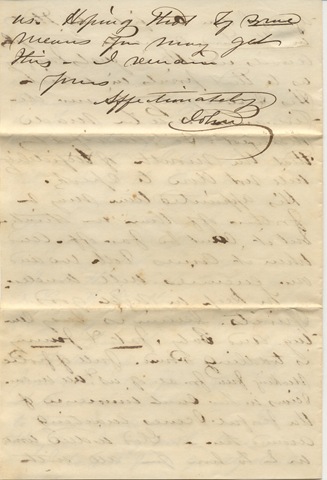
We keep in right good spirits. Jennie is busy sewing and Baby, fat & funny, is toddling round. Full of frolic making fun for all of us & all unconscious in her sweet innocence of the fearful scenes enacting around her—Glad indeed would we be to have you all with us. Hoping that by some means you may get this—I remain

Yours

John

Citation: John Riddle Warner, autograph letter signed to George Eyster.  Gettysburg, Pa.; 23 June 1863. Moore VI:05:20

June 21, 1863: Mary Craig Eyster to Jennie Craig Warner

Jennie Craig Warner was the grandmother of the poet Marianne Moore and during the Civil War, she lived in Gettysburg, Pennsylvania. Mary Craig Eyster was her sister and lived in Chambersburg. These letters are preserved as part of Marianne Moore’s family papers.
Moore VI-5-20 p1 Mary to Jennie Craig Warner 6-21-63 Moore VI-5-20 p2 Mary to Jennie Craig Warner 6-21-63 Moore VI-5-20 p3 Mary to Jennie Craig Warner 6-21-63 Moore VI-5-20 p4 Mary to Jennie Craig Warner 6-21-63

Transcript:

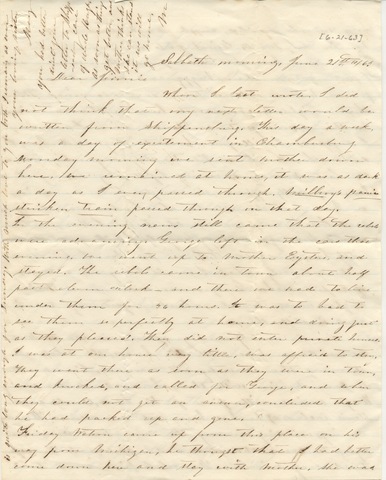
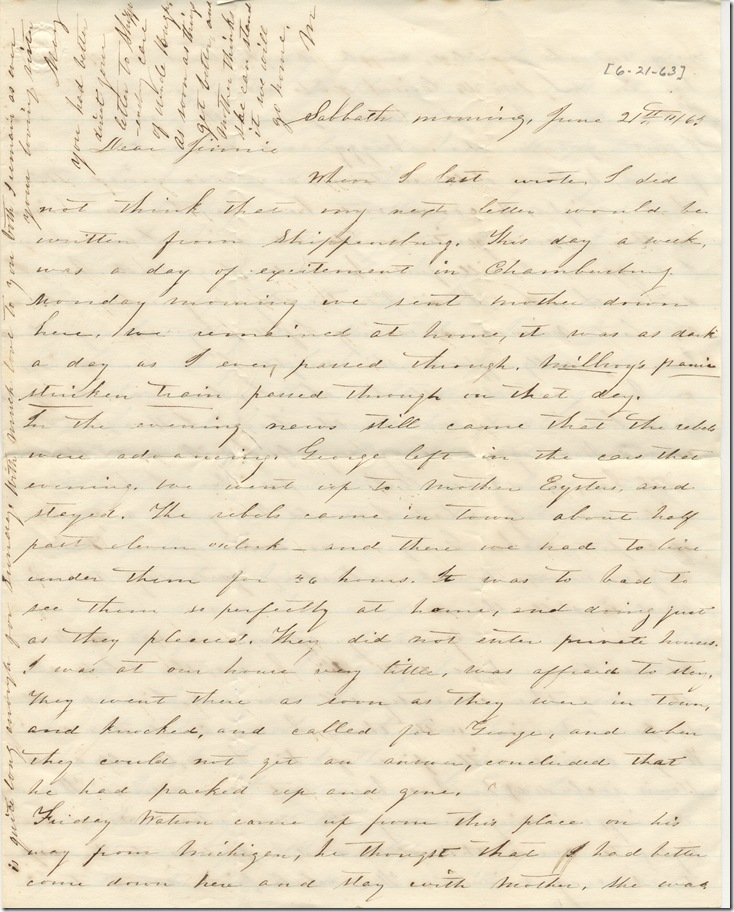
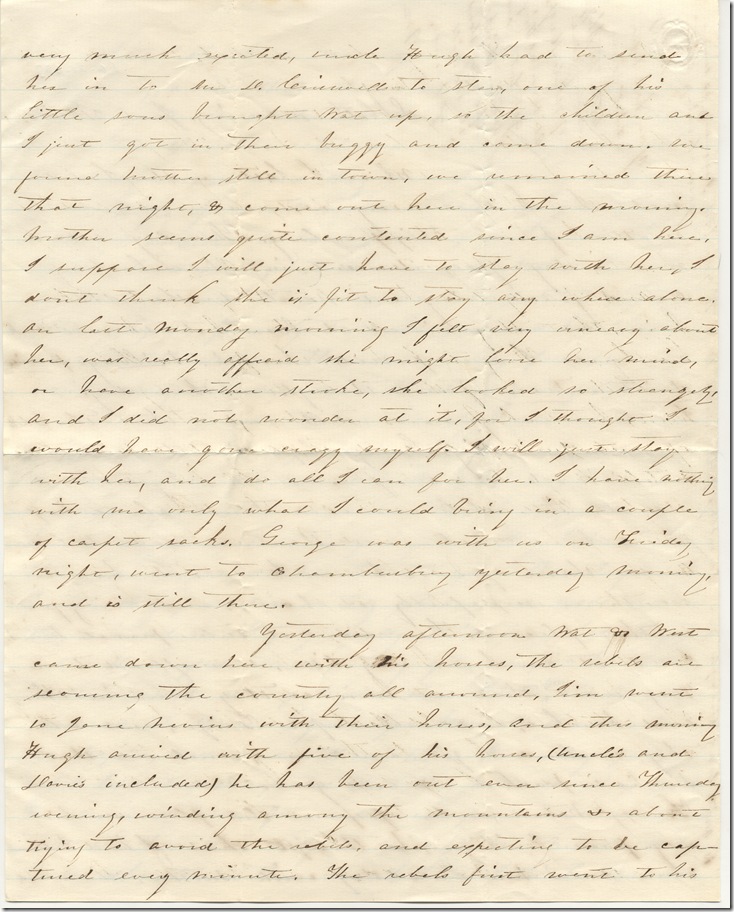
Sabbath morning, June 21st 1863

Dear Jennie

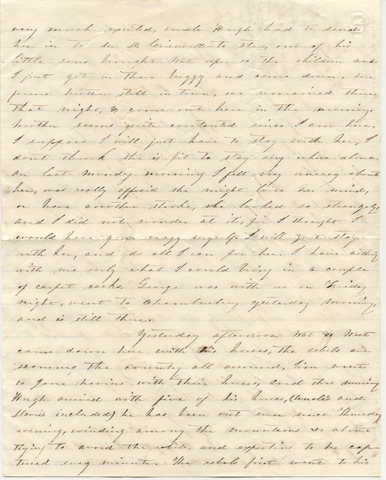
When I last wrote, I did not think that my next letter would be written from Shippensburg. This day a week, was a day of excitement in Chambersburg. Monday morning we sent Mother down here. We remained at home, it was as dark a day as I ever passed through. Millroy’s panic stricken train passed through on that day, In the evening news still came that the rebels were advancing. George left in the cars that evening. We went up to Mother Eysters, and stayed. The rebels came in town about half past eleven o’clock—and there we had to live under them for 36 hours. It was to bad to see them so perfectly at home, and doing just as they pleased. They did not enter private houses. I was at our house very little, was afraid to stay. They went there as soon as they were in town, and knocked, and called for George, and when they could not get an answer, concluded that he had packed up and gone.

Friday Watson came up from this place on his way from Michigan, he thought that I had better come down here and stay with Mother. She was very much excited, Uncle Hugh had to send her in to see D. [Cornwall?] to stay, one of his little sons brought Wat up, so the children and I just got in their buggy and came down. We found brother still in town, we remained there that night, & came out here in the morning. Mother seems quite contented since I am here, I suppose I will just have to stay with her. I dont think she is fit to stay any where alone. On last Monday morning I felt very uneasy about her, was really afraid she might loose her mind, or have another stroke, she looked so strangely, and I did not wonder at it, for I thought I would have gone crazy myself. I will just stay with her, and do all I can for her. I have nothing with me only what I could bring in a couple of carpet sacks. George was with us on Friday night, went to Chambersburg yesterday morning, and is still there.;

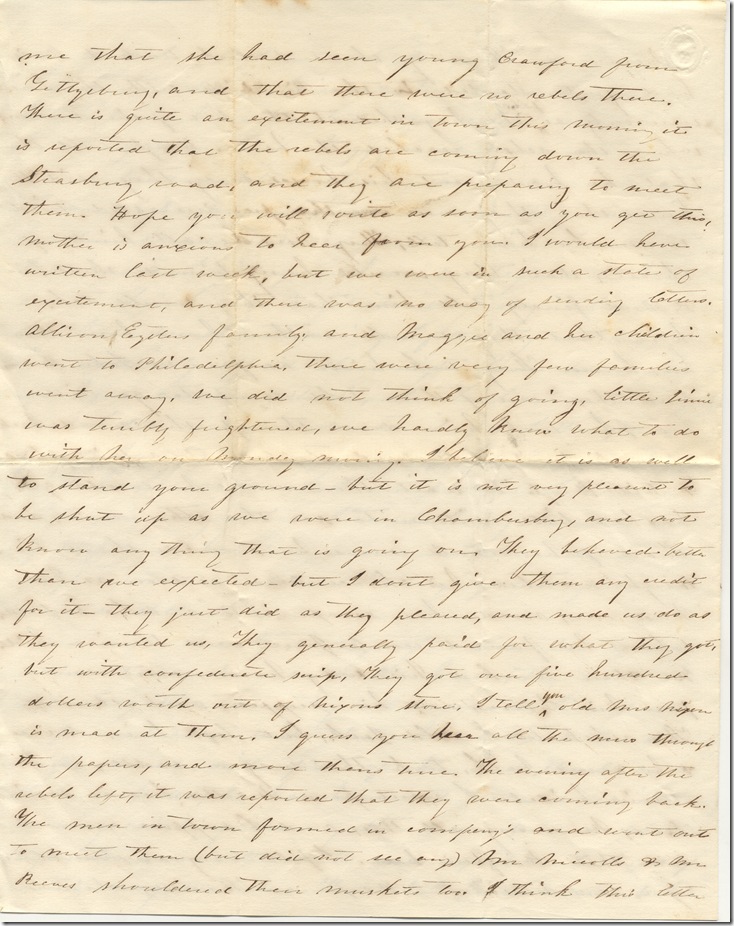
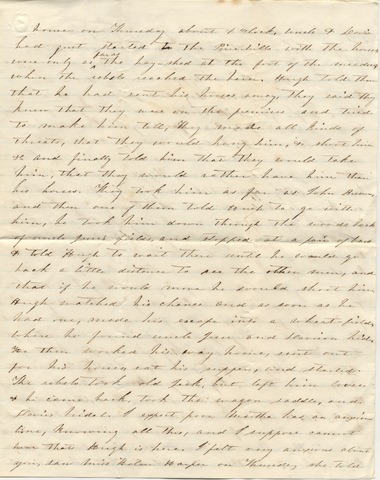
Yesterday afternoon Watson West came down here with his horses, the rebels are securing the country all around. Tim went to Gene Nevins with their horses, and this morning Hugh arrived with five of his horses, (Uncle’s and Davies’ included) he has been out ever since Thursday evening, winding among the mountains & above trying to avoid the rebels, and expecting to be captured every minute. The rebels first went to his home on Thursday about 1 o’clock Uncle & Davie had just started to the Pine-hills with the horses were only as far as the hay-shed at the foot of the meadow, when the rebels reached the barn. Hugh told them that he had sent his horses away, they said they knew that they were on the premises and tried to make him tell. They made all kinds of threats, that they would hang him, & shoot him &c and finally told him that they would take him, that they would rather have him than his horses. They took him as far as John Brewers, and then one of them told Hugh to go with him, he took him down through the woods back of uncle Jesse’s fields, and stopped at a pair of barns & told Hugh to wait there until he would go back a little distance to see the other men, and that if he would move he would shoot him. Hugh watched his chance and as soon as he had one, made his escape into a wheat field, where he found uncle Jesse and Davies hid. He then worked his way home, sent out for his horses, eat his supper, and started. The rebels took old Jack, but left him loose & he came back, took the wagon saddle, and Davies bridal. I expect poor Martha has an anxious time, knowing all this, and I suppose cannot bear that Hugh is here. I felt very anxious about you, saw Miss Helen Harper on Thursday she told me that she had seen young Crawford from Gettysburg, and that there were no rebels there. There is quite an excitement in town this morning it is reported that the rebels are coming down the Strasburg road, and they are preparing to meet them. Hope you will write as soon as you get this! Mother is anxious to hear from you. I would have written last week, but we were in such a state of excitement, and there was no way of sending letters. Allison Eysters family, and Maggie and her children went to Philadelphia. There were very few families went away, we did not think of going, little Jennie was terribly frightened, we hardly knew what to do with her on Monday morning. I believe it is as well to stand your ground—but it is not very pleasant to be shut up as we were in Chambersburg, and not know any thing that is going on. They behaved better than we expected—but I dont give them any credit for it—they just did as they pleased, and made us do as they wanted us. They generally paid for what they got, but with confederate scrip. They got over five hundred dollars worth out of Nixons store. I tell you old Mrs Nixon is mad at them. I guess you hear all the news through the papers, and more thans true.The evening after the rebels left, it was reported that they were coming back. The men in town formed in company’s and went out to meet them (but did not see any) Mr Nicolls & Mr Reeves shouldered their muskets too. I think this letter is quite long enough for Sunday. With much love to you both I remain as ever

Your loving sister

Mary

You had better direct your letter to Shippensburg care of Uncle Hugh. As soon as things get better, and Mother thinks she can stand it we will go home.

M

Citation: Mary Craig Eyster, autograph letter signed to Jennie Craig Warner.  Shippensburg, Pa.; 21 June 1863. Moore VI:05:20

June 17, 1863: Henry and Mary Warner to John Riddle Warner

Henry and Mary Warner lived in Allegheny City, Pennsylvania, now part of Pittsburgh. They are the great-grandparents of poet Marianne Moore.  By the 1860s they had three surviving children:  John, Henry, and Anne. Their letters to John, a Presbyterian minister living in Gettysburg, are preserved as part of Marianne Moore’s family papers.
  

Moore VI-5-20 Henry and Mary Warner to Children 6-17-63

Transcript [excerpt]:

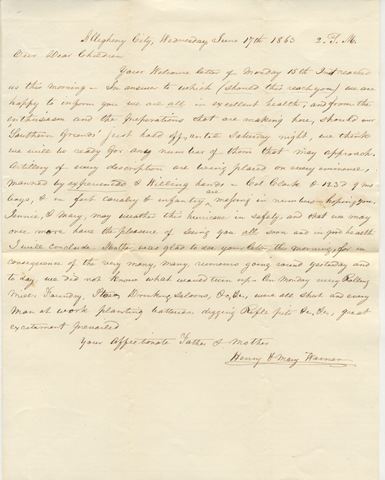
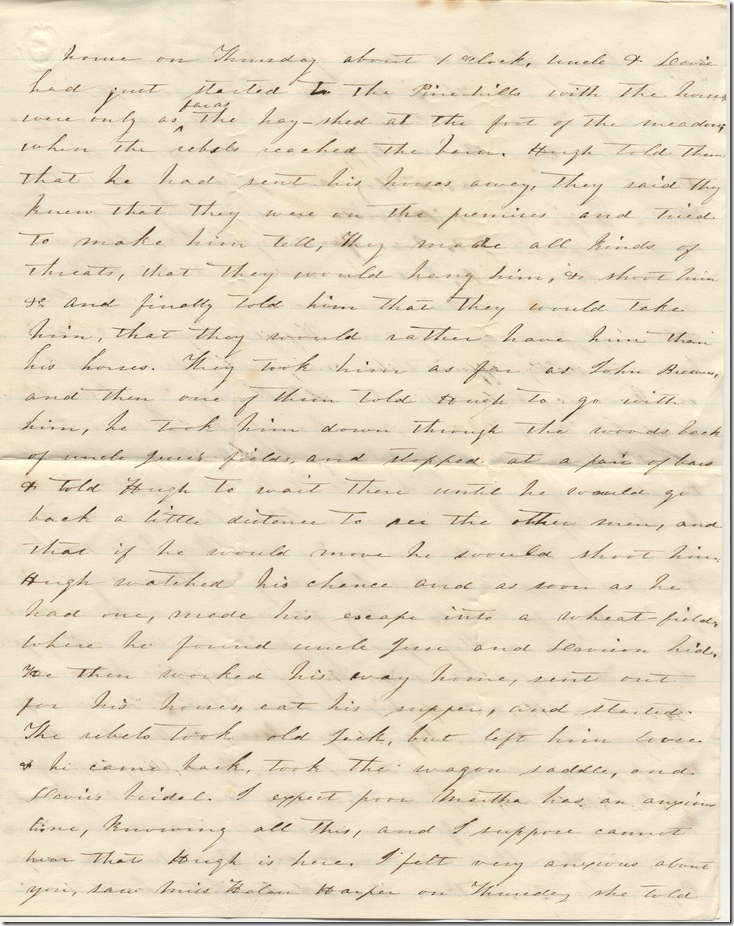
Allegheny City, Wednesday, June 17th 1863 2 P.M.

Our Dear Children

Your Welcome letter of Monday 15th Inst. reached us this morning—In answer to which (should this reach you) we are happy to inform you we are all in excellent health, and from the enthusiasm and the preparations that are making here, should our ‘Southern friends’ just hold off, until Saturday night, we think we will be ready for any number of them that may approach. Artillery of every description are being placed on every eminence, manned by experienced & Willing hands—Col Clark & 123 9 mo boys, & in fact cavalry & infantry are massing in numbers—hoping you, Jennie, & Mary, may weather this hurricane in safety, and that we may once more have the pleasure of seeing you all soon and in good health I will conclude—Mother was glad to see your letter this morning, for in consequence of the very many, many, rumours going round yesterday and to day, we did not know what would turn up—On Monday every Rolling Mill, Foundry, Store, Drinking Saloons, &c &c, were all shut and every man at work planting batteries, digging Rifle pits, &c &c, great excitement prevailed

Your Affectionate Father & Mother

Henry & Mary Warner


Citation: Henry and Mary Warner, autograph letter signed to John Riddle Warner.  Allegheny City [Pittsburgh],17 June 1863. Moore VI:05:20
June 11, 1863: Mary Craig Eyster to Jennie Craig Warner

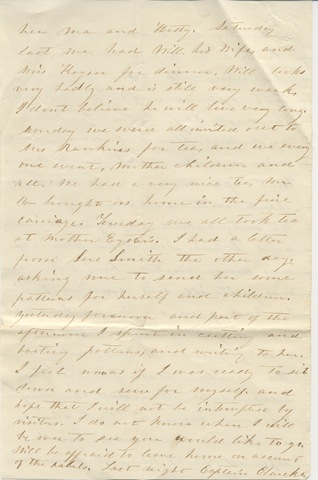
Jennie Craig Warner was the grandmother of the poet Marianne Moore. During the Civil War she lived in Gettysburg, Pennsylvania. Mary Craig Eyster was her sister and lived in Chambersburg. These family letters are preserved as part of the Marianne Moore family papers.Moore VI-5-20 p1 Hugh to Jennie Craig Warner 6-11-63 Moore VI-5-20 p2 Hugh to Jennie Craig Warner 6-11-63 Moore VI-5-20 p3 Hugh to Jennie Craig Warner 6-11-63 Moore VI-5-20 p4 Hugh to Jennie Craig Warner 6-11-63 Moore VI-5-20 p5 Hugh to Jennie Craig Warner 6-11-63 Moore VI-5-20 p6 Hugh to Jennie Craig Warner 6-11-63

Transcript [excerpt]:

June 11th 1863

Dear Jennie

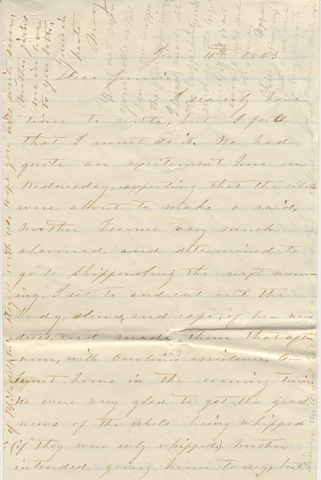
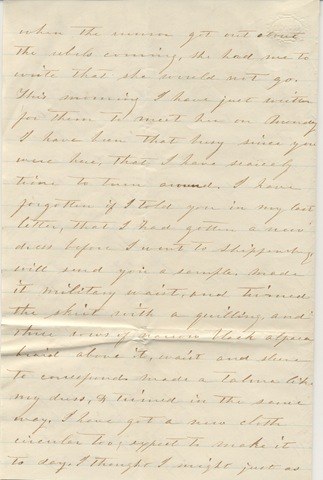
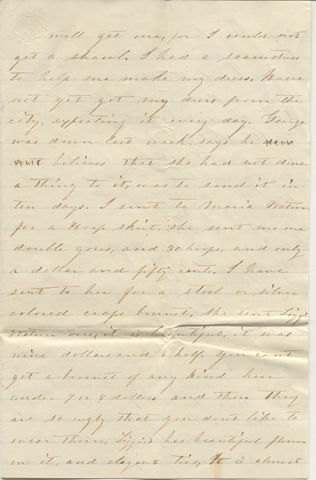
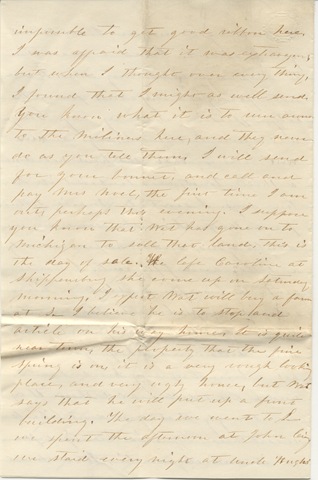
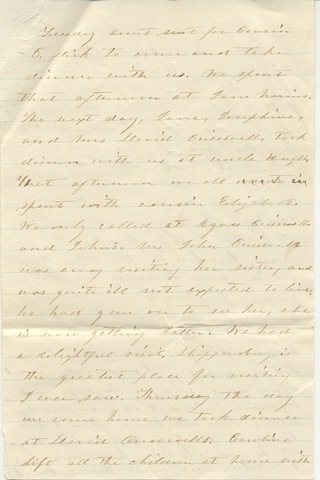
I scarcely have time to write, but I felt that I must do it. We had quite an excitement here on Wednesday, expecting that the rebels were about to make a raid. Mother became very much alarmed, and determined to go to Shippensburg the next morning. I set to and cut out the body, sleeves, and cape, of her new dress, and made them that afternoon, with Caroline’s assistance. C [illeg.] home in the evening trains. We were very glad to get the good news of the rebels being whipped (if they were only whipped.) Mother intended going home to-day, but when the rumor got out about the rebels coming, she had me to write that she would not go. This morning I have just written for them to meet her on Monday. I have been that busy since you were here, that I have scarcely time to turn around…


Citation: Mary Craig Eyster, autograph letter signed to Jennie Craig Warner. [Chambersburg, Pa.?]; 11 June 1863. Moore VI:05:21